


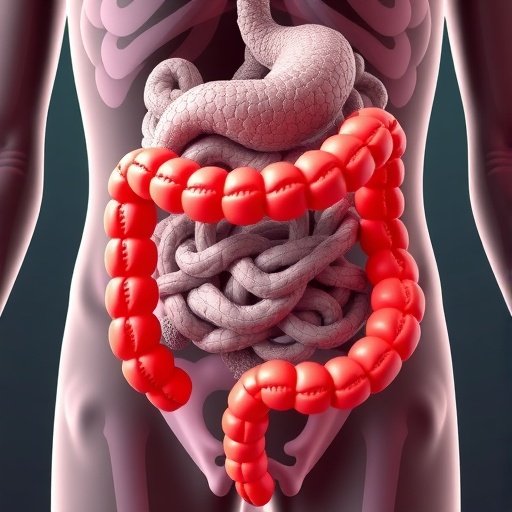
In recent years, the intricate dynamics between the human gut microbiome and inflammatory bowel diseases have become a focal point of cutting-edge biomedical research. A groundbreaking study published in Nature Communications by Wang, Y., Hou, Q., Lv, X., and colleagues in 2026 has propelled our understanding of ulcerative colitis to new heights. Their research unravels how inorganic nitrogen metabolism within the gut microbiota orchestrates the therapeutic success of fecal microbiota transplantation (FMT) in patients with this chronic condition.
Ulcerative colitis, a debilitating inflammatory disorder characterized by continuous mucosal inflammation of the colon, has posed considerable challenges to effective treatment strategies. Conventional approaches frequently fall short of inducing sustained remission, prompting scientists to explore the gut microbiome’s role as a therapeutic target. FMT, the transplantation of fecal microbial communities from healthy donors into affected patients, has emerged as a promising intervention, yet the molecular and metabolic underpinnings of its efficacy remained elusive.
Wang and colleagues embarked on an ambitious mission to decode the metabolic landscape underpinning FMT’s impact on ulcerative colitis. Their investigation centered on the inorganic nitrogen metabolic pathways within the gut microbiome — a multifaceted system involving nitrogen sources such as nitrate, nitrite, and ammonia that microbial communities utilize for growth and metabolism. This exploration signifies a paradigm shift, focusing not just on microbial taxonomy but on functional metabolic remodeling as a driver of clinical outcomes.
Through meticulous metagenomic and metabolomic analyses complemented by state-of-the-art bioinformatics modeling, the researchers delineated how the gut microbiome of ulcerative colitis patients undergoing FMT undergoes profound reprogramming of nitrogen metabolism. Before transplantation, patients exhibited disrupted inorganic nitrogen cycling associated with heightened mucosal inflammation and impaired epithelial barrier integrity. Post-FMT, there was a striking restoration and reorganization of microbial genes mediating nitrogen assimilation and dissimilation pathways.
The study highlights that specific microbial taxa enriched after FMT possess enhanced capacities for nitrate reduction and ammonia assimilation. These metabolic shifts appear to recalibrate the nitrogen flux within the gut lumen, leading to downstream effects on microbial community resilience and host immune modulation. Notably, the modulation of nitrification and denitrification processes fosters an environment conducive to colon mucosa healing by attenuating pro-inflammatory signaling cascades.
This revelation about the inorganic nitrogen metabolism axis provides mechanistic insights into how FMT re-establishes homeostasis in the dysbiotic gut ecosystem characteristic of ulcerative colitis. The authors propose that the nitrogen metabolic reprogramming acts as a metabolic switch, integral to the therapeutic efficacy of FMT, by promoting beneficial microbial functions that stabilize the microbial-host interface and suppress aberrant immune responses.
Intriguingly, the research underscores a bidirectional relationship where the microbiome’s nitrogen metabolism influences host epithelial and immune cell physiology, while host inflammation modulates microbial functional potentials. This interplay suggests novel therapeutic avenues targeting metabolic pathways rather than individual bacterial species, potentially enabling precision microbiome engineering strategies tailored for ulcerative colitis and beyond.
Furthermore, the study provides compelling evidence that manipulating inorganic nitrogen metabolism could be leveraged to optimize FMT protocols. Enriching donor microbiota with metabolic traits that enhance nitrogen cycling could enhance engraftment success and clinical remission rates. This metabolic concept challenges existing paradigms relying predominantly on microbial diversity metrics as predictors of FMT outcomes.
From a broader perspective, the findings add a new dimension to the understanding of microbiome-host metabolic crosstalk, emphasizing the crucial role of nutrient cycles in maintaining gut health. The nitrogen metabolism pathways, often overshadowed by carbon and sulfur cycling, emerge as pivotal regulators of microbial ecology and disease modulation within the gut environment.
Importantly, this study sets the stage for the development of novel diagnostic biomarkers based on nitrogen metabolic gene signatures. Such biomarkers could guide patient selection, monitor treatment responses, and personalize microbiome-based therapies, aligning with the future of precision medicine in gastrointestinal disorders.
Technically, the research leveraged integrative multi-omics approaches combining shotgun metagenomics, targeted metabolomics, and systems biology tools to map nitrogen metabolic networks. This holistic strategy enables identification of key enzymatic nodes and microbial contributors driving metabolic shifts, overcoming the limitations of single-omic studies.
In conclusion, Wang et al.’s discovery that inorganic nitrogen metabolic reprogramming is central to the success of fecal microbiota transplantation provides a transformative framework for microbiome therapeutics. This metabolically focused lens not only enriches fundamental understanding of ulcerative colitis pathogenesis but also catalyzes innovative strategies to harness microbial metabolism for disease intervention. As research progresses, targeted modulation of nitrogen pathways may emerge as a cornerstone in the evolving landscape of gut microbiota-based treatments.
Cite Scienmag News
Morgan Morrow. (May 18, 2026). Gut Microbiome Nitrogen Shift Boosts Ulcerative Colitis Treatment. Scienmag. https://scienmag.com/gut-microbiome-nitrogen-shift-boosts-ulcerative-colitis-treatment/
Morgan Morrow. "Gut Microbiome Nitrogen Shift Boosts Ulcerative Colitis Treatment." Scienmag, 18 May 2026, https://scienmag.com/gut-microbiome-nitrogen-shift-boosts-ulcerative-colitis-treatment/. Accessed 4 September 2026.
Morgan Morrow. "Gut Microbiome Nitrogen Shift Boosts Ulcerative Colitis Treatment." Scienmag. May 18, 2026. https://scienmag.com/gut-microbiome-nitrogen-shift-boosts-ulcerative-colitis-treatment/


