


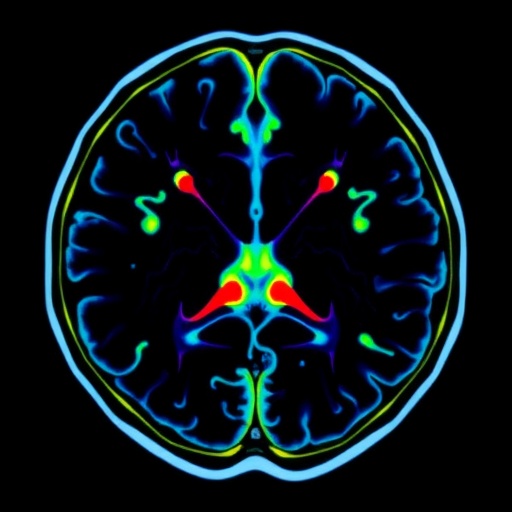
The National Center for Radiation Research in Oncology – OncoRay has recently embarked on a groundbreaking initiative that promises to reshape the future of cancer treatment. Awarded approximately 1.1 million euros in funding by the Federal Ministry of Research, Technology, and Space under the “Nuclear Safety and Radiation Research” program, the collaborative project MEDABIS-PRO is set to advance the frontiers of MRI-guided proton therapy. Over a four-year period, this investment will be strategically allocated between the Helmholtz-Zentrum Dresden-Rossendorf (HZDR) and the Carl Gustav Carus Faculty of Medicine at Dresden University of Technology (TUD), underscoring the mission to fuse scientific innovation with clinical practice.
At the heart of MEDABIS-PRO lies an interdisciplinary endeavor integrating imaging science, radiation physics, biological assessment, and clinical translation. The focus is on Magnetic Resonance-integrated Proton Therapy (MRiPT), a state-of-the-art therapeutic approach that merges the unparalleled soft-tissue imaging capabilities of MRI and the highly targeted energy delivery of proton therapy. The project’s central scientific challenge revolves around the complex interactions between magnetic fields inherent to MRI systems and the dynamics of charged particles used in proton therapy. Specifically, the influence of magnetic field orientation and strength on charged particle trajectories—and thus dose deposition within tumor tissues—requires rigorous characterization and control to maintain treatment precision.
Magnetic Resonance Imaging has long been prized in oncological settings for its superior contrast resolution in soft tissues. Unlike conventional X-ray imaging methods, MRI avoids additional ionizing radiation exposure, making it an attractive candidate for real-time tumor tracking. The integration of MRI directly into proton therapy delivery facilitates adaptive approaches, enabling clinicians to accommodate patient and tumor movement during treatment. However, the introduction of a magnetic field fundamentally alters the charged proton beams’ paths via the Lorentz force, potentially modifying dose distributions in unintended ways. This interaction necessitates a comprehensive physical and biological understanding to ensure the therapeutic benefits of MRiPT outweigh any adverse dosimetric distortions.
A unique feature propelling MEDABIS-PRO’s research capacity is the installation of a pioneering whole-body MRI prototype at OncoRay in 2024. This system boasts a rotatable magnet assembly, an unprecedented innovation allowing systematic variation of the magnetic field’s orientation relative to the proton beam axis. This capability provides researchers with the flexibility to dissect the directional dependencies of magnetic field effects on proton beam propagation—a dimensionality absent in previously static MRI-proton configurations. Such novel infrastructure paves the way for experimental setups that simulate clinical scenarios more realistically, providing crucial insights into system optimization.
By leveraging sophisticated Monte Carlo simulations alongside empirical measurements on tissue-equivalent phantoms, MEDABIS-PRO aims to elucidate the subtleties of dose perturbations induced by magnetic fields of varying intensities and orientations. Beyond physical dosimetry, the project uniquely ventures into biophysical and radiobiological territories by conducting the first-ever experiments involving proton irradiation within an active MRI field. These investigations probe the potential alterations in biological radiation effects imparted by the magnetic environment—critical knowledge for predicting clinical outcomes and tailoring treatment protocols that harness the full potential of MRiPT.
Dr. Felix Horst, the project coordinator at HZDR, articulated the significance of this multidisciplinary approach, emphasizing the confluence of physical and biological experimental domains enabled by the generous funding. The capacity to perform cutting-edge investigations directly inside the in-beam MRI system represents a transformative opportunity to bridge theoretical modeling with tangible clinical applicability. Concurrently, Prof. Esther Troost, chair of radiation therapy at University Hospital Dresden and TUD project leader, highlighted that the insights derived will play a substantial role in refining MRiPT modalities tailored for future clinical trials, enhancing cancer treatment precision and efficacy.
The MEDABIS-PRO initiative is positioned as a vital research pillar within the expanding scope of MRiPT development. Its comprehensive evaluation of magnetic field effects extends beyond conceptual exploration—aiming for practical solutions that safeguard the spatial accuracy and therapeutic integrity of proton therapy under MRI guidance. As real-time imaging refines treatment delivery, this project supports the transition from experimental prototypes toward robust clinical implementations that could minimize side effects and escalate tumor control rates.
Integrating magnetic resonance imaging into proton beam radiotherapy encapsulates a paradigm shift in oncological treatment. Proton therapy’s hallmark advantage—the precise dose localization defined by the Bragg peak—can be exploited more effectively when combined with MRI’s superior soft-tissue contrast and dynamic imaging. Real-time adaptation to anatomical changes during therapy sessions promises to reduce margins around tumors, potentially lowering toxicity while intensifying the dose to malignant tissue. The synergy of physics, biology, and engineering in MEDABIS-PRO illustrates the translational research needed to realize this vision.
HZDR’s role as a multifaceted research center underpins the project’s success. With its Ion Beam Center, Dresden High Magnetic Field Laboratory, and ELBE high-power radiation sources, HZDR provides a robust infrastructure supporting not only the development of novel therapies but also fundamental investigations into the behavior of matter under extreme conditions. The collaboration with TUD’s medical faculty further integrates clinical expertise, fostering an environment where scientific breakthroughs are rapidly transitioned from bench to bedside.
Looking forward, MEDABIS-PRO’s findings are expected to impact the design parameters of next-generation MRiPT systems, guiding magnetic field configurations, beam delivery techniques, and biological dose models. By delivering a comprehensive understanding of how magnetic fields intricately influence proton therapy, the project contributes essential knowledge to the broader oncology community striving to optimize radiation treatments. Ultimately, this research underscores the imperative for precision medicine approaches that leverage advanced physics to enhance patient outcomes and strengthen the therapeutic arsenal against cancer.
In conclusion, the robust funding and unique research infrastructure supporting MEDABIS-PRO herald a new era in MRI-guided proton therapy research. This cutting-edge project not only addresses key technical challenges inherent in merging magnetic resonance imaging with proton beam therapy but also pioneers biophysical studies crucial to clinical translation. Through systematic analysis of dose delivery alterations and biological effects under variable magnetic fields, MEDABIS-PRO is poised to advance the precision, effectiveness, and tolerability of future cancer treatments. As this work progresses, it promises to set new standards in oncological care, making real-time adaptive radiotherapy a clinical reality for patients worldwide.
News Publication Date: Information not provided
Web References:
https://www.oncoray.de/
https://www.hzdr.de/
Keywords
MRI-guided proton therapy, MRiPT, proton beam therapy, radiation oncology, magnetic resonance imaging, dose distribution, radiation biology, in-beam MRI, medical physics, oncological treatment innovation, magnetic field effects, adaptive radiotherapy
Cite Scienmag News
Nathaniel Bowman. (April 22, 2026). MEDABIS-PRO Advances Biophysical Research in MRI-Guided Proton Therapy. Scienmag. https://scienmag.com/medabis-pro-advances-biophysical-research-in-mri-guided-proton-therapy/
Nathaniel Bowman. "MEDABIS-PRO Advances Biophysical Research in MRI-Guided Proton Therapy." Scienmag, 22 April 2026, https://scienmag.com/medabis-pro-advances-biophysical-research-in-mri-guided-proton-therapy/. Accessed 3 September 2026.
Nathaniel Bowman. "MEDABIS-PRO Advances Biophysical Research in MRI-Guided Proton Therapy." Scienmag. April 22, 2026. https://scienmag.com/medabis-pro-advances-biophysical-research-in-mri-guided-proton-therapy/


