


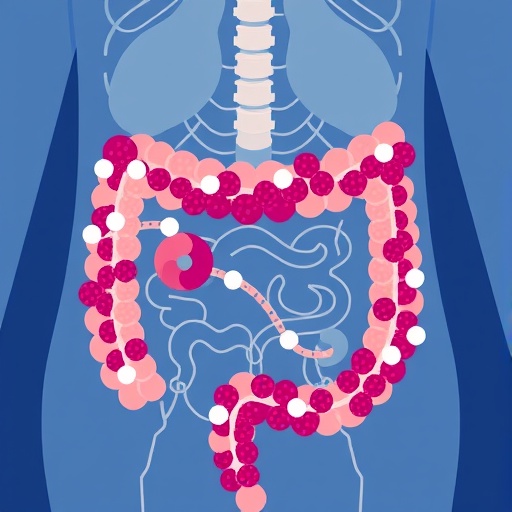
A concerning trend has emerged in colorectal cancer (CRC) mortality rates among younger adults in the United States, revealing a striking disparity driven by educational attainment. Recent comprehensive analyses utilizing high-quality, nationwide population-based mortality datasets enriched with individual-level educational data have uncovered that increases in CRC death rates among young adults are predominantly seen in those with a lower education threshold—specifically, individuals reporting 15 or fewer years of formal education. This phenomenon marks a deviation from previous epidemiological patterns, highlighting a crucial public health challenge that intersects with socioeconomic factors.
Colorectal cancer traditionally affects older adults, typically those over the age of 50, but a growing body of evidence has flagged the increasing incidence and mortality of CRC in younger age cohorts. The present study delves into mortality trends over the past three decades and identifies education level as a pivotal determinant influencing these trends. While more educated populations have witnessed relatively stable or improving CRC mortality rates, those with lower educational attainment have experienced a steep escalation, effectively doubling disparities in young-onset CRC mortality rates.
This divergence raises critical questions about the underlying mechanisms through which educational attainment influences CRC outcomes. Education often correlates closely with myriad factors, including health literacy, access to healthcare services, lifestyle behaviors, occupational exposures, and socioeconomic stability. Individuals with fewer years of education may encounter barriers to preventive care, screenings such as colonoscopies, and timely diagnosis, fundamentally impacting disease progression and survival. The data suggest that the interplay between educational deprivation and rising young-onset CRC mortality warrants urgent policy and clinical interventions.
Methodologically, the study capitalized on robust mortality statistics from national vital records meticulously linked to education data—a combination that empowered granular stratification by age and educational categories. Employing sophisticated statistical models, researchers quantified mortality trends and disparity indices, capturing temporal shifts and unveiling the persistence of inequities. The analytic framework allowed for the identification of a near doubling in mortality rate ratios between groups with 12 or fewer years versus 16 or more years of education over the evaluated period. Such insights pinpoint sociocultural and structural disparities as prime targets for risk mitigation strategies.
The alarming rise in CRC mortality among less-educated young adults carries potential implications for public health surveillance and cancer control programs. Standard screening guidelines, often focusing on older populations, might overlook younger individuals at heightened risk due to socio-educational vulnerabilities. The study underscores the need to recalibrate screening protocols and develop targeted outreach programs that consider educational context as a risk stratifier. This approach could improve early detection, enhance treatment access, and ultimately reduce mortality disparities.
In addition to screening access, the study’s findings call attention to lifestyle and environmental exposures that may disproportionately affect lower-educated populations. Dietary patterns, tobacco and alcohol use, obesity prevalence, and occupational hazards have all been implicated in colorectal carcinogenesis. Understanding how these factors converge with educational disadvantage might illuminate etiological pathways behind the rising mortality. Moreover, integrating educational interventions aimed at improving health literacy and promoting healthy behaviors could serve as ancillary measures to curtail this worrisome trend.
The translational potential of these findings is profound. Healthcare providers, policymakers, and cancer researchers must consider multifaceted strategies that merge clinical risk assessment with social determinants of health frameworks. Steps towards achieving equitable CRC outcomes may involve enhancing community-based education programs, improving insurance coverage for preventive services, and embedding culturally competent support within healthcare delivery systems. These efforts are crucial to dismantle entrenched disparities highlighted by the study.
Furthermore, the revelation that mortality disparities have nearly doubled over three decades signals that existing public health initiatives have inadequately addressed socioeconomic inequity in cancer outcomes. Addressing this challenge requires systemic changes—including greater investment in social infrastructure, reducing healthcare access gaps, and empowering populations historically underserved by medical and educational systems. The intersectionality of education, cancer risk, and mortality presents a clarion call for comprehensive, cross-sectoral collaboration in cancer prevention.
The study also contributes to the evolving epidemiologic understanding of CRC, which is increasingly recognized as a heterogeneous disease influenced by demographic, genetic, and socioeconomic variables. Through its rigorous linkage of mortality and educational data, this research fills an important knowledge gap in the lived experience of young-onset colorectal cancer patients. Such nuanced understanding is critical to formulating precision public health strategies that acknowledge the diversity within at-risk populations.
While this work provides crucial insights, it simultaneously prompts further inquiry. The biological mechanisms that may differentially drive CRC progression in less educated young adults remain to be elucidated. Future research integrating molecular tumor profiling, lifestyle interventions, and socioeconomic data may shed light on these pathways. Additionally, it is imperative to evaluate how healthcare system factors, such as provider bias or geographic disparities in care provision, contribute to observed mortality trends.
In conclusion, the escalating CRC mortality rate among young adults with lower educational attainment presents a pressing public health dilemma. The nearly twofold increase in mortality disparities over the last thirty years underscores the profound impact of socioeconomic status on cancer outcomes. Addressing this requires targeted screening approaches, health education, and structural reforms that collectively alleviate barriers faced by vulnerable populations. Concerted efforts to bridge these gaps will be instrumental in reversing this concerning trend and ensuring equitable cancer care for all young adults.
For inquiries or further information, Ahmedin Jemal, DVM, PhD, who serves as the corresponding author, can be contacted at ahmedin.jemal@cancer.org. The full findings appear in the latest edition of JAMA Oncology. Journal media relations are available through JAMA Network communications for press engagement.
Cite Scienmag News
Nathaniel Bowman. (April 16, 2026). Rising Mortality Rates in Young-Onset Colorectal Cancer Linked to Educational Attainment. Scienmag. https://scienmag.com/rising-mortality-rates-in-young-onset-colorectal-cancer-linked-to-educational-attainment/
Nathaniel Bowman. "Rising Mortality Rates in Young-Onset Colorectal Cancer Linked to Educational Attainment." Scienmag, 16 April 2026, https://scienmag.com/rising-mortality-rates-in-young-onset-colorectal-cancer-linked-to-educational-attainment/. Accessed 4 September 2026.
Nathaniel Bowman. "Rising Mortality Rates in Young-Onset Colorectal Cancer Linked to Educational Attainment." Scienmag. April 16, 2026. https://scienmag.com/rising-mortality-rates-in-young-onset-colorectal-cancer-linked-to-educational-attainment/


