


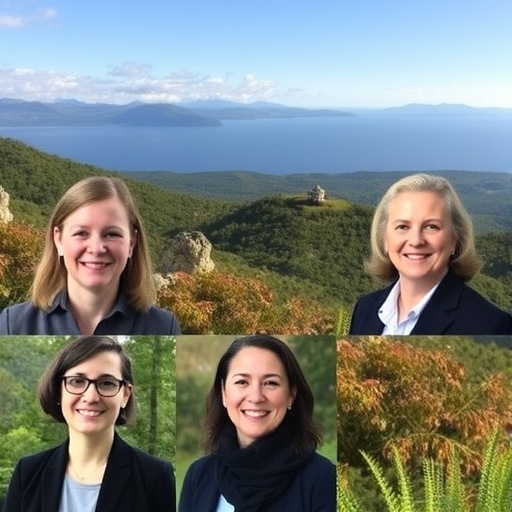
The Ecological Society of America (ESA) recently announced the latest cohort of its prestigious Fellows and Early Career Fellows for 2026, marking a significant milestone in the global ecological sciences community. These appointments underscore the exceptional achievements of members who have significantly advanced ecological research, education, management, and policy across diverse ecosystems and disciplines. This year’s induction includes eight highly accomplished senior Fellows and ten promising Early Career Fellows who have demonstrated notable leadership and innovation in understanding the natural world.
ESA’s Fellows program, inaugurated in 2012, acknowledges members whose research and professional activities have profoundly enriched ecological science and its application to society. Fellowship is a lifetime honor, reflecting long-standing contributions that have influenced academic thought, shaped conservation strategies, or informed environmental policy frameworks. Early Career Fellows, in contrast, are recognized for their rapid advancement within eight years post-doctorate, signaling bright futures poised to sustain or elevate the quality and impact of ecological science.
Among the newly elected senior Fellows is Bethany Bradley from the University of Massachusetts Amherst. Her research exemplifies the integration of biogeography and invasion ecology, examining how terrestrial plant invasions modify ecosystems under climate stressors. Bradly’s work is pioneering in synthesizing complex datasets to enable predictive modeling of invasive species spread, offering crucial insights for adapting management strategies in a warming world. She is notably co-founder of the Northeast Regional Invasive Species and Climate Change Network, which bridges scientific findings with practitioner needs.
Deron E. Burkepile, a marine and terrestrial ecologist based at the University of California, Santa Barbara, also joins the exclusive list of Fellows. He explores the multifaceted roles of consumers within ecosystems, elucidating how biodiversity and species interactions govern ecosystem resilience and nutrient cycling across biomes from coral reefs to savannahs. His transdisciplinary approach incorporates both empirical data and modeling to unravel how ecological communities respond to global environmental change.
Yale University’s Vanessa Ezenwa contributes to the cohort with her innovative research in disease ecology and behavioral immunology. Her studies dissect the complex within-host parasite interactions and their influence on broader disease dynamics in wildlife populations. By linking ecological immunology with animal behavior, Ezenwa’s lab reveals critical connections between host susceptibility, transmission patterns, and ecosystem health, advancing predictive frameworks for emerging infectious diseases in changing landscapes.
Donald Falk, of the University of Arizona, brings expertise in fire ecology and paleoecology—a field crucial for understanding historical ecosystem dynamics under varying climatic regimes. Falk’s investigations employ dendrochronological methods and fire history reconstructions to elucidate how fire regimes have historically shaped forest resilience. His leadership roles in ecological restoration and climate adaptation further underscore his impact on integrating science with policy and management practices.
At Oak Ridge National Laboratory, Lianhong Gu represents a convergence of plant biology, ecosystem science, and environmental biophysics. Drawing inspiration from foundational physical principles, Gu leverages multimodal data—including genomics, phenomics, and remote sensing—to develop mechanistic models of photosynthesis and plant physiology under environmental variability. His efforts in coupling artificial intelligence with environmental datasets highlight the burgeoning frontier of computational ecology.
Marine ecologist Sergio Andrés Navarrete’s body of work connects species interactions with the physical oceanography of coastal systems. His models of metapopulation dynamics incorporate dispersal mechanisms influenced by ocean currents, offering critical insights for managing exploited marine ecosystems challenged by climate change perturbations. Navarrete’s experience directing a major marine research station and Chile’s pioneering marine protected area solidifies his standing as a leader in marine conservation ecology.
Nathan G. Swenson, leading the University of Notre Dame Environmental Research Center, focuses on the synthesis of phylogenetic and functional trait data to decode biodiversity patterns at varied spatial and temporal scales. His research bridges evolutionary biology with community ecology, making significant strides in understanding how plant assemblages assemble and persist under environmental pressures. Swenson’s interdisciplinary expertise exemplifies the integrative approaches essential for contemporary ecological questions.
Laura Yahdjian, affiliated with the University of Buenos Aires and IFEVA–CONICET, brings critical attention to grassland ecosystems, emphasizing livestock grazing, ecosystem drought responses, and invasive species impacts. Her research adopts a social-ecological perspective, linking ecosystem services to human decision-making, thereby fostering more sustainable land management practices in arid and semi-arid environments. Yahdjian’s leadership in international ecological networks enhances collaboration and capacity building, particularly for early-career scientists.
The Early Career Fellows recognized in 2026 demonstrate diverse, cutting-edge research trajectories promising to drive future ecological inquiry. Lillian R. Aoki from the University of Oregon addresses resilience in coastal and estuarine habitats, investigating carbon sequestration following climate-induced disturbances with an integrative field-to-computation approach. Roxanne Beltran at UC Santa Cruz explores physiology and behavior in marine vertebrates, identifying mechanistic drivers of survival amidst rapid oceanic environmental changes.
Corey T. Callaghan’s work at the University of Florida harnesses citizen science data combined with quantitative ecology to unravel biodiversity patterns from local to global scales. His approach exemplifies the power of community-based data and computational innovation in addressing complex ecological challenges. Meanwhile, Christina M. Hernández’s population ecology and oceanographic modeling provide vital tools to understand reproductive dynamics in marine species, supported by robust data collection and reproducible computational methods.
Tess Grainger at the University of Guelph pursues fundamental questions linking global change to species coexistence and evolutionary dynamics through rigorous experimental systems. Her advocacy for inclusive scientific environments enhances academic culture by addressing mental health and parenting barriers. Joseph Hoyt of Virginia Tech examines emerging wildlife diseases using ecological and evolutionary lenses, offering actionable solutions for conservation under pathogen pressures exacerbated by environmental change.
Lin Meng at Vanderbilt University studies vegetation phenology responses to climatic and anthropogenic influences. Recognized internationally for her contributions, Meng integrates ecological and human dimensions, advancing urban sustainability and public health. Claire E. Willing at the University of Washington pioneers fungal ecology in climate adaptation contexts, elucidating mycorrhizal roles in plant community resilience. Casey Youngflesh at Clemson University employs data science to decipher biodiversity patterns shaped by migration, life histories, and demography across taxa.
Lastly, Yong Zhou at UCSB specializes in ecosystem biogeochemistry, particularly carbon and nutrient cycling within fire-prone and tropical savanna ecosystems. His research elucidates plant-soil-microbe interactions and fire feedback mechanisms, informing management of ecosystems increasingly vulnerable to global change-driven fire regimes.
The 2026 ESA Fellows and Early Career Fellows symbolize an elite assembly of ecological scientists whose collective expertise spans theoretical frameworks, empirical methodologies, and applied conservation solutions. Their combined efforts illuminate ecological processes from molecular to landscape scales and inform humanity’s stewardship of an ever-changing biosphere. ESA will honor these new Fellows at the upcoming Annual Meeting in Salt Lake City, further highlighting the critical intersections of science, policy, and education that define the future of ecology.
News Publication Date: Not explicitly provided (assumed 2026 based on content)
Web References:
– ESA Fellows page: https://esa.org/about/esa-fellows-program/esa-fellows/
– ESA Annual Meeting: https://esa.org/saltlake2026/
– ESA Website: https://www.esa.org
References: Not specifically listed in the text.
Cite Scienmag News
Courtney Benton. (April 15, 2026). Ecological Society of America Unveils 2026 Fellows for Outstanding Scientific Contributions. Scienmag. https://scienmag.com/ecological-society-of-america-unveils-2026-fellows-for-outstanding-scientific-contributions/
Courtney Benton. "Ecological Society of America Unveils 2026 Fellows for Outstanding Scientific Contributions." Scienmag, 15 April 2026, https://scienmag.com/ecological-society-of-america-unveils-2026-fellows-for-outstanding-scientific-contributions/. Accessed 4 September 2026.
Courtney Benton. "Ecological Society of America Unveils 2026 Fellows for Outstanding Scientific Contributions." Scienmag. April 15, 2026. https://scienmag.com/ecological-society-of-america-unveils-2026-fellows-for-outstanding-scientific-contributions/


