


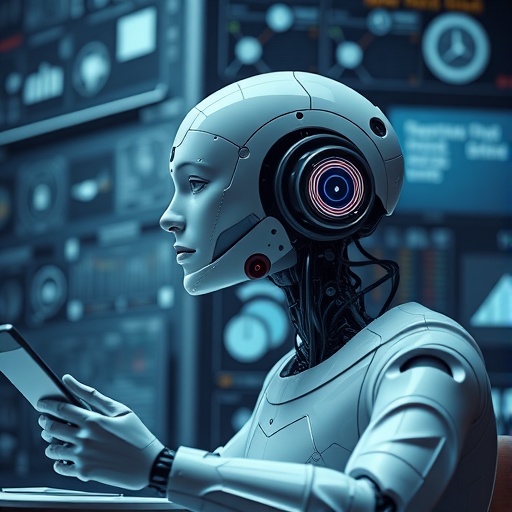
As artificial intelligence (AI) and digital technologies continue to permeate every facet of society, their profound influence on the educational landscape is becoming increasingly evident. A recent article in the ECNU Review of Education, authored by Andreas Schleicher of the OECD, delves deeply into the evolving demands placed upon educators in this era dominated by AI. Published on May 13, 2026, the article critically examines what quality teaching entails amid rapid technological transformations, emphasizing that the future of education hinges as much on human qualities as on technological sophistication.
Teaching has historically been a complex vocation demanding a broad spectrum of skills and knowledge. Today, these expectations are intensifying. Educators are no longer simply conveyors of content knowledge; they must adeptly navigate diverse classrooms, employ robust pedagogical methods, and cultivate inclusive environments that embrace social cohesion. A new dimension to their role is the expectation to model lifelong learning behaviors. As Schleicher points out, the propensity for students to embrace continuous learning is markedly influenced by witnessing their teachers engage persistently in knowledge expansion and critical inquiry, thus reinforcing the interplay between educator mindset and student development.
The introduction of AI and widespread digitalization has injected unprecedented complexity into the teaching profession. Teachers face the daunting task of managing vast streams of information without succumbing to overload, contending with new ethical considerations such as digital plagiarism, and safeguarding students against a wide array of online dangers including fraud, privacy breaches, and cyberbullying. The article underscores that educators must equip students with critical thinking skills tailored specifically to digital literacy, fostering their ability to discern reliable sources and become savvy consumers of vast online data. This shift pushes teaching far beyond the traditional realms of academic instruction into a multi-dimensional arena requiring vigilance and adaptability.
Technological tools like AI are characterized as inherently neutral, holding transformative potential but also bearing risks that can deepen inequalities. The article argues that AI can democratize education by enabling learning that is personalized and accessible, catering to individual learner profiles and crafting flexible pathways that give students greater governance over their learning timelines and modalities. However, such benefits are nuanced; AI may inadvertently reinforce educational disparities due to uneven access or algorithmic biases. The COVID-19 pandemic illuminated these disparities vividly, illustrating how technology can both bridge and widen gaps in educational equity depending on context and implementation.
An important technical critique within the article is AI’s dual capacity to both empower and constrain educators. On one hand, AI-driven analytics can aid teachers in designing innovative, data-informed learning experiences that adapt dynamically to student needs. On the other, it can curtail teacher autonomy by fostering dependence on predetermined algorithms or scripted lesson plans, potentially stifling creativity and professional judgment. This duality calls for a deliberate balance in integrating technology, ensuring that human expertise remains central rather than subordinated to machine-driven processes.
Central to Schleicher’s argument is the irreplaceable value of human capacities in education—particularly in areas where AI falls short. Emotional intelligence, empathy, and social skills are complex human traits that profoundly impact student well-being and development. Many individuals retrospectively attribute significant personal and academic successes to teachers who provided genuine care and emotional support, qualities that resist quantification yet are foundational to effective education. These human dimensions cannot be replicated by AI, underscoring the necessity of preserving and nurturing these competencies in the teaching workforce.
Professional judgment emerges as another critical human trait highlighted by the article. Classrooms are dynamic and unpredictable ecosystems shaped by diverse student backgrounds, fluctuating resources, and emergent challenges. Effective teaching requires educators to apply their expertise creatively and responsively, integrating subject matter knowledge with pedagogical flexibility. This interplay involves constant real-time decision-making that technology, as yet, cannot replicate fully, emphasizing the sophisticated cognitive and affective labor inherent in teaching.
Teaching is thus framed as both an art and a science. The scientific aspect involves leveraging evidence-based strategies derived from research on learning processes, cognitive development, and educational psychology. Concurrently, teaching is an art, demanding sensitivity to contextual nuances and unique learner needs, alongside the creative capacity to adapt methodologies innovatively. The article asserts that the synergy of these dimensions enables teachers to craft personalized and effective learning experiences within complex classroom environments.
Moreover, Schleicher argues for a future of education where teachers are not merely implementers of technology but active designers of learning experiences. As “critical guides” in a digital world, educators should wield technology thoughtfully, integrating it with human judgment and empathy to facilitate meaningful, equitable learning opportunities. Embracing this dual responsibility involves continual professional development, critical reflection on technological tools, and an ongoing commitment to student-centered pedagogy.
The role of teacher as a role model is also accentuated, particularly within the context of AI’s rise. Students observing teachers who demonstrate curiosity, adaptability, and lifelong learning habits are more inclined to cultivate similar traits themselves. This modeling is imperative in a digital society where learning is no longer confined to classrooms but is a pervasive, lifelong endeavor informed by rapidly evolving digital environments.
Finally, the article stresses that the trajectory of education will be defined by the capacity to integrate technological innovations with the preservation of core human educational values. Fostering a balanced relationship between artificial intelligence and human capacities will ensure that education systems not only harness the power of advanced technologies but also maintain their commitment to nurturing socially and emotionally competent individuals with strong critical thinking skills.
In conclusion, Andreas Schleicher’s article offers a compelling and nuanced perspective on the profound transformation of the teaching profession in the digital age. While AI presents significant opportunities to enhance learning accessibility and personalization, the article convincingly argues that the heart of quality teaching remains grounded in humanity. Emotional intelligence, professional judgment, creativity, and the artful application of pedagogical science are indispensable to ensuring that education remains a domain where human potential can truly flourish amid technological change.
Cite Scienmag News
Courtney Benton. (May 26, 2026). As AI Revolutionizes Education, New Article Explores the Human Side of Teaching. Scienmag. https://scienmag.com/as-ai-revolutionizes-education-new-article-explores-the-human-side-of-teaching/
Courtney Benton. "As AI Revolutionizes Education, New Article Explores the Human Side of Teaching." Scienmag, 26 May 2026, https://scienmag.com/as-ai-revolutionizes-education-new-article-explores-the-human-side-of-teaching/. Accessed 6 September 2026.
Courtney Benton. "As AI Revolutionizes Education, New Article Explores the Human Side of Teaching." Scienmag. May 26, 2026. https://scienmag.com/as-ai-revolutionizes-education-new-article-explores-the-human-side-of-teaching/


