


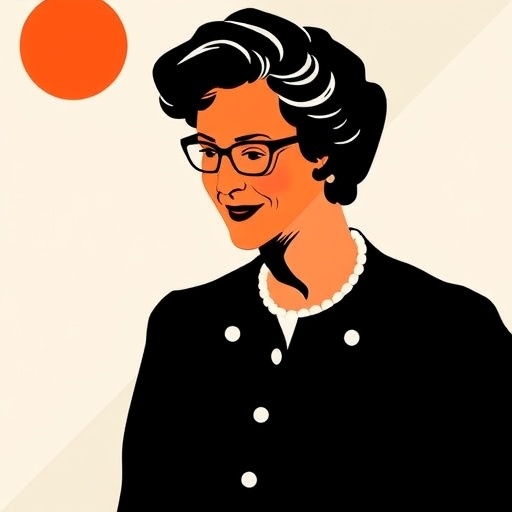
A groundbreaking exhibition opened on April 13th at the Bologna Book Fair, shining a spotlight on the visionary work of Marie Neurath, a pioneering figure in the realm of graphic design and science education. This exhibit, hosted at L’Esprit Nouveau, celebrates Neurath’s prolific contribution to children’s informational literature, transcending traditional boundaries in the presentation of scientific knowledge to young audiences. Through meticulously crafted infographics and engaging illustrated diagrams, Neurath revolutionized the way complex scientific concepts are communicated, fostering an accessible and visually captivating educational experience.
Marie Neurath’s career spanned several decades, notably from 1944 to 1971, during which she directed a multifaceted team composed of researchers, artists, and writers. This collaborative approach was instrumental in creating over 80 illustrated children’s books that not only conveyed scientific facts but did so through the innovative use of the Isotype (International System of Typographic Picture Education) method. The Isotype technique employed standardized pictograms to visually represent data and facts, effectively bridging linguistic and cultural barriers. This method remains a foundational reference in information design, particularly in educational contexts.
The exhibition curated by Professor Sue Walker of the University of Reading presents an extensive array of original materials from Neurath’s oeuvre, including spreads and unpublished working notes from seminal series such as ‘Wonder World of Nature’ and ‘Wonders of the Modern World.’ Visitors are afforded a rare glimpse into Neurath’s design process, revealing her hands-on involvement and the dynamic interplay between visual elements and textual content. These artifacts underscore the intricate methodology behind the creation of educational infographics meant to stimulate curiosity and facilitate comprehension among children.
Professor Walker, an expert in information design, emphasized the profound impact of Marie Neurath’s interdisciplinary methodology, which integrated scientific accuracy with artistic clarity. Neurath’s insistence on collaboration between scientists, artists, and writers ensured that each book was carefully calibrated to balance visual appeal with factual rigor. This dynamic collaboration forged a new paradigm in educational publishing, where the visual language of science was articulated through an accessible and engaging lexicon of symbols and imagery.
The archival materials showcased at the exhibition are part of the Otto and Marie Neurath Isotype Collection, preserved at the University of Reading. This collection not only provides evidence of the design and production processes behind Neurath’s books but also includes poignant testimonies reflecting their reception. Among these is feedback from a young reader who described the books as “wizard books,” highlighting the enchanting effect these works held over their audience. Such responses underscore the timeless appeal and pedagogical potency of Neurath’s creations.
One of the central achievements of Neurath’s work was the democratization of scientific knowledge, especially in an era when educational resources were often inaccessible to children outside formal schooling contexts. By distilling complex topics into fundamental visual components, her books served as empowering tools that cultivated a foundational scientific literacy. This approach anticipated many contemporary practices in STEM education, where visual aids and data visualization are critical in enhancing comprehension and engagement.
The exhibit also contextualizes Neurath’s work within the broader history of information design, illustrating how her innovations prefigured and influenced modern infographics used in media, education, and public communication. The Isotype system’s principles—clarity, universality, and systematic design—remain highly relevant to today’s designers who seek to communicate multifaceted information efficiently in a visually driven world. The exhibition invites reflection on the enduring legacy of Neurath’s contribution to shaping how knowledge is presented graphically.
Moreover, Neurath’s dedication to inclusive education is palpable in her books’ design philosophy, which strived to transcend linguistic and cultural differences through universally understandable symbols. This commitment reflects an understanding that visual literacy is a key component of scientific literacy, particularly in a globalized society. The exhibition thus situates Neurath not merely as a designer but as a pioneer of educational equity and accessibility.
Professor Walker’s curation captures the essence of Marie Neurath’s interdisciplinary collaboration and pedagogical innovation, evidencing how visual communication strategies can transform abstract scientific ideas into tangible learning experiences for children. The exhibited materials reveal an iterative design process, where feedback loops between content experts and creative professionals resulted in refined educational products. This model of teamwork underscores the value of cross-sector collaboration in educational publishing.
The exhibition at Bologna also highlights the historical significance of Quinto Quarto Edizione’s role in bringing Marie Neurath’s legacy to contemporary audiences, bridging the gap between mid-20th-century design expertise and today’s educational challenges. By reviving interest in Neurath’s work, the exhibition fosters renewed appreciation for visual pedagogy and encourages contemporary educators and designers to draw upon proven methodologies for effective science communication.
Visitors to the exhibit are immersed in a narrative that underscores how the careful integration of design, science, and education can lead to transformative learning experiences. The visual language developed by Neurath provides a template for modern efforts aiming to simplify and clarify scientific content for diverse audiences, reaffirming the power of well-executed infographics as catalysts for knowledge dissemination.
Partners and organizers envision the exhibition as more than a retrospective; it is also a call to action for educators, designers, and communicators to embrace integrative, collaborative approaches in developing educational materials. The legacy of Marie Neurath exemplifies how design innovation rooted in scientific rigor and empathy for learners can achieve profound educational impacts and contribute to broader scientific literacy.
Professor Sue Walker is available to elaborate on these themes through interviews and discussions, contributing expert insights into the ongoing relevance of Marie Neurath’s Isotype books for children and their role in shaping the future of science education through design.
News Publication Date: April 13, 2024
Web References:
https://mediasvc.eurekalert.org/Api/v1/Multimedia/8dd6455f-2029-45cb-9061-993274bc9617/Rendition/low-res/Content/Public
Cite Scienmag News
Kelly Grady. (April 14, 2026). Marie Neurath Exhibition Highlights Designer’s Pioneering Contributions to Science Communication. Scienmag. https://scienmag.com/marie-neurath-exhibition-highlights-designers-pioneering-contributions-to-science-communication/
Kelly Grady. "Marie Neurath Exhibition Highlights Designer’s Pioneering Contributions to Science Communication." Scienmag, 14 April 2026, https://scienmag.com/marie-neurath-exhibition-highlights-designers-pioneering-contributions-to-science-communication/. Accessed 3 September 2026.
Kelly Grady. "Marie Neurath Exhibition Highlights Designer’s Pioneering Contributions to Science Communication." Scienmag. April 14, 2026. https://scienmag.com/marie-neurath-exhibition-highlights-designers-pioneering-contributions-to-science-communication/


