

Friday, July 17, 2026
Science
No Result
View All Result
  • Login
  • HOME
  • SCIENCE NEWS
  • CONTACT US
  • HOME
  • SCIENCE NEWS
  • CONTACT US
No Result
View All Result
Scienmag
No Result
View All Result
Home Science News Chemistry

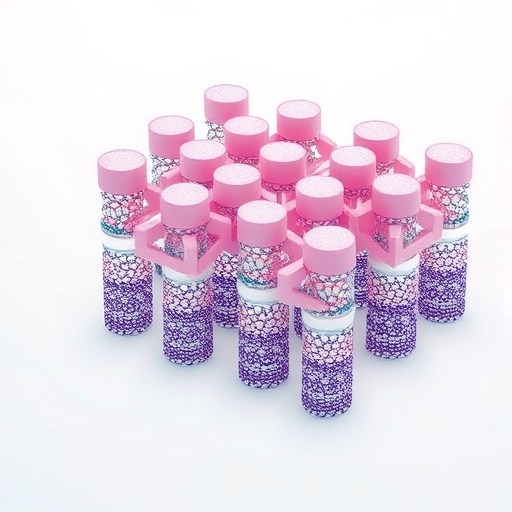
Y-Added FeCoNiSiB Amorphous Multi-Principal Alloys Demonstrate Enhanced Performance

July 17, 2026
in Chemistry
Reading Time: 2 mins read
0
Y-Added FeCoNiSiB Amorphous Multi-Principal Alloys Demonstrate Enhanced Performance

Y-Added FeCoNiSiB Amorphous Multi-Principal Alloys Demonstrate Enhanced Performance

65
SHARES
587
VIEWS
Share on FacebookShare on Twitter
ADVERTISEMENT

High entropy alloys have emerged as a powerful materials platform, built from multiple principal elements in a single system. Among them, multi-principal element amorphous alloys (MPEAAs) offer an especially attractive combination: strong mechanical response, reliable wear and corrosion behavior, and soft magnetic performance that can remain stable at elevated temperatures. Yet one question has persisted for researchers working on these glassy metals—how do rare-earth (RE) additions reshape their internal structure and, in turn, their functional properties?

A new experimental study by Zhang and colleagues focuses on Yttrium (Y), a rare-earth element, added to a representative Fe–Co–Ni–Si–B metallic glass. The work investigates the transformation of a melt-spun (Fe1/3Co1/3Ni1/3)80Si6B14 amorphous alloy when Y is introduced, aiming to clarify how Y affects atomic arrangements that govern magnetism and thermal behavior.

To achieve this, the authors design a family of six-component, or senary, Fe–Co–Ni–Si–B–Y MPEAAs. Instead of tuning only composition, the study links Y incorporation to measurable outcomes such as saturation magnetization, thermal stability, and microhardness—three properties that often compete in advanced soft magnetic materials. The goal is to find compositions that resist structural relaxation while maintaining strong magnetic response.

Microstructural analysis reveals that adding Y can modify how the amorphous matrix stabilizes, reducing tendencies that would otherwise promote unwanted transformations during heating. This stabilization is crucial because amorphous soft magnetic alloys are intended to operate under real-world thermal cycling, where crystallization or phase evolution can degrade performance.

As a result, the Y-containing alloys exhibit exceptional thermal stability alongside enhanced microhardness. In practical terms, this suggests improved resistance to deformation and service wear, supporting longer component lifetimes and reduced maintenance requirements in demanding environments.

Magnetically, the reported compositions show high saturation magnetization and acceptable soft-magnetic characteristics. Soft magnetic behavior is essential for minimizing energy losses, which directly influences the efficiency of electromagnetic devices that rely on transformer cores.

Corrosion resistance is also improved to an acceptable level, addressing another barrier for deployment outside laboratory conditions. Materials for offshore and industrial systems must tolerate moisture, salinity, and aggressive atmospheres that accelerate degradation.

These findings point toward an important application pathway: the potential use of the (Fe1/3Co1/3Ni1/3)80Si6B14 family of amorphous alloys—now with Y optimization—as magnetic core materials in offshore wind power transformers. In offshore wind infrastructure, where efficiency and durability are critical, refined soft magnetic alloys could help improve energy conversion while extending service life.

Subject of Research: Experimental study
Article Title: Effects of Y addition on microstructure and properties of FeCoNiSiB multi-principal element amorphous alloys
News Publication Date: 26-May-2026
Web References: http://dx.doi.org/10.1007/s11706-026-0769-9
References: https://journal.hep.com.cn/foms/EN/10.1007/s11706-026-0769-9
Image Credits: HIGHER EDUCATION PRESS

Keywords

Chemistry

Tags: amorphous magnetic materialscorrosion resistance of multi-principal alloyshigh entropy alloysinfluence of Y on atomic arrangementsmechanical properties of multi-component alloysmicrostructural analysis of Y-added FeCoNiSiB alloysmulti-principal element amorphous alloysrare-earth elements in amorphous metalssoft magnetic performance in amorphous alloysstructural relaxation in metallic glassesthermal stability of MPEAAsYttrium addition in metallic glasses
Share26Tweet16
Previous Post

Study Links Heavy TV Watching to Smaller Brain Structures

Next Post

UMN researcher wins $3.7 million NIH grant to advance AI glaucoma care

Related Posts

Noble Metal-Modified Zinc Oxide Nanoflakes Show Enhanced Gas Sensing Properties
Chemistry

Noble Metal-Modified Zinc Oxide Nanoflakes Show Enhanced Gas Sensing Properties

July 17, 2026
Surface-Enhanced Raman Enables Ultra-Sensitive Detection of Pb2+ Ions
Chemistry

Surface-Enhanced Raman Enables Ultra-Sensitive Detection of Pb2+ Ions

July 17, 2026
Researchers Develop New Approaches to Tackle the PFAS Contamination Crisis
Chemistry

Researchers Develop New Approaches to Tackle the PFAS Contamination Crisis

July 17, 2026
Entropy Gravity Theory Provides New Clues to Reconcile Gravity With Thermodynamics’ Second Law
Chemistry

Entropy Gravity Theory Provides New Clues to Reconcile Gravity With Thermodynamics’ Second Law

July 17, 2026
Chemical Functionalization Enables High-Performance Structural Nanocomposites Using Helical Carbon Nanotubes
Chemistry

Chemical Functionalization Enables High-Performance Structural Nanocomposites Using Helical Carbon Nanotubes

July 17, 2026
New Layered Crystal Enables High-Efficiency Thermoelectric Energy Conversion
Chemistry

New Layered Crystal Enables High-Efficiency Thermoelectric Energy Conversion

July 17, 2026
Next Post
UMN researcher wins $3.7 million NIH grant to advance AI glaucoma care

UMN researcher wins $3.7 million NIH grant to advance AI glaucoma care

  • Mothers who receive childcare support from maternal grandparents show more

    Mothers who receive childcare support from maternal grandparents show more parental warmth, finds NTU Singapore study

    27656 shares
    Share 11059 Tweet 6912
  • University of Seville Breaks 120-Year-Old Mystery, Revises a Key Einstein Concept

    1061 shares
    Share 424 Tweet 265
  • Bee body mass, pathogens and local climate influence heat tolerance

    682 shares
    Share 273 Tweet 171
  • Researchers record first-ever images and data of a shark experiencing a boat strike

    546 shares
    Share 218 Tweet 137
  • Groundbreaking Clinical Trial Reveals Lubiprostone Enhances Kidney Function

    531 shares
    Share 212 Tweet 133
Science

Embark on a thrilling journey of discovery with Scienmag.com—your ultimate source for cutting-edge breakthroughs. Immerse yourself in a world where curiosity knows no limits and tomorrow’s possibilities become today’s reality!

RECENT NEWS

  • Noble Metal-Modified Zinc Oxide Nanoflakes Show Enhanced Gas Sensing Properties
  • Study Shows Adolescent Brain Remodeling Improves Memory Formation
  • Prefrontal intermittent theta-burst stimulation alters hemodynamic responses in major depression
  • KPNA2 overexpression worsens T4 colorectal cancer prognosis by nuclear c-Myc suppression of p21

Categories

  • Agriculture
  • Anthropology
  • Archaeology
  • Athmospheric
  • Biology
  • Biotechnology
  • Blog
  • Bussines
  • Cancer
  • Chemistry
  • Climate
  • Earth Science
  • Editorial Policy
  • Marine
  • Mathematics
  • Medicine
  • Pediatry
  • Policy
  • Psychology & Psychiatry
  • Science Education
  • Social Science
  • Space
  • Technology and Engineering

Subscribe to Blog via Email

Enter your email address to subscribe to this blog and receive notifications of new posts by email.

Join 5,146 other subscribers

© 2025 Scienmag - Science Magazine

Welcome Back!

Login to your account below

Forgotten Password?

Retrieve your password

Please enter your username or email address to reset your password.

Log In
No Result
View All Result
  • HOME
  • SCIENCE NEWS
  • CONTACT US

© 2025 Scienmag - Science Magazine

Discover more from Science

Subscribe now to keep reading and get access to the full archive.

Continue reading
