


Chickens are one of the most economically important animals in the world today. However, the story of their origins and dispersal across the ancient world is still poorly understood. In fact, new archaeological techniques have recently led to the recognition that many finds of bones previously thought to represent early chickens in fact belonged to wild birds. Now, in a new publication, an international team of archaeologists, historians, and biomolecular scientists present the earliest clear evidence for the raising of chickens for egg production, and argue that the loss of seasonal egg laying was the main driver for the dispersal of domestic chickens across Eurasia and northeast Africa.

Credit: Robert Spengler
Chickens are one of the most economically important animals in the world today. However, the story of their origins and dispersal across the ancient world is still poorly understood. In fact, new archaeological techniques have recently led to the recognition that many finds of bones previously thought to represent early chickens in fact belonged to wild birds. Now, in a new publication, an international team of archaeologists, historians, and biomolecular scientists present the earliest clear evidence for the raising of chickens for egg production, and argue that the loss of seasonal egg laying was the main driver for the dispersal of domestic chickens across Eurasia and northeast Africa.
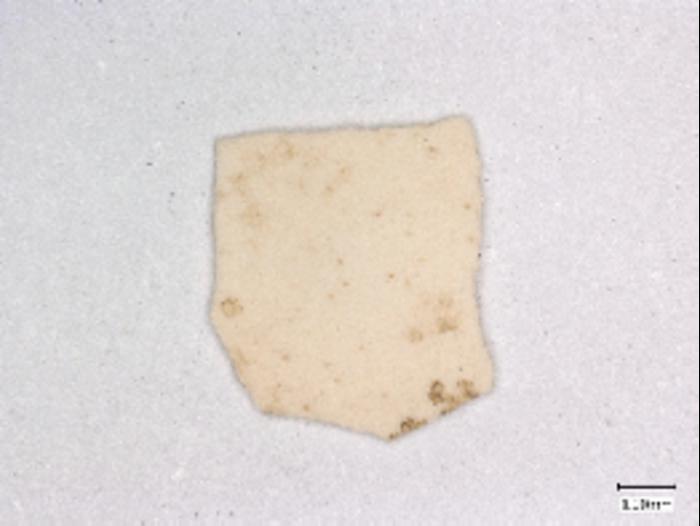
Using eggshell fragments collected from 12 archaeological sites spanning roughly 1500 years, the researchers show that chickens were widely raised in Central Asia from approximately 400 BCE to 1000 CE and were likely dispersed along the ancient Silk Road. The abundance of eggshells further suggests that the birds were laying out of season. It was this trait of prolific egg laying, the researchers argue, that made the domestic chicken so attractive to ancient peoples.
To reach these conclusions, the team collected tens of thousands of eggshell fragments from sites located along the main Central Asian corridor of the Silk Road. They then used a method of biomolecular analysis called ZooMS to identify the source of the eggs. Much like genetic analysis, ZooMS can make species identifications from animal remains such as bone, skin and shell, but it relies on protein signals rather than DNA. This makes it a faster and more cost-effective option than genetic analysis.
“This study showcases the potential of ZooMS to shed light on human-animal interactions in the past,” says Dr. Carli Peters, researcher at the Max Planck Institute of Geoanthropology and first author of the new paper.
The identification of these shell fragments as chickens, and their abundance throughout the sediment layers at each site, led the researchers to an important conclusion: the birds must have been laying more frequently than their wild ancestor, the red jungle fowl, which nests once per year and typically lays six eggs per clutch.
“This is the earliest evidence for the loss of seasonal egg laying yet identified in the archaeological record,” says Dr. Robert Spengler, leader of the Domestication and Anthropogenic Evolution research group and principal investigator on the study. “This is an important clue for better understanding the mutualistic relationships between humans and animals that resulted in domestication.”
Taken together, the new study suggests an answer to the age-old riddle of the chicken and the egg. In Central Asia, evidence suggests that the ability to lay a multitude of eggs is what made the chicken the chicken we know today – a global species of enormous economic importance. The authors hope that this study will demonstrate the potential of new, cost-effective methods and interdisciplinary collaboration to address long-standing questions about the past.
Journal
Nature Communications
Article Title
When Did the Chicken Cross the Road: Archaeological and molecular evidence for ancient chickens in Central Asia
Article Publication Date
2-Apr-2024
Cite Scienmag News
Courtney Benton. (April 4, 2024). When did the chicken cross the road? New evidence from Central Asia. Scienmag. https://scienmag.com/when-did-the-chicken-cross-the-road-new-evidence-from-central-asia/
Courtney Benton. "When did the chicken cross the road? New evidence from Central Asia." Scienmag, 4 April 2024, https://scienmag.com/when-did-the-chicken-cross-the-road-new-evidence-from-central-asia/. Accessed 3 September 2026.
Courtney Benton. "When did the chicken cross the road? New evidence from Central Asia." Scienmag. April 4, 2024. https://scienmag.com/when-did-the-chicken-cross-the-road-new-evidence-from-central-asia/

