


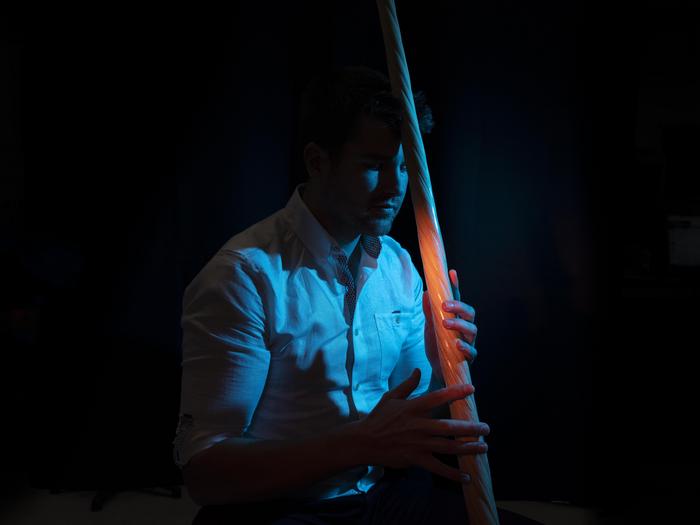

Credit: Photo credit: Alejandro Acin.
How we view real-life ‘heroes’ is changing according to new research, with more of a focus on acting heroically in certain situations, rather than being a heroic person.
Our culture is obsessed with heroes, historical, fictional or otherwise. But despite the success of comic books and movie franchises, the way we view people who might be called heroes in real life is changing.
Research from the University of Birmingham and published in a special issue of Critical Studies on Security, has found that British society has moved to ‘situational heroism’, which is more inclusive and less elitist than traditional heroism.
Dr Katharina Karcher, Associate Professor at the University of Birmingham, who led the research said: “Some researchers have argued that we live in post-heroic times, meaning that there are fewer and fewer heroes in the classic sense (think of heroic warriors or public figures like Winston Churchill and Queen Elizabeth II). As a society, we now put more value on heroic actions and situational awareness.”
Situational awareness plays a huge role in how people react to dangerous situations and has three key components: perception of relevant elements in the environment, comprehension of the current situation, and a projection of future status(es). The UK’s National Counterterrorism Security Office has run campaigns encouraging citizens to ‘stay alert’ and ‘trust their instincts’.
Having good situational awareness can lead people to make brave decisions and swift action in the face of danger. This has been seen in recent terrorist attacks, which have seen ordinary members of the public spring into action and become situational heroes.
The example that the research focuses on is the 29th of November 2019 London Bridge terror attack. Darryn Frost and Steve Gallant were two of the people caught up in the attack when they were attending an event at Fishmongers Hall for the Learning Together Prison programme. When fellow participant Usman Khan began to stab people, Gallant and Frost (who famously used a Narwhal tusk) confronted him putting themselves in danger to save others. They were among a small group of people awarded the Queen’s Gallantry Medal in 2023 for their heroic efforts to stop the attack.
Dr Karcher continued: “Frost and specifically Gallant are not what we first think of when it comes to heroes. One was a convicted murderer serving a life sentence, and the other was a normal Ministry of Justice employee. While Frost and Gallant may not be heroes in the traditional sense, the actions they took based on their situational awareness exemplify exceptional bravery with moral impact, which characterises heroism in today’s post-heroic culture. In this way, we see that situational heroism opens up the title of hero to everyone – a normal person and even a convicted murderer can become heroes.”
Dr Karcher’s research, which included interviews with Frost, found that the social shift towards situational awareness in the UK has created this new mode of heroism. But despite this more inclusive definition, neither Gallant nor Frost sees themselves as heroes. Instead, they characterise themselves as people who took action to protect others and had to learn to act in this way.
In the study Darryn Frost says: “So at first I shunned the word hero and it made me feel very uncomfortable. It wasn’t something I was looking for or wanting […] Yes, we did some really positive things. But there are a lot of negative side effects.”
Eventually, Darryn Frost embraced the hero label to campaign for Gallant’s release. But important ethical questions remain about this new age of heroism, such as what happens if situational heroism becomes a moral imperative? And should acts of bravery committed by individuals be discussed in isolation, ignoring any unheroic acts from the past?
The case of Steve Gallant illustrates that this can be deeply problematic. In 2005, Gallant had received a life sentence for killing former firefighter Barrie Jackson outside a pub in Hull. Recently Jackson’s ex-partner Vicky Foster, who is also referred to in the study, has spoken to the media about how it felt to have the man who killed the father of her children celebrated as a hero following the London Bridge attack.
Dr Karcher concluded: “Against the background of a substantial terrorist threat, the public praise for the ‘heroic actions’ of civilians with a high degree of situational awareness has great social and political significance: they are the living proof that ordinary citizens can switch into hero mode. The weight of the title ‘hero’ is massive, and comes loaded with expectations about that person, but this is shifting. Due to our enhanced public need for situational awareness, it is more likely that heroes can be anyone, even those you would least expect. What this means for governments and security agencies, the media and society at large is the next big question.”
ENDS
Journal
Critical Studies on Security
Article Title
Situational awareness and situational heroism: a close reading of testimonies from the London Bridge terror attack 2019
Article Publication Date
5-Aug-2024
Cite Scienmag News
Courtney Benton. (August 6, 2024). We can be heroes – Research reveals how ordinary people can become ‘situational heroes’. Scienmag. https://scienmag.com/we-can-be-heroes-research-reveals-how-ordinary-people-can-become-situational-heroes/
Courtney Benton. "We can be heroes – Research reveals how ordinary people can become ‘situational heroes’." Scienmag, 6 August 2024, https://scienmag.com/we-can-be-heroes-research-reveals-how-ordinary-people-can-become-situational-heroes/. Accessed 3 September 2026.
Courtney Benton. "We can be heroes – Research reveals how ordinary people can become ‘situational heroes’." Scienmag. August 6, 2024. https://scienmag.com/we-can-be-heroes-research-reveals-how-ordinary-people-can-become-situational-heroes/

