


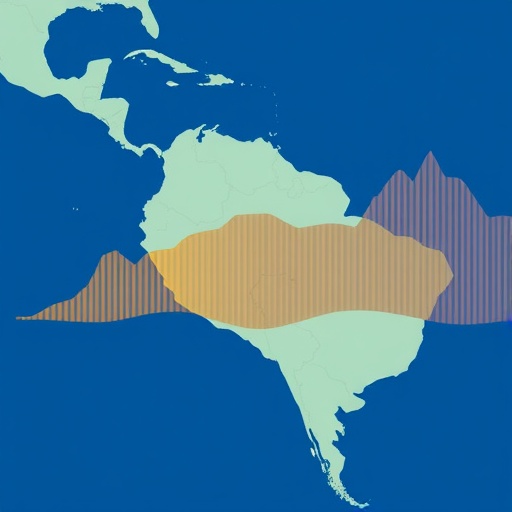
Economists have long debated whether the wave of market-based, outward-oriented reforms adopted across Latin America since the late 1980s has actually delivered net resource gains to the region, or whether it has simply formalized a new channel through which wealth flows outward. A new study published in the Atlantic Economic Journal by Miguel D. Ramirez of Trinity College in Hartford, Connecticut, tackles that question head-on with econometric evidence from Chile, one of the earliest and most celebrated adopters of the reform agenda. The paper, published on 10 April 2026 in volume 54 of the journal, documents reverse transfers of profits and interest out of Chile that are not only large in absolute dollar terms but also substantial relative to the country’s gross domestic product and its gross fixed capital formation, and it shows statistically that these outflows measurably blunt the positive effect of foreign investment on labor productivity growth.
Chile makes a particularly instructive test case. The country was among the first in Latin America to embrace liberalized trade, privatization, and open-door policies toward foreign direct investment, and it is widely regarded as one of the best-performing economies in the region, often outpacing larger neighbors such as Brazil and Mexico. If the promised benefits of foreign capital are to be found anywhere in Latin America, the reasoning goes, they should be visible in Chile. Ramirez’s central finding complicates the conventional narrative: while the stock of inward foreign direct investment in Chile and the wider region has grown dramatically, the simultaneous outflow of profit remittances and interest payments represents a drain on resources that could otherwise have financed domestic investment in physical and human capital.
The scale of these reverse flows is striking. According to data from the United Nations Economic Commission for Latin America and the Caribbean (ECLAC) cited in the study, net payments of profit and interest from Chile averaged about 11.2 billion dollars per year over the 2015–2022 period. That figure is dwarfed by Mexico’s average of 32.4 billion dollars — nearly three times larger — but in both countries the outflows are significant relative to the size of the economy. Indeed, the study’s notes indicate that if net payments of profits and interest alone were used to compute the relevant ratios for 2010–2022, the percentages would exceed 3 percent of GDP in several years, particularly between 2017 and 2022. The paper characterizes these transfers as foregone opportunities for domestic capital formation that may further undermine the country’s capacity to generate future income and employment for its population.
Paradoxically, the era of reverse transfers has coincided with an unprecedented build-up of foreign investment in the region. The study reports that Latin America’s inward FDI stock, measured in dollars, more than quintupled over two decades, rising from 338.8 billion dollars in 2000 to 1,549.9 billion dollars in 2010 and 2,653.1 billion dollars in 2022, according to UNCTAD data. In relative terms, the inward FDI stock climbed from 10.5 percent of regional GDP in 1990 to 23.6 percent in 2000 and 44.6 percent in 2015, the latest year for which reliable data were available. This expansion during the 1990s and 2000s, the paper observes, far exceeds anything seen even during the boom years before the “lost decade” of the 1980s. The question is how much of that accumulated stock translates into net gains for host economies once the ongoing claims of foreign investors are serviced.
Methodologically, the study constructs a labor productivity growth equation for Chile in which the growth rate of the net foreign capital stock per worker appears alongside measures of private and public domestic capital. The capital stocks were generated using a standard perpetual inventory model of the form Kt = Kt−1 + It − δKt−1, where It is gross investment in period t and δ is the depreciation rate. Because of data limitations, initial capital stocks were estimated by aggregating ten years of gross investment — rather than the recommended twenty — and assuming a 5 percent depreciation rate. As a robustness check, the author repeated the exercise with a 10 percent depreciation rate and found the results were qualitatively unchanged. All foreign investment data, including profit remittances, were drawn from official sources such as ECLAC and UNCTAD.
Before estimating the long-run relationships, Ramirez followed the Johansen and Juselius cointegration methodology to establish whether the non-stationary variables in the model share a stable long-run equilibrium. Applying the Pantula principle, he selected Model 4, in which the cointegrating equation includes both a constant and a trend, as the last significant specification before the null hypothesis of no cointegration could no longer be rejected. The likelihood ratio tests supported this choice: the trace statistic of 54.89 exceeded the 5 percent critical value of 42.91, and the Max-Eigen statistic of 41.65 exceeded its critical value of 32.11. The unique cointegrating vector identified through this procedure was then used to generate the error-correction terms employed in the subsequent dynamic regressions.
The heart of the paper lies in its error-correction estimates, which address a problem that has plagued earlier cross-country work on foreign investment and growth: endogeneity and serial correlation. The headline result is that once remittances of profits and interest are deducted, the positive economic impact of the growth rate of the net foreign capital stock per worker on labor productivity growth is diminished, holding other factors constant. In other words, gross foreign capital looks beneficial, but the net contribution — what remains after foreign investors extract their returns — is materially smaller. The author also reports weak exogeneity tests showing that three of the four capital variables (private capital, public capital, and foreign capital) can be safely excluded from the vector error-correction model and treated as weakly exogenous, although the test for private capital produced a p-value of 0.06497, only marginally above the conventional 0.05 threshold.
To reinforce these findings, Ramirez turned to two alternative long-run estimators designed for cointegrated systems: the parametric dynamic ordinary least squares (DOLS) approach of Stock and Watson and the non-parametric fully modified ordinary least squares (FMOLS) estimator. Both were applied to the Chilean labor productivity equation in level form, and the estimates they generated were, in general, consistent with the error-correction results. Additional robustness checks showed that the long-run DOLS and FMOLS estimates without dummy variables were also consistent with the main results, and that output growth equations yielded qualitatively similar conclusions to those for labor productivity. A Wald test, with a p-value of 0.916, indicated that the assumption of constant returns to scale could not be rejected in the framework.
The paper is candid about what it does not settle. Most importantly, Ramirez notes, the study does not address whether the financial resources and technological or managerial know-how that foreign capital ostensibly brings to the country — and to the region more broadly — are sufficient to offset the negative effects flowing from the unprecedented reverse transfer of resources of recent decades. Answering that question would require quantifying technology spillovers, management practices, and productivity gains attributable to multinational presence, none of which are directly captured by the aggregate accounting framework employed here. The paper also relies on official statistical sources whose coverage and quality, particularly for earlier decades, impose constraints; the shortened ten-year window used to initialize the capital stocks is one example of such compromises. Nor does the single-country time-series design automatically generalize to every Latin American economy, although the author’s earlier work on Mexico suggests the reverse-transfer problem extends well beyond Chile.
The implications, nevertheless, are significant for development policy debates. If a substantial share of the measured contribution of foreign direct investment is recycled abroad as profit and interest remittances, then headline FDI figures may substantially overstate the net resources actually available for domestic accumulation. This reframes long-standing discussions about the Washington Consensus and its successors: economists such as Dani Rodrik, Joseph Stiglitz, and Ha-Joon Chang have argued that integration with global capital markets carries costs as well as benefits, and Ramirez’s estimates give that argument quantitative bite in one of the region’s star performers. The findings also speak to the so-called Baker hypothesis — the proposition that stabilization and structural reforms would unleash sustained growth — by suggesting that even where reform succeeds in attracting capital, the distribution of gains between host country and foreign investor may be less favorable than assumed.
For policymakers in Santiago and elsewhere, the study underscores the importance of looking beyond gross inflows when evaluating the development payoff of foreign investment. Measures such as negotiated reinvestment requirements, taxation of repatriated profits, and public investment in complementary infrastructure all bear on whether the net foreign capital stock genuinely raises domestic living standards over time. The paper’s own evidence on public capital formation in Chile — a theme the author has pursued in earlier work — suggests that domestic policy choices remain central to productivity performance. Whether the region’s remarkable accumulation of inward FDI since 1990 will ultimately be judged a net win depends, on this reading, less on the volume of capital attracted than on what remains after the returns flow home.
The article, “Foreign Direct Investment and Net Reverse Transfers from Latin America and the Caribbean: Econometric Evidence for Chile,” appears in the Atlantic Economic Journal, volume 54, pages 59–74, and was received on 19 May 2025, accepted on 3 March 2026, and published online on 10 April 2026. The author declares no competing financial interests. As Latin American economies continue to grapple with sluggish productivity growth and fiscal strain in the post-pandemic era, the study adds a careful piece of econometric evidence to a question that has animated the region’s development debate for four decades: not simply how much foreign capital a country can attract, but how much of it the country actually keeps.
Cite Scienmag News
Courtney Benton. (August 31, 2026). Foreign Direct Investment and Net Reverse Transfers from Latin America and the Caribbean: Econometric Evidence for Chile. Scienmag. https://scienmag.com/foreign-direct-investment-and-net-reverse-transfers-from-latin-america-and-the-caribbean-econometric-evidence-for-chile/
Courtney Benton. "Foreign Direct Investment and Net Reverse Transfers from Latin America and the Caribbean: Econometric Evidence for Chile." Scienmag, 31 August 2026, https://scienmag.com/foreign-direct-investment-and-net-reverse-transfers-from-latin-america-and-the-caribbean-econometric-evidence-for-chile/. Accessed 3 September 2026.
Courtney Benton. "Foreign Direct Investment and Net Reverse Transfers from Latin America and the Caribbean: Econometric Evidence for Chile." Scienmag. August 31, 2026. https://scienmag.com/foreign-direct-investment-and-net-reverse-transfers-from-latin-america-and-the-caribbean-econometric-evidence-for-chile/


