


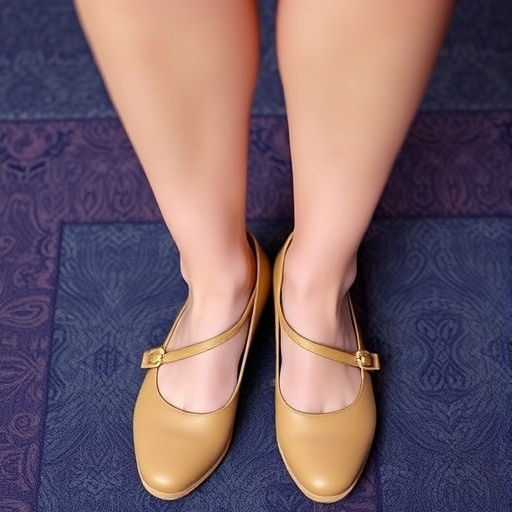
Most Australian women in a new study are wearing shoes that do not match the size indicated by their foot length, according to research from RMIT University that points to fundamental flaws in the way footwear is sized and sold. The peer-reviewed study, published in the International Journal of Fashion Design, Technology and Education, found that conventional sizing systems, which rely heavily on foot length, fail to capture the width and shape differences that determine whether a shoe actually fits.
The research team measured the feet of 107 women and compared those measurements with the shoe sizes the participants wore. Under US sizing, 72% of the women wore a size that differed from the size their foot length would indicate, and under EU sizing the figure was 65%. Notably, more participants wore a larger size than their foot length suggested: 59% under US sizing and 52% under EU sizing.
The researchers argue that this tendency to size up is not simply a matter of women choosing the wrong shoe. Instead, they suggest many women may be compensating for shoes that do not adequately accommodate the width of their feet. Because most shoes are sold in only one width fitting, going up a size is often the only practical way to gain extra room across the widest part of the foot, even though it also adds length the foot does not need.
The measurements behind the study support that interpretation. Among women who were assigned the same shoe size based on foot length, the width of the foot around its broadest point varied by up to 40mm under US sizing and 37mm under EU sizing. That degree of variation, the researchers calculated, would require roughly six or seven distinct width options to properly accommodate all women sharing a single length-based size. In practice, consumers are offered one.
The mismatch the researchers describe is rooted in the history of shoe sizing itself. The Brannock device, the metal measuring instrument long found in shoe shops and used in modified form in this study, was patented in the 1920s and measures both length and width, yet the width reading it provides is rarely used in mainstream retail. Over the decades, footwear manufacturing globalised and sizing conventions diverged across regions, producing the patchwork of UK, US and EU labels that shoppers in Australia encounter side by side on store shelves. Length became the dominant, and often the only, dimension communicated to the consumer, while width was left to the cut of the shoe and the judgment of the buyer.
Associate Professor Saniyat Islam, a co-author from RMIT’s School of Fashion and Textiles, said the findings shift the blame from shoppers to the system itself. “Australian women aren’t bad at buying shoes – the sizing system is bad at describing their feet,” Islam said. “Women are often forced to choose between the right length and the right width because a single shoe size does not capture the shape of their feet. They may be choosing a larger shoe because it is often the only way to achieve a comfortable fit.”
Islam argued that expanding the availability of width fittings would do more to improve fit than the current reliance on length-based sizing and half-sizes. “Offering more width options would give consumers a better chance of finding shoes that fit both the length and width of their feet,” he said. The recommendation challenges an industry norm in which width fittings, where they exist at all, are typically confined to specialist or premium ranges rather than mainstream retail.
The economics of the current system help explain why width fittings have not become standard. Stocking multiple width options for every length size multiplies the number of distinct products a retailer must hold, and for manufacturers it complicates production runs and last design – the “last” being the foot-shaped mould around which a shoe is constructed. Offering a single width per length size keeps inventory lean, but as the RMIT measurements show, it also leaves a large share of customers without a shoe that genuinely matches their foot. The result is a compromise in which the consumer, rather than the product range, absorbs the variability.
The study also documented the real-world consequences of poor fit. Some 68% of participants reported at least one recurring problem with how their shoes fit, a figure that underscores how widespread the mismatch is even among women actively trying to find comfortable footwear. Recurring fit problems of this kind are more than a daily annoyance; footwear that is too short, too narrow or shaped incorrectly for the wearer is a recognised contributor to foot pain and to longer-term foot conditions, which is one reason researchers in footwear and podiatric fields have long argued that sizing deserves closer scrutiny.
The findings carry particular relevance for Australia’s multi-ethnic population. Among the 25 participants who said shoes were often too narrow, 60% came from North-East Asian, South-East Asian or Southern Asian backgrounds. The researchers were careful to note that the study was not designed to establish differences between individual ethnic groups, and that further research with a larger sample would be needed before drawing firm conclusions. Even so, the pattern suggests that footwear designed around a narrow set of reference foot shapes may disadvantage a substantial share of the population.
Co-author Associate Professor Carol Tan said the results highlight a gap between the diversity of the Australian population and the assumptions embedded in footwear sizing. “Footwear sizing still largely reflects a narrow range of Western foot shapes, despite Australia having one of the world’s most diverse populations,” Tan said. “If we’re serious about designing products that work for the people who use them, we need to recognise that foot length is only part of the story.”
That observation connects the study to a broader conversation in design and manufacturing about whose bodies standard products are built around. When the reference shapes used to develop sizing charts reflect only part of the population, everyone outside that part faces a harder search for well-fitting products – and often pays for the mismatch in discomfort, in money spent on alternatives, or in simply going without. Footwear is a particularly visible case because fit is felt with every step, and because the reference data underpinning many sizing systems predates the demographic makeup of contemporary markets such as Australia’s.
Beyond width, the study also identified confusion in how consumers navigate the patchwork of international sizing systems. More than half of the participants did not know their UK shoe size, a striking gap given that UK sizing remains common in Australian retail alongside US and EU labels. The researchers recommended clearer sizing information to help shoppers compare sizes across brands and systems, which can vary inconsistently even for nominally equivalent sizes. A shopper who knows her size in one system or one brand cannot reliably translate it to another, and the study’s finding that most participants were unsure of their UK size suggests that even the most basic anchor for comparison is missing for many consumers.
The study, titled “One size fits small: exploring the shoe size preferences of Australian women and their implications for shoe design,” was conducted by Barbara Pallaspuro, Saniyat Islam and Caroline Swee Lin Tan and published on 28 July 2026. The research used a survey-based method with human participants, and the authors reported no potential conflicts of interest. To take the measurements, the team used a modified Brannock device – the familiar metal measuring instrument found in shoe shops – together with a measuring tape, allowing them to record both length and width dimensions for each participant. Combining the two instruments gave the researchers a direct record of the foot’s dimensions at its broadest point, which is the measurement that conventional length-based sizing leaves out.
As with any study of this scale, there are limits to how far the findings can be generalised. The sample of 107 women is modest, and the ethnic comparisons in particular were explicitly not designed to test differences between specific groups. Nevertheless, the researchers argue the evidence is strong enough to justify a rethink of how footwear is sized, fitted and sold. The team is now looking to work with companies to make footwear sizing more inclusive, and has invited organisations interested in partnering to make contact through RMIT’s research partnerships office.
The implications extend beyond comfort. Poorly fitting shoes are a persistent complaint among consumers, and the study suggests the problem is structural rather than behavioural: a sizing architecture built around length alone cannot describe feet that vary widely in width and shape. If retailers and manufacturers adopted multiple width fittings and clearer, more consistent size labelling, the researchers say, consumers would have a far better chance of finding shoes that fit both dimensions of their feet – without resorting to oversized shoes as a workaround.
For shoppers in the meantime, the study offers a practical takeaway: a shoe that feels loose in length but comfortable in width may be a sign that the sizing system, not the foot, is the problem. The researchers’ central message is that the widespread habit of buying a larger size to gain width is a rational response to a market that offers no better option – and that the fix lies not in better-informed consumers but in a better-described product.
Cite Scienmag News
Courtney Benton. (August 31, 2026). Most Australian women wearing shoes that don’t match their feet, study finds. Scienmag. https://scienmag.com/most-australian-women-wearing-shoes-that-dont-match-their-feet-study-finds/
Courtney Benton. "Most Australian women wearing shoes that don’t match their feet, study finds." Scienmag, 31 August 2026, https://scienmag.com/most-australian-women-wearing-shoes-that-dont-match-their-feet-study-finds/. Accessed 3 September 2026.
Courtney Benton. "Most Australian women wearing shoes that don’t match their feet, study finds." Scienmag. August 31, 2026. https://scienmag.com/most-australian-women-wearing-shoes-that-dont-match-their-feet-study-finds/


