

UN’s Most Ambitious Ocean Audit Reveals Aquaculture’s Promise and Peril
The largest scientific health check of the seas ever coordinated by the United Nations has delivered a stark and urgent message: the world’s oceans are changing faster than at any time in human history, and the window to safeguard their life-support functions is narrowing. The third World Ocean Assessment (WOA III) brings together hundreds of specialists from every continent, including a critical contribution from the University of Alicante, to produce the most comprehensive global snapshot of marine ecosystems ever assembled. Its findings are meant to guide international conservation policy for the rest of this decade and beyond. With oceans covering over 70 percent of the planet, producing half the oxygen we breathe through phytoplankton photosynthesis, absorbing roughly a third of anthropogenic carbon dioxide, and regulating global heat transport, their deterioration is not an abstract environmental concern—it is a direct threat to the stability of the entire Earth system.
At the heart of the report is a recognition that the relentless triple assault of climate change, pollution, and overexploitation is rewriting the fundamental chemistry and biology of marine waters. Accelerated warming is driving thermal expansion and sea-level rise, while the uptake of excess atmospheric CO₂ is lowering the pH of surface waters in a process known as ocean acidification, a phenomenon that directly undermines calcifying organisms from pteropods to corals. Simultaneously, vast oxygen-depleted “dead zones” are expanding, compressing the habitable range for fish and invertebrates, and microplastic particles have now been detected in every marine environment sampled, from abyssal trenches to polar ice cores. The assessment makes clear that these changes are not occurring in isolation; they interact synergistically, amplifying stress on marine life in ways that single-threat models fail to capture.
One of the most powerful tools available to counteract this degradation, according to the assessment, is the strategic expansion of marine protected areas (MPAs) and fully protected marine reserves. These areas, when well designed and enforced, allow fish populations to recover in biomass and size structure, re-establishing ecological relationships that have been lost to industrial fishing. Decades of meta-analyses show that reserves export larvae, juveniles, and even adult organisms to adjacent fishing grounds through density-dependent spillover, thereby supporting both biodiversity conservation and the long-term viability of small-scale fisheries. The assessment stresses that the effectiveness of MPAs depends not merely on their size but on the inclusion of complete habitat mosaics, connectivity between reserves, and the active participation of local communities in enforcement and monitoring.
The University of Alicante’s involvement in WOA III comes through marine biologist Pablo Sánchez Jerez of the Department of Marine Sciences and Applied Biology, who served as an author of the chapter on medium- and large-scale marine aquaculture. This sector is increasingly central to global food security debates because wild capture fisheries have essentially plateaued, while demand for aquatic protein continues to climb. Sánchez Jerez and his co-authors scrutinize how offshore cage culture, recirculating aquaculture systems, and integrated multi-trophic aquaculture can be expanded without repeating the environmental mistakes of the past. “The future of global food security will largely depend on developing increasingly sustainable marine production systems,” he notes. “Aquaculture must grow, but it must do so by relying on technological innovation, environmental sustainability, and a balanced coexistence with natural ecosystems.”
The chapter’s technical analysis dives into feed formulation, disease management, and the digitalization of production. A key concern is the reliance of carnivorous finfish aquaculture on fishmeal and fish oil derived from wild pelagic stocks, a practice that, if left unaddressed, undermines net protein gain. The authors review advances in alternative feeds based on microalgae, insect meal, and single-cell proteins, which are beginning to decouple farmed fish from wild forage fisheries. They also examine the potential of environmental DNA (eDNA) metabarcoding and autonomous underwater vehicles for real-time monitoring of waste plumes and escaped fish, illustrating how artificial intelligence and machine learning can transform regulatory compliance and benthic impact assessments. The sustainability of marine aquaculture, the chapter concludes, will hinge on a regulatory framework that internalizes the true ecological costs of production while incentivizing innovations that reduce nutrient loading and genetic introgression with wild populations.
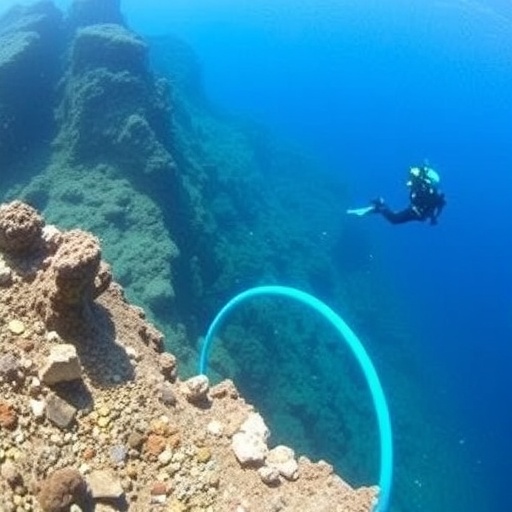
Beyond its immediate focus, the University of Alicante’s team has spent decades building the empirical foundation for marine spatial planning in the Mediterranean. Their long-term monitoring of fully protected reserves such as Tabarca has demonstrated that recovery trajectories for apex predators like dusky groupers can take decades but, once achieved, cascade positively through the entire food web, enhancing resilience to heatwaves and invasive species. This work directly informs the WOA III’s recommendation that nations move beyond simple area-based protection targets and adopt dynamic management regimes that respond to shifting species distributions driven by climate velocity.
The assessment is unflinching in its conclusion: the loss of marine biodiversity is not only an ecological tragedy but also an existential threat to coastal economies, cultural heritage, and the essential ecosystem services that underpin human well-being. It warns that without transformative changes in the way we extract resources, generate energy, and manage land-based pollution, the very chemistry of the ocean will shift into a state unknown to human civilization. Yet the report also offers a roadmap, grounded in the kind of rigorous, interdisciplinary science that chapters like the one on aquaculture exemplify, demonstrating that informed management can still bend the curve of degradation. The question is whether political will can catch up with the scientific consensus before critical tipping points are irreversibly crossed.
Subject of Research: Global ocean health, marine aquaculture sustainability, and marine protected areas
Article Title: UN’s Most Ambitious Ocean Audit Reveals Aquaculture’s Promise and Peril
Web References:
https://woa.un.org/
https://woa.un.org/third-world-ocean-assessment/socioecological-systems/sustainable-and-inclusive-ocean-economy/chapter-1-subchapter-1c-medium-and-large-scale-aquaculture
Image Credits: University of Alicante


