


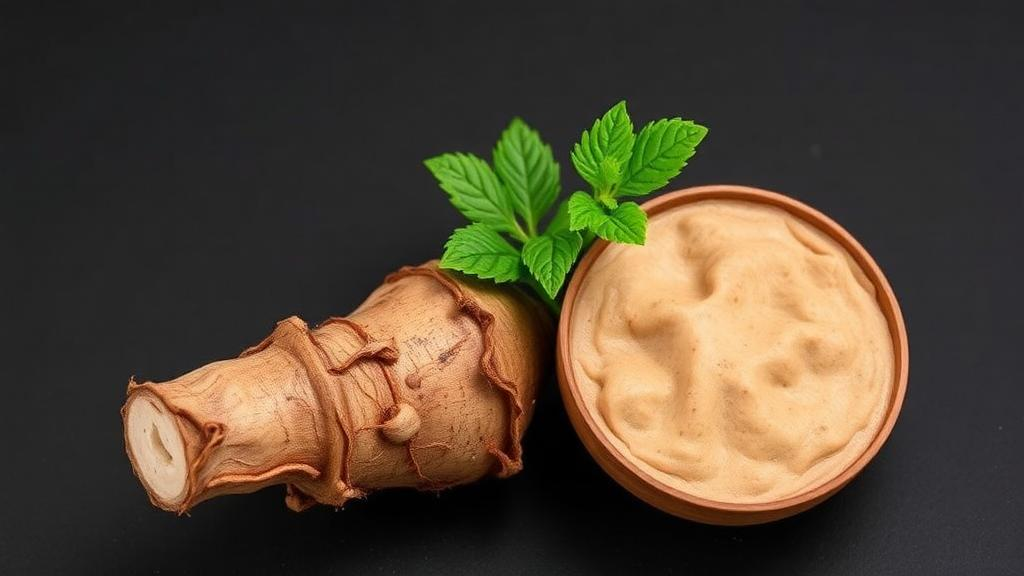
A root that Korean traditional medicine has prized for centuries may owe much of its healing reputation to just two molecules. In a new study published in Food Science and Biotechnology, researchers report that decursin and decursinol angelate, the signature pyranocoumarins of Angelica gigas Nakai, can reproduce the major anti-inflammatory effects of the plant’s whole ethanol extract in macrophages, the immune cells that orchestrate inflammatory responses. The finding, led by Kyoungmin Kim and Mi-Bo Kim with colleagues at Hanyang University and Pukyong National University in South Korea, together with a collaborator at Hokkaido University in Japan, offers a molecular explanation for why this botanical extract calms inflamed cells, and it points toward standardized, compound-based alternatives to crude herbal preparations.
Angelica gigas, known in Korea as Dang-gui, has long been used to treat inflammation, pain, and circulatory complaints. Its roots are rich in decursin and decursinol angelate, two closely related coumarin compounds that earlier work had already linked to anti-inflammatory activity. What remained unclear was a deceptively simple question: how much of the whole extract’s effect do these two compounds actually account for? If they explain most of the activity, then a defined mixture of the two could stand in for the extract, bringing the consistency and quality control that modern pharmacology demands. If they explain only part of it, then other constituents must be doing significant work, and simplifying the extract could sacrifice efficacy.
To answer that question, the team designed a head-to-head experiment in RAW264.7 macrophages, a widely used mouse cell line for studying innate immunity. They inflamed the cells with lipopolysaccharide, or LPS, a component of the outer membrane of Gram-negative bacteria that reliably triggers a potent inflammatory program. They then compared two treatments at carefully matched doses: the whole Angelica gigas root ethanol extract at 40 micrograms per milliliter, and an extract-equivalent mixture of the two pure coumarins, calibrated to 17.7 micromolar decursin and 5.99 micromolar decursinol angelate, the concentrations at which these compounds naturally occur in that amount of extract. This extract-equivalent design is the study’s methodological backbone, because it ensures that any difference between the two treatments reflects the contribution of other extract constituents rather than unequal dosing.
The results were striking in their symmetry. The decursin plus decursinol angelate mixture suppressed the LPS-driven expression of three central inflammatory cytokine genes, Tnf, Il1b, and Il6, whose protein products drive fever, tissue damage, and the recruitment of further immune cells. In direct comparisons, the mixture reduced these cytokine mRNAs to roughly the same extent as the whole extract. The two coumarins also matched the extract in tamping down nuclear factor-kappa B, or NF-kB, the master transcription factor that switches on inflammatory genes. Under inflammatory stimulation, NF-kB moves from the cytoplasm into the nucleus, where it binds DNA and activates dozens of target genes; both the extract and the compound mixture curtailed this nuclear localization to a comparable degree.
The anti-inflammatory fingerprint extended beyond cytokines and NF-kB. Both treatments reduced the accumulation of reactive oxygen species, the chemically reactive molecules that macrophages produce during inflammatory bursts and that can damage surrounding tissue while amplifying inflammatory signaling. The mixture also mirrored the extract in lowering the levels of NLRP3, pro-IL-1beta, and IL-18, three proteins tied to the inflammasome, a multi-protein molecular machine inside macrophages that processes immature IL-1beta and IL-18 into their mature, potent inflammatory forms. NLRP3 inflammasome overactivation has been implicated in a wide range of diseases, from gout and atherosclerosis to metabolic syndrome and neurodegeneration, so a botanical compound pair that restrains this machinery at its source is of considerable pharmacological interest.
Notably, the study found no apparent enhancement when the two compounds were combined, at least under the concentrations tested. Decursin and decursinol angelate each dampened the inflammatory markers on their own, and mixing them at extract-equivalent ratios did not produce a synergistic boost beyond what either compound achieved individually. This suggests that the two coumarins act through overlapping or parallel mechanisms rather than complementary ones, and that their combined presence in the root is a matter of natural abundance rather than a finely tuned synergistic partnership. For product developers, that is a simplifying result: a single well-characterized compound, or a simple fixed-ratio pair, may capture most of the relevant activity.
The story was not entirely one of equivalence, however. When the researchers probed deeper into the cellular stress landscape, they found that the whole extract did not broadly reverse the changes that LPS imposed on genes governing the integrated stress response, a cellular signaling network activated when protein folding in the endoplasmic reticulum goes awry, or on genes involved in mitochondrial proteostasis, the quality-control system that keeps the mitochondrion’s own protein machinery in working order. In other words, LPS reshapes a wider swath of the macrophage’s stress physiology than the extract or the coumarin pair fully counteracts, and the anti-inflammatory effects documented here do not extend to a wholesale restoration of stress-response gene expression.
That nuance matters for interpretation. The authors conclude that decursin and decursinol angelate are major contributors to the anti-inflammatory and antioxidant effects of the Angelica gigas extract, while explicitly leaving room for other constituents to play supporting roles. The extract contains a complex cocktail of coumarins, polyacetylenes, and phenolic compounds, and the present data cannot rule out that some of these contribute to effects the two-compound mixture did not fully capture, particularly in the stress-response pathways that remained largely unresponsive. The extract-equivalent design means that any residual activity of the whole extract beyond the mixture would be attributable to those minor components, and mapping them is a natural next step for the field.
The broader significance lies in the tension between traditional botanical medicine and modern standardization. Crude herbal extracts vary with plant genetics, growing conditions, harvest timing, and processing, making dose consistency difficult and clinical trial interpretation messy. Prior studies had already shown that decursin blocks NF-kB activation in macrophages and that decursinol angelate modulates NF-kB and MAPK signaling, but this study is distinctive in quantifying how far two defined molecules go toward reproducing a whole extract at matched concentrations. If subsequent work in additional cell types and in vivo models confirms the equivalence, Angelica gigas preparations could be reformulated around standardized decursin and decursinol angelate content, improving reproducibility and enabling precise dosing in future clinical studies of inflammation-related conditions.
For now, the findings rest on a single macrophage cell line and LPS as the inflammatory trigger, so extrapolation to human inflammation requires caution. Yet the mechanistic picture is coherent: two pyranocoumarins from a traditional medicinal root converge on NF-kB nuclear translocation, cytokine gene expression, reactive oxygen species accumulation, and inflammasome-related protein levels, matching the extract that contains them. It is a textbook example of pharmacognosy doing what it does best, taking an ancient remedy apart molecule by molecule to find out which pieces actually work. In this case, the answer appears to be that a great deal of Dang-gui’s anti-inflammatory reputation can be carried by two compounds small enough to name, dose, and one day perhaps prescribe.
Subject of Research: Anti-inflammatory activity of decursin and decursinol angelate from Angelica gigas root extract in macrophages
Article Title: Extract-equivalent decursin and decursinol angelate reproduce major anti-inflammatory effects of Angelica gigas root ethanol extract in LPS-stimulated macrophages
Article References: Kim, K., Kim, M.-B., Baek, S., Kumagai, Y., Go, G.-W., Cao, L., & Lee, S. (2026). Extract-equivalent decursin and decursinol angelate reproduce major anti-inflammatory effects of Angelica gigas root ethanol extract in LPS-stimulated macrophages. Food Science and Biotechnology. https://doi.org/10.1007/s10068-026-02227-4
Image Credits: AI Generated
DOI: 10.1007/s10068-026-02227-4
Keywords: Angelica gigas, decursin, decursinol angelate, macrophages, inflammation, NF-kB, NLRP3 inflammasome, cytokines, reactive oxygen species, pyranocoumarins, LPS, natural products
Cite Scienmag News
Drew Townsend. (October 1, 2026). Two Coumarins From Korean Angelica Root Carry Most of Its Anti-Inflammatory Power. Scienmag. https://scienmag.com/two-coumarins-from-korean-angelica-root-carry-most-of-its-anti-inflammatory-power/
Drew Townsend. "Two Coumarins From Korean Angelica Root Carry Most of Its Anti-Inflammatory Power." Scienmag, 1 October 2026, https://scienmag.com/two-coumarins-from-korean-angelica-root-carry-most-of-its-anti-inflammatory-power/. Accessed 4 October 2026.
Drew Townsend. "Two Coumarins From Korean Angelica Root Carry Most of Its Anti-Inflammatory Power." Scienmag. October 1, 2026. https://scienmag.com/two-coumarins-from-korean-angelica-root-carry-most-of-its-anti-inflammatory-power/


