Wednesday, October 28, 2026
Science
No Result
View All Result
  • Login
  • HOME
  • SCIENCE NEWS
  • CONTACT US
  • HOME
  • SCIENCE NEWS
  • CONTACT US
No Result
View All Result
Scienmag
No Result
View All Result
Home Science News Biology

TRPM7 Channel Drives Heart Damage After Ischemia-Reperfusion Through a Newly Traced Molecular Pathway

October 28, 2026
in Biology
Drew Townsend
By Drew Townsend Scienmag Editorial Profile - Cell Biology
Reading Time: 3 mins read
0
TRPM7 Channel Drives Heart Damage After Ischemia-Reperfusion Through a Newly Traced Molecular Pathway

TRPM7 Channel Drives Heart Damage After Ischemia-Reperfusion Through a Newly Traced Molecular Pathway

65
SHARES
587
VIEWS
Share on FacebookShare on Twitter
ADVERTISEMENT

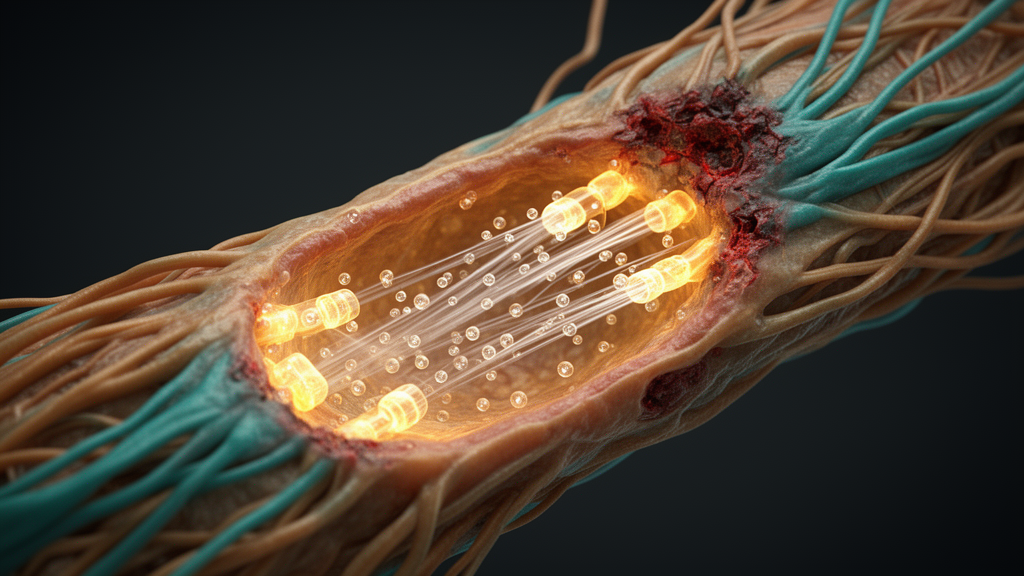
A new study published in Biological Research reports that the ion channel TRPM7 promotes myocardial ischemia-reperfusion injury (MIRI) by triggering a signaling cascade that drives cardiomyocyte pyroptosis, a highly inflammatory form of programmed cell death. The research, published as an open-access article on 14 October 2026, maps a pathway running from TRPM7-mediated calcium influx through CaMKII and the RNA-binding protein DDX3X to activation of the NLRP3 inflammasome.

The study was designed to determine whether TRPM7 regulates cardiomyocyte pyroptosis during MIRI and to identify the underlying mechanisms. The researchers established two complementary models: mice subjected to ischemia-reperfusion injury in vivo, and HL-1 cardiomyocytes exposed to hypoxia-reperfusion (H/R) in vitro.

Methodologically, the team combined gene knockdown and overexpression approaches with pharmacological inhibition, using the specific inhibitor KN-93 to block CaMKII. Protein-protein interactions were probed with co-immunoprecipitation and GST pull-down assays, while m5C RNA modification analysis relied on MeRIP and a dual-luciferase reporter assay with site-directed mutagenesis.

The central in vivo finding was that TRPM7 knockdown significantly improved cardiac function, reduced infarct area and myocardial fibrosis, and suppressed cell death in mice. These results position TRPM7 as an upstream promoter of the injury response rather than a passive marker of damage, and they align with the channel’s mechanistic role in the downstream pathway the authors traced.

That mechanism begins with calcium. According to the study, TRPM7-mediated calcium influx activates CaMKII, which then binds to and upregulates DDX3X. In parallel, ischemia-reperfusion or hypoxia-reperfusion induced m5C modification on DDX3X mRNA, which recruited the m5C reader protein ALYREF and thereby stabilized DDX3X expression. The authors describe this as an m5C/ALYREF-dependent stabilization of DDX3X, linking an epitranscriptomic RNA modification to the injury response.

Elevated DDX3X, in turn, activated the NLRP3 inflammasome, ultimately driving cardiomyocyte pyroptosis. The present study connects that inflammasome to a specific ion channel and an RNA-modification pathway in a single axis.

Importantly, the researchers report that in vivo knockdown of DDX3X recapitulated the cardioprotective effects observed with TRPM7 inhibition. This convergence suggests that DDX3X sits at a critical downstream node of the pathway, since reducing it independently of TRPM7 produced comparable protection in the mouse model.

The authors conclude that their findings reveal a critical role for a TRPM7-initiated CaMKII/DDX3X/NLRP3 signaling axis in regulating pyroptosis during MIRI, and they propose it as a novel potential therapeutic target for the condition. Readers should note that the article is being shared early as a peer-reviewed, accepted manuscript carrying a permanent DOI; this version is subject to further edits and will be replaced by the final Version of Record. The findings derive from mouse and HL-1 cardiomyocyte models, and the authors frame the pathway as a potential target rather than a validated clinical intervention.

Subject of Research: The role of the TRPM7 ion channel and a CaMKII/DDX3X/NLRP3 signaling axis in cardiomyocyte pyroptosis during myocardial ischemia-reperfusion injury.

Article Title: TRPM7 promotes myocardial ischemia-reperfusion injury via CaMKII/DDX3X/NLRP3-mediated pyroptosis and m5C/ALYREF-dependent DDX3X stabilization

Article References: Yang, J., Hu, S., Ji, P., Guo, Y., & Xiang, H. (2026). TRPM7 promotes myocardial ischemia-reperfusion injury via CaMKII/DDX3X/NLRP3-mediated pyroptosis and m5C/ALYREF-dependent DDX3X stabilization. Biological Research. https://doi.org/10.1186/s40659-026-00732-8

Image Credits: AI Generated

DOI: 10.1186/s40659-026-00732-8

Keywords: TRPM7, myocardial ischemia-reperfusion injury, pyroptosis, CaMKII, DDX3X, NLRP3 inflammasome, m5C RNA modification, ALYREF, cardiomyocytes, calcium signaling, HL-1 cells, Biological Research

Cite Scienmag News

Drew Townsend. (October 28, 2026). TRPM7 Channel Drives Heart Damage After Ischemia-Reperfusion Through a Newly Traced Molecular Pathway. Scienmag. https://scienmag.com/trpm7-channel-drives-heart-damage-after-ischemia-reperfusion-through-a-newly-traced-molecular-pathway/

Drew Townsend. "TRPM7 Channel Drives Heart Damage After Ischemia-Reperfusion Through a Newly Traced Molecular Pathway." Scienmag, 28 October 2026, https://scienmag.com/trpm7-channel-drives-heart-damage-after-ischemia-reperfusion-through-a-newly-traced-molecular-pathway/. Accessed 28 October 2026.

Drew Townsend. "TRPM7 Channel Drives Heart Damage After Ischemia-Reperfusion Through a Newly Traced Molecular Pathway." Scienmag. October 28, 2026. https://scienmag.com/trpm7-channel-drives-heart-damage-after-ischemia-reperfusion-through-a-newly-traced-molecular-pathway/
Tags: ALYREFBiological Researchcalcium influx signaling pathwaycalcium signalingCaMKIICaMKII activationcardiomyocyte pyroptosiscardiomyocytesDDX3XDDX3X RNA-binding proteinHL-1 cellsinflammation-mediated heart damageischemia-reperfusion injury modelsm5C RNA modificationmyocardial ischemia-reperfusion injuryNLRP3 inflammasomeNLRP3 inflammasome activationpharmacological inhibition of CaMKIIpyroptosisRNA methylation in cardiac injuryTRPM7TRPM7 gene knockdownTRPM7 ion channel
Share26Tweet16
Previous Post

Vaccine-type pneumococci persist in Ugandan children five years after PCV10 rollout

Next Post

DCAF13 Drives Liver Cancer Growth by Tagging RCAN1.4 for Destruction

Related Posts

Acoustic tags show only transient behavioural effects in young grey seals
Biology

Acoustic tags show only transient behavioural effects in young grey seals

October 28, 2026
New method reads sequencing errors directly from overlapping reads to spot rare mutations
Biology

New method reads sequencing errors directly from overlapping reads to spot rare mutations

October 28, 2026
Optimized Fermentation Boosts Streptococcus suis Biomass for Inactivated Vaccine Testing
Biotechnology

Optimized Fermentation Boosts Streptococcus suis Biomass for Inactivated Vaccine Testing

October 28, 2026
Endothelial protein CCDC92 found to restrain early atherosclerosis through STAT1 degradation
Biology

Endothelial protein CCDC92 found to restrain early atherosclerosis through STAT1 degradation

October 28, 2026
H&E Slide Spatial Features Explain Gene Expression Beyond Cell-Type Mix
Biotechnology

H&E Slide Spatial Features Explain Gene Expression Beyond Cell-Type Mix

October 28, 2026
Fungal Enzyme Partners Reshape How Cytochrome P450 Reactions Are Powered
Biotechnology

Fungal Enzyme Partners Reshape How Cytochrome P450 Reactions Are Powered

October 28, 2026
Next Post
DCAF13 Drives Liver Cancer Growth by Tagging RCAN1.4 for Destruction

DCAF13 Drives Liver Cancer Growth by Tagging RCAN1.4 for Destruction

  • Mothers who receive childcare support from maternal grandparents show more optimized

    Mothers who receive childcare support from maternal grandparents show more parental warmth, finds NTU Singapore study

    27656 shares
    Share 11059 Tweet 6912
  • University of Seville Breaks 120-Year-Old Mystery, Revises a Key Einstein Concept

    1061 shares
    Share 424 Tweet 265
  • Bee body mass, pathogens and local climate influence heat tolerance

    682 shares
    Share 273 Tweet 171
  • Researchers record first-ever images and data of a shark experiencing a boat strike

    546 shares
    Share 218 Tweet 137
  • Groundbreaking Clinical Trial Reveals Lubiprostone Enhances Kidney Function

    531 shares
    Share 212 Tweet 133
Science

Embark on a thrilling journey of discovery with Scienmag.com—your ultimate source for cutting-edge breakthroughs. Immerse yourself in a world where curiosity knows no limits and tomorrow’s possibilities become today’s reality!

RECENT NEWS

  • Acoustic tags show only transient behavioural effects in young grey seals
  • AI pathology scoring flags longer survival on pembrolizumab in metastatic triple-negative breast cancer
  • New method reads sequencing errors directly from overlapping reads to spot rare mutations
  • Greenhouse Design of Shrimp Pond Solar Arrays Shapes Greenhouse Gas Emissions

Categories

  • Agriculture
  • Anthropology
  • Archaeology
  • Athmospheric
  • Biology
  • Biotechnology
  • Blog
  • Bussines
  • Cancer
  • Chemistry
  • Climate
  • Earth Science
  • Editorial Policy
  • Marine
  • Mathematics
  • Medicine
  • Pediatry
  • Policy
  • Psychology & Psychiatry
  • Science Education
  • Science News
  • Social Science
  • Space
  • Technology and Engineering

Subscribe to Blog via Email

Enter your email address to subscribe to this blog and receive notifications of new posts by email.

Join 5,151 other subscribers

© 2025 Scienmag - Science Magazine

Welcome Back!

Login to your account below

Forgotten Password?

Retrieve your password

Please enter your username or email address to reset your password.

Log In
No Result
View All Result
  • HOME
  • SCIENCE NEWS
  • CONTACT US

© 2025 Scienmag - Science Magazine

Discover more from Science

Subscribe now to keep reading and get access to the full archive.

Continue reading