Wednesday, October 28, 2026
Science
No Result
View All Result
  • Login
  • HOME
  • SCIENCE NEWS
  • CONTACT US
  • HOME
  • SCIENCE NEWS
  • CONTACT US
No Result
View All Result
Scienmag
No Result
View All Result
Home Science News Biology

Acoustic tags show only transient behavioural effects in young grey seals

October 28, 2026
in Biology, Technology and Engineering
Margaret Porter
By Margaret Porter Scienmag Editorial Profile - Biodiversity Science
Reading Time: 3 mins read
0
Acoustic tags show only transient behavioural effects in young grey seals

Acoustic tags show only transient behavioural effects in young grey seals

65
SHARES
587
VIEWS
Share on FacebookShare on Twitter
ADVERTISEMENT

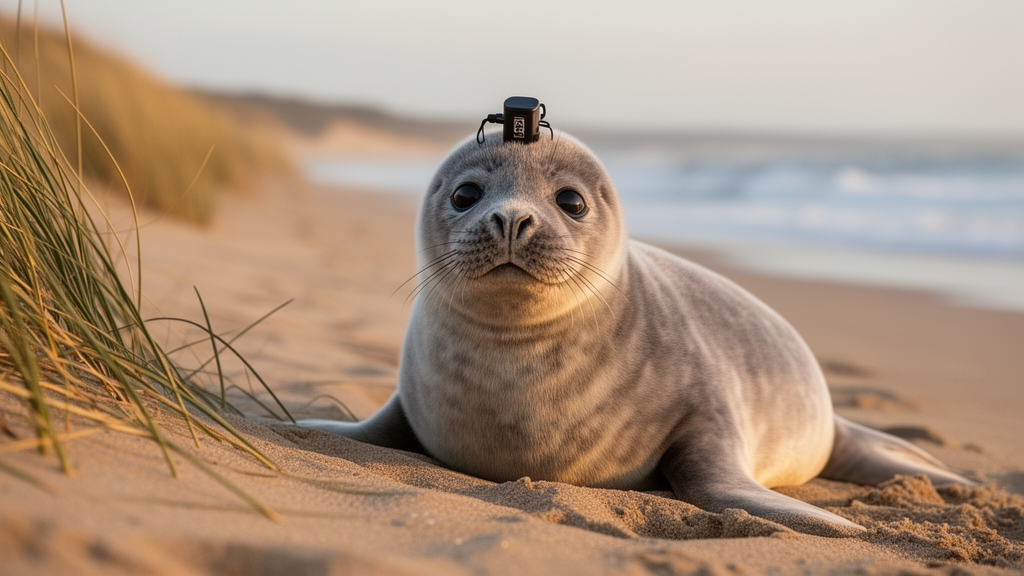
Animal-borne acoustic transmitters operating at 69 kHz appear to cause only short-lived behavioural changes in young grey seals, with no detectable effect on survival during their first year at sea, according to a study of weaned Atlantic grey seal pups published in the journal Animal Biotelemetry. The findings address a long-standing ethical concern that has limited the use of acoustic telemetry in pinnipeds: whether the tags’ ultrasonic signals, audible to the animals underwater, might disturb or harm the very individuals researchers are trying to follow.

Acoustic telemetry is widely used to remotely monitor the behaviour and survival of aquatic animals because the tags are relatively affordable, miniature and have extended battery life. Yet its use in pinnipeds has remained limited, partly because of worries about potential auditory disturbance, and the authors note that little scientific evidence has existed on this question. To fill the gap, the team equipped 130 weaned Atlantic grey seal pups (Halichoerus grypus) with satellite transmitters between 2023 and 2025, monitoring their behaviour and survival through their first year at sea, the most vulnerable life stage. Approximately half of the animals, 68 seals, were also fitted with a 69 kHz acoustic transmitter that produced a low-power signal lasting three to five seconds, with a source level of 147 dB re 1 µPa @ 1 m in water, emitted on average every 120 seconds.

Compared with the control group, the acoustically tagged seals did not show a higher probability of hauling out, a behaviour that could indicate avoidance of the acoustic signals, which were only audible to the tagged animals underwater. There was, however, one measurable difference: while at sea, the acoustically tagged seals allocated a higher proportion of their time to widespread movement than the control group, which the authors interpret as a prolonged exploration phase. That difference began to diminish by the third week at sea, suggesting the effect faded with time.

Although this behavioural difference may support the presence of sub-lethal effects, overall survival did not differ between the two groups during this sensitive life stage. Taken together, the results indicate that the effects of 69 kHz acoustic telemetry may be transient, acting primarily through early behavioural pathways. The authors caution that the underlying mechanism causing the effect of the acoustic pings on seal behaviour to attenuate remains unknown. The study suggests that animal-borne 69 kHz acoustic telemetry could be used to study grey seal ecology over long time periods, while emphasising that, as with any telemetry method, its use requires weighing scientific benefits against potential consequences.

The research was released as an early-access, peer-reviewed accepted article, citable under a permanent DOI and subject to further edits before the final version of record. For researchers considering acoustic tags for seals, the practical message is that the common 69 kHz frequency produced no detectable survival cost in this large field experiment, and the one observed behavioural difference was temporary. The authors frame the work as evidence to inform ethical assessments rather than a blanket endorsement, noting that decisions about deploying such tags should still balance the scientific value of the data against the potential consequences for the tagged animals.

Subject of Research: Effects of 69 kHz animal-borne acoustic telemetry on the behaviour and survival of young Atlantic grey seals

Article Title: Potential effects of animal-borne 69 kHz acoustic telemetry on pinniped behaviour and survival in the wild

Article References: Irani, A. I., Bordeleau, X., den Heyer, C. E., Blanchet, F. G., Flemming, J. M., Lidgard, D., Mongrain, S., Hammill, M. O., & Pelletier, F. (2026). Potential effects of animal-borne 69 kHz acoustic telemetry on pinniped behaviour and survival in the wild. Animal Biotelemetry. https://doi.org/10.1186/s40317-026-00505-w

Image Credits: AI Generated

DOI: 10.1186/s40317-026-00505-w

Keywords: acoustic telemetry, grey seals, pinnipeds, animal-borne tags, 69 kHz, biotelemetry, wildlife tracking, haul-out behaviour, first-year survival, sub-lethal effects, Halichoerus grypus, ethics

Cite Scienmag News

Margaret Porter. (October 28, 2026). Acoustic tags show only transient behavioural effects in young grey seals. Scienmag. https://scienmag.com/acoustic-tags-show-only-transient-behavioural-effects-in-young-grey-seals/

Margaret Porter. "Acoustic tags show only transient behavioural effects in young grey seals." Scienmag, 28 October 2026, https://scienmag.com/acoustic-tags-show-only-transient-behavioural-effects-in-young-grey-seals/. Accessed 28 October 2026.

Margaret Porter. "Acoustic tags show only transient behavioural effects in young grey seals." Scienmag. October 28, 2026. https://scienmag.com/acoustic-tags-show-only-transient-behavioural-effects-in-young-grey-seals/


Tags: 69 kHzacoustic telemetryanimal-borne tagsbiotelemetryconservation research using animal-borne devicesearly life stage marine animal studiesethical considerations in animal trackingethicsfirst-year survivalGrey seal acoustic telemetrygrey sealsHalichoerus grypushaul-out behaviourimpact of acoustic tags on seal behaviorlong-term effects of acoustic taggingmarine animal telemetry limitationspinniped behavioral response to acoustic signalspinniped survival monitoringpinnipedssatellite and acoustic transmitter technologysub-lethal effectstransient behavioral effectsultrasonic signals in marine mammalswildlife tracking
Share26Tweet16
Previous Post

AI pathology scoring flags longer survival on pembrolizumab in metastatic triple-negative breast cancer

Next Post

Manager training plus audit-and-feedback linked to better obstetric care availability in Mozambique

Related Posts

Rice’s Green Revolution traced to two key genes from a Taiwanese landrace
Biology

Rice’s Green Revolution traced to two key genes from a Taiwanese landrace

October 28, 2026
Research report: Human-centered AI and robotics
Technology and Engineering

Research report: Human-centered AI and robotics

October 28, 2026
When Partial Atom Maps Can Be Uniquely Completed: New Algorithmic Guarantees
Biotechnology

When Partial Atom Maps Can Be Uniquely Completed: New Algorithmic Guarantees

October 28, 2026
New ZERO framework puts AI data-centre water and carbon decisions before consumption
Climate

New ZERO framework puts AI data-centre water and carbon decisions before consumption

October 28, 2026
Colonial buildings and kampungs together form Surabaya’s hybrid urban heritage, study finds
Technology and Engineering

Colonial buildings and kampungs together form Surabaya’s hybrid urban heritage, study finds

October 28, 2026
RNA Sequencing Reveals Which Gut Antibiotic Resistance Genes Are Actually Switched On
Biology

RNA Sequencing Reveals Which Gut Antibiotic Resistance Genes Are Actually Switched On

October 28, 2026
Next Post
Manager training plus audit-and-feedback linked to better obstetric care availability in Mozambique

Manager training plus audit-and-feedback linked to better obstetric care availability in Mozambique

  • Mothers who receive childcare support from maternal grandparents show more optimized

    Mothers who receive childcare support from maternal grandparents show more parental warmth, finds NTU Singapore study

    27656 shares
    Share 11059 Tweet 6912
  • University of Seville Breaks 120-Year-Old Mystery, Revises a Key Einstein Concept

    1061 shares
    Share 424 Tweet 265
  • Bee body mass, pathogens and local climate influence heat tolerance

    682 shares
    Share 273 Tweet 171
  • Researchers record first-ever images and data of a shark experiencing a boat strike

    546 shares
    Share 218 Tweet 137
  • Groundbreaking Clinical Trial Reveals Lubiprostone Enhances Kidney Function

    531 shares
    Share 212 Tweet 133
Science

Embark on a thrilling journey of discovery with Scienmag.com—your ultimate source for cutting-edge breakthroughs. Immerse yourself in a world where curiosity knows no limits and tomorrow’s possibilities become today’s reality!

RECENT NEWS

  • Satellites, Sensors and AI Join Forces to Watch Landslides Move in Real Time
  • Food rescue programs improve diets but fall short on nutrition, review finds
  • Mid-infrared observations reveal apparent magnetic field weakening in a solar flare
  • Two teenage case reports expose the diagnostic maze of adolescent delusional disorder

Categories

  • Agriculture
  • Anthropology
  • Archaeology
  • Athmospheric
  • Biology
  • Biotechnology
  • Blog
  • Bussines
  • Cancer
  • Chemistry
  • Climate
  • Earth Science
  • Editorial Policy
  • Marine
  • Mathematics
  • Medicine
  • Pediatry
  • Policy
  • Psychology & Psychiatry
  • Science Education
  • Science News
  • Social Science
  • Space
  • Technology and Engineering

Subscribe to Blog via Email

Enter your email address to subscribe to this blog and receive notifications of new posts by email.

Join 5,151 other subscribers

© 2025 Scienmag - Science Magazine

Welcome Back!

Login to your account below

Forgotten Password?

Retrieve your password

Please enter your username or email address to reset your password.

Log In
No Result
View All Result
  • HOME
  • SCIENCE NEWS
  • CONTACT US

© 2025 Scienmag - Science Magazine

Discover more from Science

Subscribe now to keep reading and get access to the full archive.

Continue reading