Thursday, October 29, 2026
Science
No Result
View All Result
  • Login
  • HOME
  • SCIENCE NEWS
  • CONTACT US
  • HOME
  • SCIENCE NEWS
  • CONTACT US
No Result
View All Result
Scienmag
No Result
View All Result
Home Science News Biotechnology

When Partial Atom Maps Can Be Uniquely Completed: New Algorithmic Guarantees

October 28, 2026
in Biology, Biotechnology
Blake Davidson
By Blake Davidson Scienmag Editorial Profile - Data Science
Reading Time: 2 mins read
0
When Partial Atom Maps Can Be Uniquely Completed: New Algorithmic Guarantees

When Partial Atom Maps Can Be Uniquely Completed: New Algorithmic Guarantees

65
SHARES
587
VIEWS
Share on FacebookShare on Twitter
ADVERTISEMENT

Chemical reaction databases usually record the structures of reactants and products and their stoichiometry, but they rarely specify which atom in a reactant becomes which atom in a product. These atom-to-atom maps, or AAMs, are essential for applications such as chemical synthesis planning in organic chemistry and the analysis of isotope labeling experiments in modern metabolomics. Because the maps are generally missing from the databases, they must be reconstructed computationally. A new study published in Algorithms for Molecular Biology by Marcos E. González Laffitte, Tieu-Long Phan and Peter F. Stadler addresses a precise mathematical question at the heart of this reconstruction problem: when can a partially known atom map be extended to a complete one, and in what sense is that extension unique?

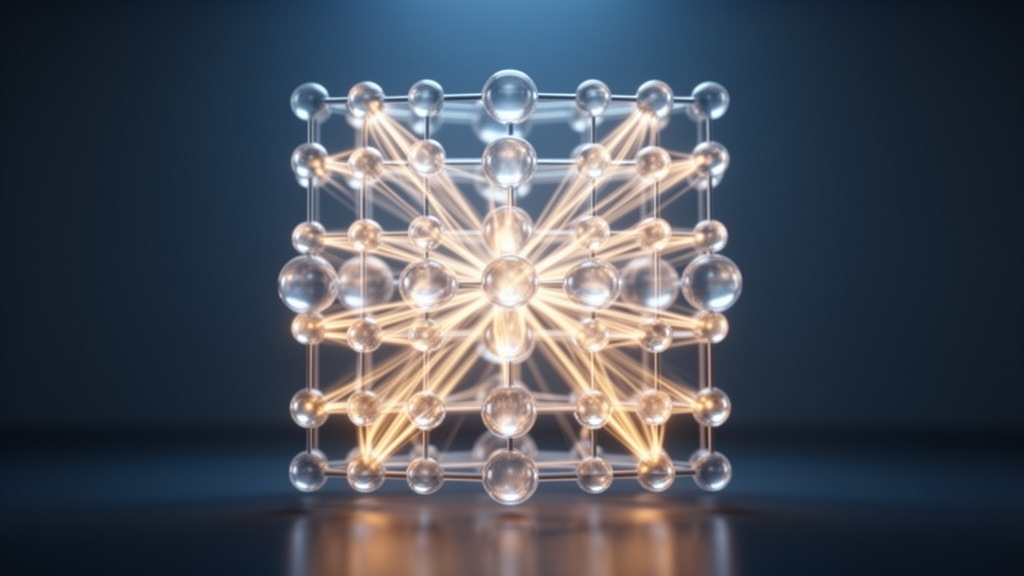
The authors note that chemically correct AAMs are ultimately determined by quantum-mechanical phenomena, and therefore cannot be reliably computed by solving graph-theoretical optimization problems defined only by the reactant and product structures. Their proposed way around this difficulty is to shift the focus: first identify a partial AAM that contains the reaction center, meaning the atoms incident with all bonds that change during the reaction, and then extend that partial map to the full reaction. The complete AAM of a reaction is faithfully represented by the Imaginary Transition State (ITS) graph, which provides a convenient graph-theoretic framework for analyzing when and how such an extension is possible.

Within this framework the researchers establish a clean characterization. They show that a unique extension of a partial AAM exists whenever, and only if, the partial maps cover the reaction center. In other words, coverage of the reaction center is both necessary and sufficient for uniqueness, a result that turns an intuitive chemical notion into a provable graph-theoretic condition. The uniqueness results are further generalized to partial AAMs in situations where hydrogen atoms are not represented explicitly, a common simplification in practical chemical databases that complicates the mapping problem.

For the computational side, the study shows that when hydrogens are implicit, the extension of a partial map can be computed by solving a constrained graph-isomorphism search between specific subgraphs of ITS graphs. This reformulation connects the reconstruction task to a well-studied algorithmic problem, giving a concrete route from partial information to a complete reaction map. The authors close by benchmarking different tools for this task, providing a practical comparison of available methods. The work thus offers both a theoretical guarantee — uniqueness tied to reaction-center coverage — and an algorithmic strategy for computing extensions, situating the results within the broader effort to reconstruct atom mappings computationally for synthesis planning and isotope-labeling studies.

Subject of Research: Uniqueness conditions and algorithms for extending partial atom-to-atom maps of chemical reactions

Article Title: Extension of partial atom-to-atom maps: uniqueness and algorithms

Article References: Laffitte, M. E. G., Phan, T.-L., & Stadler, P. F. (2026). Extension of partial atom-to-atom maps: uniqueness and algorithms. Algorithms for Molecular Biology, 21(1), Article 10. https://doi.org/10.1186/s13015-026-00300-5

Image Credits: AI Generated

DOI: 10.1186/s13015-026-00300-5

Keywords: atom-to-atom mapping, chemical reactions, Imaginary Transition State graph, graph isomorphism, reaction center, chemical databases, metabolomics, synthesis planning, algorithms, computational chemistry, Extension, partial

Cite Scienmag News

Blake Davidson. (October 28, 2026). When Partial Atom Maps Can Be Uniquely Completed: New Algorithmic Guarantees. Scienmag. https://scienmag.com/when-partial-atom-maps-can-be-uniquely-completed-new-algorithmic-guarantees/

Blake Davidson. "When Partial Atom Maps Can Be Uniquely Completed: New Algorithmic Guarantees." Scienmag, 28 October 2026, https://scienmag.com/when-partial-atom-maps-can-be-uniquely-completed-new-algorithmic-guarantees/. Accessed 29 October 2026.

Blake Davidson. "When Partial Atom Maps Can Be Uniquely Completed: New Algorithmic Guarantees." Scienmag. October 28, 2026. https://scienmag.com/when-partial-atom-maps-can-be-uniquely-completed-new-algorithmic-guarantees/

Tags: algorithmic guarantees in chemical informaticsalgorithmsalgorithms for molecular biologyatom mapping database reconstructionatom mapping in metabolomicsatom-to-atom mappingchemical databaseschemical reaction atom-to-atom mappingchemical reactionschemical synthesis planningcomputational chemistrycomputational methods for chemical reactionsExtensiongraph isomorphismgraph-theoretical optimization in chemistryImaginary Transition State graphMetabolomicspartialpartial atom map extensionquantum-mechanical influence on atom mapsreaction centerreaction center identificationsynthesis planningunique atom map reconstruction
Share26Tweet16
Previous Post

New ZERO framework puts AI data-centre water and carbon decisions before consumption

Next Post

Local Feed Supplement Boosts Milk Protein and Solids in Ugandan Dairy Cows

Related Posts

Midday Sunlight Yields Smaller Copper Nanoparticles With Stronger Antibacterial Activity
Biotechnology

Midday Sunlight Yields Smaller Copper Nanoparticles With Stronger Antibacterial Activity

October 29, 2026
LncRNA SBF2-AS1 Worsens Heart Injury After Attack via miR-149-5p/PHLPP2 Axis
Biology

LncRNA SBF2-AS1 Worsens Heart Injury After Attack via miR-149-5p/PHLPP2 Axis

October 29, 2026
Few-Shot AI Tool Reads Cancer Genome Rearrangements from Single-Cell Hi-C Data
Biotechnology

Few-Shot AI Tool Reads Cancer Genome Rearrangements from Single-Cell Hi-C Data

October 29, 2026
One Health Meets Mental Health: Rethinking Crisis Recovery in Ethiopia
Medicine

One Health Meets Mental Health: Rethinking Crisis Recovery in Ethiopia

October 29, 2026
Trichoderma Fungus Cuts Banana Wilt Damage and Boosts Yields in Lebanon Field Trials
Agriculture

Trichoderma Fungus Cuts Banana Wilt Damage and Boosts Yields in Lebanon Field Trials

October 29, 2026
Polyphenols in Korean health supplements: safety review flags regulatory gaps
Chemistry

Polyphenols in Korean health supplements: safety review flags regulatory gaps

October 29, 2026
Next Post
Local Feed Supplement Boosts Milk Protein and Solids in Ugandan Dairy Cows

Local Feed Supplement Boosts Milk Protein and Solids in Ugandan Dairy Cows

  • Mothers who receive childcare support from maternal grandparents show more optimized

    Mothers who receive childcare support from maternal grandparents show more parental warmth, finds NTU Singapore study

    27656 shares
    Share 11059 Tweet 6912
  • University of Seville Breaks 120-Year-Old Mystery, Revises a Key Einstein Concept

    1061 shares
    Share 424 Tweet 265
  • Bee body mass, pathogens and local climate influence heat tolerance

    682 shares
    Share 273 Tweet 171
  • Researchers record first-ever images and data of a shark experiencing a boat strike

    546 shares
    Share 218 Tweet 137
  • Groundbreaking Clinical Trial Reveals Lubiprostone Enhances Kidney Function

    531 shares
    Share 212 Tweet 133
Science

Embark on a thrilling journey of discovery with Scienmag.com—your ultimate source for cutting-edge breakthroughs. Immerse yourself in a world where curiosity knows no limits and tomorrow’s possibilities become today’s reality!

RECENT NEWS

  • Global Financing Facility falls short on adolescent health funding in three country case studies
  • Prostate Cancer Detection Rose After MRI Arrived, But a Single-Centre Study Says the Reason Stays Unclear
  • Midday Sunlight Yields Smaller Copper Nanoparticles With Stronger Antibacterial Activity
  • Never-Smoker COPD Shows Stronger Lung Function Gains from Salbutamol and Glycopyrronium

Categories

  • Agriculture
  • Anthropology
  • Archaeology
  • Athmospheric
  • Biology
  • Biotechnology
  • Blog
  • Bussines
  • Cancer
  • Chemistry
  • Climate
  • Earth Science
  • Editorial Policy
  • Marine
  • Mathematics
  • Medicine
  • Pediatry
  • Policy
  • Psychology & Psychiatry
  • Science Education
  • Science News
  • Social Science
  • Space
  • Technology and Engineering

Subscribe to Blog via Email

Enter your email address to subscribe to this blog and receive notifications of new posts by email.

Join 5,150 other subscribers

© 2025 Scienmag - Science Magazine

Welcome Back!

Login to your account below

Forgotten Password?

Retrieve your password

Please enter your username or email address to reset your password.

Log In
No Result
View All Result
  • HOME
  • SCIENCE NEWS
  • CONTACT US

© 2025 Scienmag - Science Magazine

Discover more from Science

Subscribe now to keep reading and get access to the full archive.

Continue reading