


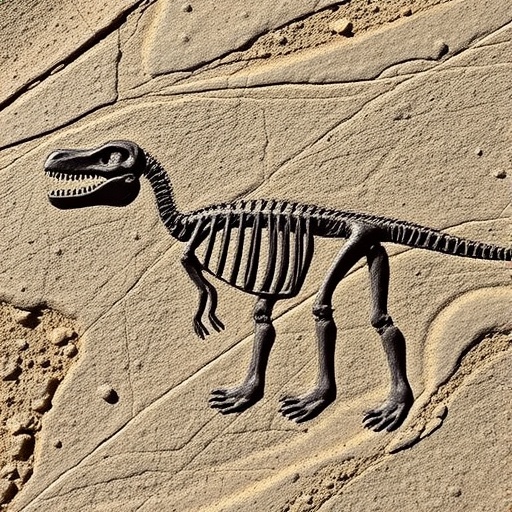
In a breakthrough paleontological study published recently in Nature, researchers have unveiled a rare and exceptionally complete fossil of a dome-headed pachycephalosaur unearthed in Mongolia’s Gobi Desert. The specimen, named Zavacephale rinpoche, extends the known fossil record of this enigmatic dinosaur group by approximately 15 million years and offers unparalleled insight into their cranial development, biology, and evolutionary history. This discovery not only reshapes scientific understanding of pachycephalosaur evolution but also provides a vital glimpse into their sociosexual behavior and growth patterns that have long puzzled experts.
Pachycephalosaurs, characterized by their distinctive thickened and ornamented skull domes, have captivated scientists and the public alike for decades. Yet despite their iconic status, the fossil record has been sparse and fragmentary, with many specimens represented only by partial skulls, hindering comprehensive study. The newly discovered Z. rinpoche specimen is the most complete skeleton known to date from this clade and, crucially, is also the oldest. Dating from approximately 108 million years ago during the Early Cretaceous, the find predates previously known pachycephalosaurs by a significant margin, filling a critical gap in the evolutionary timeline.
The fossil was meticulously excavated from the Khuren Dukh locality within the Eastern Gobi Basin, an area that during the Early Cretaceous was a verdant valley surrounded by cliffs and interspersed with lakes. This paleoenvironment would have supported diverse flora, consistent with the herbivorous diet inferred for pachycephalosaurs. Unlike larger adult members of the group, which could reach up to 14 feet in length and weigh over 800 pounds, Z. rinpoche was relatively small, measuring less than one meter at the time of death, potentially reflective of its juvenile status.
One of the most striking aspects of Zavacephale rinpoche is its exquisitely preserved cranial dome. Prior to this discovery, debates about dome formation and growth were hampered by a lack of juveniles and early diverging taxa. The new specimen has a fully formed dome but lacks the intricate ornamental elaborations seen in mature specimens of other pachycephalosaur species. This suggests an ontogenetic trajectory where primary dome formation precedes cranial ornamentation, shedding light on the developmental dynamics underlying these specialized structures.
Advanced osteohistological analyses conducted on slices of the specimen’s lower leg bones revealed that despite the complete dome, Z. rinpoche had not yet reached full somatic maturity. This decoupling between the development of sociosexual display structures and overall body growth is a remarkable find, providing concrete evidence that dome development may have been used for social signaling well before individuals attained their maximum body size. Such findings enrich our understanding of the life history strategies and complex social behaviors of these dinosaurs.
Beyond cranial features, Z. rinpoche also preserved manual elements and gastroliths—small stomach stones used to aid digestion—offering new pieces to the puzzle of pachycephalosaurian paleobiology. The manual elements contradict previous assumptions about the limb morphology and locomotion of the group, suggesting a nuanced body plan possibly adapted for specialized foraging behaviors. The presence of gastroliths further confirms the herbivorous diet and digestive mechanisms presumed for pachycephalosaurs, aligning them with other ornithischian dinosaurs.
The implications of this discovery extend to phylogenetic analyses. The placement of Zavacephale as one of the earliest diverging pachycephalosaurians recalibrates the timeline of frontoparietal dome evolution and clarifies macroevolutionary patterns in dome morphology. The dome likely evolved through a frontal-first developmental sequence while retaining open supratemporal fenestrae, paralleling ontogenetic stages observed in certain Late Cretaceous taxa. This nuanced evolutionary process underscores the iterative and mosaic nature of cranial dome acquisition within the clade.
From a behavioral ecology standpoint, the fossil strengthens hypotheses about the sociosexual functions of pachycephalosaur domes. Rather than serving practical purposes like predator defense or thermoregulation, the domes were probably vital display structures for intraspecific competition and mate attraction. The juvenile nature of Z. rinpoche coupled with its developed dome implies that these dinosaurs began practicing sociosexual behaviors, such as headbutting, early in life, perhaps as a form of social rehearsal or dominance establishment.
The integrated cranial and postcranial preservation of Z. rinpoche offers an unprecedented opportunity to correlate dome growth stages with skeletal maturity, a task previously impossible due to the fragmentary nature of most fossils. This context enriches interpretations of pachycephalosaur ontogeny, helping distinguish between species variation and individual growth-related morphological changes—a critical distinction given the taxonomic confusion often associated with cranial ornamentation.
Moreover, the exceptional preservation of tendons along the articulated tail adds to a more holistic reconstruction of pachycephalosaur anatomy and locomotion. These features may have contributed to balance and agility, complementing the bipedal stance suggested by limb morphology studies. Such anatomical insights contribute to a broader understanding of how these dinosaurs navigated their environment and interacted with contemporaneous species.
The interdisciplinary nature of the research, combining paleontological fieldwork with histological and phylogenetic analyses, exemplifies how modern methodologies are revolutionizing dinosaur science. Backed by substantial funding from the National Geographic Society and incorporating international collaborations spanning institutions in Mongolia, the United States, and South Africa, this project exemplifies the global effort to unlock Earth’s deep past.
Publication of the study in Nature marks a significant milestone in vertebrate paleontology, spotlighting Zavacephale rinpoche as a keystone species for understanding the evolutionary origins and biological nuances of pachycephalosaurs. This discovery not only enriches the fossil narrative of the Gobi Desert’s Early Cretaceous ecosystems but also propels research into dinosaur socioecology and developmental biology into new terrain.
As paleontologists continue to explore Mongolia’s rich fossil beds, the remarkable find of Z. rinpoche sets a precedent for future discoveries that challenge existing paradigms and deepen our appreciation of the diverse strategies life has employed through deep time. The vibrant dome of this “precious one” fossilized on a cliff face will undoubtedly inspire more detailed inquiries into the behavioral and evolutionary intricacies of dome-headed dinosaurs for years to come.
News Publication Date: 17-Sep-2025
Web References:
DOI: 10.1038/s41586-025-09213-6
Cite Scienmag News
Violet Maxwell. (September 17, 2025). ‘Teen’ Pachycephalosaur Discovered, Adds New Chapter to Fossil Record. Scienmag. https://scienmag.com/teen-pachycephalosaur-discovered-adds-new-chapter-to-fossil-record/
Violet Maxwell. "‘Teen’ Pachycephalosaur Discovered, Adds New Chapter to Fossil Record." Scienmag, 17 September 2025, https://scienmag.com/teen-pachycephalosaur-discovered-adds-new-chapter-to-fossil-record/. Accessed 4 September 2026.
Violet Maxwell. "‘Teen’ Pachycephalosaur Discovered, Adds New Chapter to Fossil Record." Scienmag. September 17, 2025. https://scienmag.com/teen-pachycephalosaur-discovered-adds-new-chapter-to-fossil-record/


