

Friday, September 4, 2026
Science
No Result
View All Result
  • Login
  • HOME
  • SCIENCE NEWS
  • CONTACT US
  • HOME
  • SCIENCE NEWS
  • CONTACT US
No Result
View All Result
Scienmag
No Result
View All Result
Home Science News Marine

TB under the sea: A marine sponge microbe provides insights into the evolution of tuberculosis

August 29, 2024
in Marine
Gavin Prescott
By Gavin Prescott Scienmag Editorial Profile - Ecology and Ecosystem Dynamics
Reading Time: 3 mins read
0
TB under the sea: A marine sponge microbe provides insights
67
SHARES
609
VIEWS
Share on FacebookShare on Twitter
ADVERTISEMENT

TB remains one of the world’s deadliest infectious diseases, yet the origins of M. tuberculosis are still not fully understood.

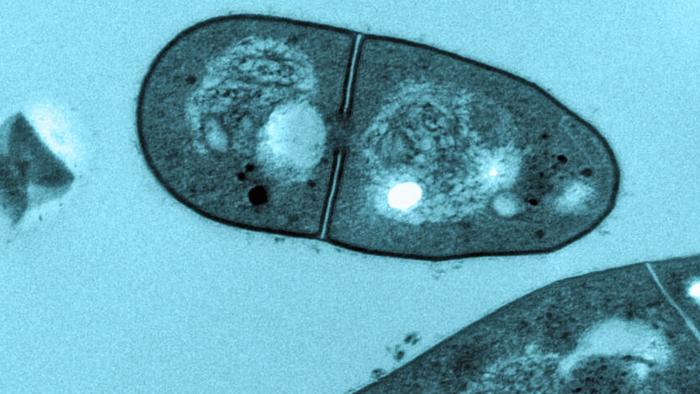
Mycobacterium spongiae under the microscope

Credit: Pidot and team at the Doherty Institute

TB under the sea: A marine sponge microbe provides insights into the evolution of tuberculosis

The surprising discovery of a bacterium in a marine sponge from the Great Barrier Reef with striking similarity to Mycobacterium tuberculosis, the pathogen responsible for tuberculosis (TB), could unlock and inform future TB research and treatment strategies.

TB remains one of the world’s deadliest infectious diseases, yet the origins of M. tuberculosis are still not fully understood.

In a new study published in PLOS Pathogens, research led by the Peter Doherty Institute for Infection and Immunity (Doherty Institute) details the newly identified bacterium, Mycobacterium spongiae, found in a marine sponge collected near Cooktown, Queensland.

Often referred to as ‘chemical factories’, marine sponges are a valuable source of bioactive compounds with potent anticancer, antibacterial, antiviral and anti-inflammatory properties. While studying a sponge specimen for its chemical-producing bacteria, researchers at the University of Queensland found a bacterium that puzzled them.

The sample was sent to the Doherty Institute, where the team conducted extensive analyses of the genes, proteins and lipids of M. spongiae. They discovered that it shares 80 per cent of its genetic material with M. tuberculosis, including some key genes associated with the bacteria’s ability to cause disease. However, the researchers found that, unlike M. tuberculosis, M. spongiae does not cause disease in mice, making it non-virulent.

The University of Melbourne’s Dr Sacha Pidot, a Laboratory Head at the Doherty Institute and co-lead author of the paper, said it was an exciting and important find.

“We were astounded to discover that this bacterium is a very close relative of M. tuberculosis,” said Dr Pidot.

“This finding provides new insights into the evolution of M. tuberculosis, suggesting that these pathogens may have originated from marine mycobacteria.”

The University of Melbourne’s Professor Tim Stinear, a Laboratory Head at the Doherty Institute and co-lead author of the paper, said that that this new knowledge is an important building block for future research.

“While there is more work to be done in this space, this discovery is a valuable piece in the puzzle of understanding how TB came to be such a serious disease,” said Professor Stinear.

“Our findings could help find weak links in M. tuberculosis to inform the development of new strategies such as vaccines to prevent and combat tuberculosis.”


Additional information: 

  • Peer review:  Pidot SJ, et al. Marine sponge microbe provides insights into evolution and virulence of the Tubercle bacillus. PLOS Pathogens (2024). DOI: 10.1371/journal.ppat.1012440
  • Funding: This project was supported by the National Health and Medical Research Council (NHMRC), the Australian Research Council (ARC), University of Queensland, the Agence Nationale pour la Recherche (ANR).
  • Collaboration: Authors who contributed were from Bio21 Institute, University of Queensland, Institut Pasteur, UK Health Security Agency, University of Otago and WEHI.


Journal

PLoS Pathogens

DOI

10.1371/journal.ppat.1012440

Method of Research

Data/statistical analysis

Article Title

Marine sponge microbe provides insights into evolution and virulence of the Tubercle bacillus

Article Publication Date

29-Aug-2024

COI Statement

The authors declare they have no conflict of interest.

Subject of Research: Marine

Article Title: TB under the sea: A marine sponge microbe provides insights into the evolution of tuberculosis

Article References: Original research article

Image Credits: AI Generated

DOI: Not provided

Keywords: Not provided

Cite Scienmag News

Gavin Prescott. (August 29, 2024). TB under the sea: A marine sponge microbe provides insights into the evolution of tuberculosis. Scienmag. https://scienmag.com/tb-under-the-sea-a-marine-sponge-microbe-provides-insights-into-the-evolution-of-tuberculosis/

Gavin Prescott. "TB under the sea: A marine sponge microbe provides insights into the evolution of tuberculosis." Scienmag, 29 August 2024, https://scienmag.com/tb-under-the-sea-a-marine-sponge-microbe-provides-insights-into-the-evolution-of-tuberculosis/. Accessed 4 September 2026.

Gavin Prescott. "TB under the sea: A marine sponge microbe provides insights into the evolution of tuberculosis." Scienmag. August 29, 2024. https://scienmag.com/tb-under-the-sea-a-marine-sponge-microbe-provides-insights-into-the-evolution-of-tuberculosis/

Share27Tweet17
Previous Post

Cultural traditions, not genetics or environment, inform nest architecture among white-browed sparrow weaver birds

Next Post

Researchers customizing power grid fault detection for solar and wind

Related Posts

Fish-prawn hybrid observed walking backward for the first time
Marine

Fish-prawn hybrid observed walking backward for the first time

September 3, 2026
Making climate governance actionable: a corpus-based analysis of institutionalizing climate change in tuna fisheries governance
Marine

Making climate governance actionable: a corpus-based analysis of institutionalizing climate change in tuna fisheries governance

September 3, 2026
Federal research chair program brings two global scholars to UVic
Marine

Federal research chair program brings two global scholars to UVic

September 3, 2026
Climate-smart marine planning framework designed to support biodiversity goals
Marine

Climate-smart marine planning framework designed to support biodiversity goals

August 29, 2026
Heat-tolerant corals may face greater disease risk, study finds
Marine

Heat-tolerant corals may face greater disease risk, study finds

August 28, 2026
Expanding Marine Social Sciences and Humanities into the Deep Ocean
Marine

Expanding Marine Social Sciences and Humanities into the Deep Ocean

August 28, 2026
Next Post

Researchers customizing power grid fault detection for solar and wind

  • Mothers who receive childcare support from maternal grandparents show more optimized

    Mothers who receive childcare support from maternal grandparents show more parental warmth, finds NTU Singapore study

    27656 shares
    Share 11059 Tweet 6912
  • University of Seville Breaks 120-Year-Old Mystery, Revises a Key Einstein Concept

    1061 shares
    Share 424 Tweet 265
  • Bee body mass, pathogens and local climate influence heat tolerance

    682 shares
    Share 273 Tweet 171
  • Researchers record first-ever images and data of a shark experiencing a boat strike

    546 shares
    Share 218 Tweet 137
  • Groundbreaking Clinical Trial Reveals Lubiprostone Enhances Kidney Function

    531 shares
    Share 212 Tweet 133
Science

Embark on a thrilling journey of discovery with Scienmag.com—your ultimate source for cutting-edge breakthroughs. Immerse yourself in a world where curiosity knows no limits and tomorrow’s possibilities become today’s reality!

RECENT NEWS

  • Agricultural waste turned into sustainable supramolecular fibers via wet spinning
  • How genes and sex jointly shape cognition in Philadelphia youth cohort
  • Warming and ammonium exposure in larvae shape adult frog outcomes
  • Does community health care cut hospital use? Australian evidence says yes

Categories

  • Agriculture
  • Anthropology
  • Archaeology
  • Athmospheric
  • Biology
  • Biotechnology
  • Blog
  • Bussines
  • Cancer
  • Chemistry
  • Climate
  • Earth Science
  • Editorial Policy
  • Marine
  • Mathematics
  • Medicine
  • Pediatry
  • Policy
  • Psychology & Psychiatry
  • Science Education
  • Social Science
  • Space
  • Technology and Engineering

Subscribe to Blog via Email

Enter your email address to subscribe to this blog and receive notifications of new posts by email.

Join 5,151 other subscribers

© 2025 Scienmag - Science Magazine

Welcome Back!

Login to your account below

Forgotten Password?

Retrieve your password

Please enter your username or email address to reset your password.

Log In
No Result
View All Result
  • HOME
  • SCIENCE NEWS
  • CONTACT US

© 2025 Scienmag - Science Magazine

Discover more from Science

Subscribe now to keep reading and get access to the full archive.

Continue reading