


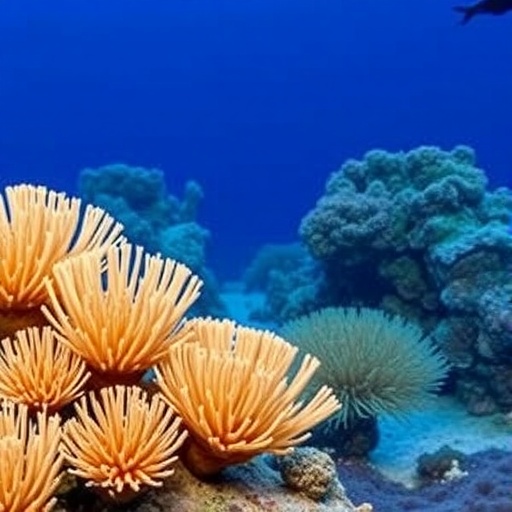
Corals that partner with heat-tolerant algae may be gaining a short-term defense against ocean warming while quietly becoming more vulnerable to disease, according to a new study from Boston University. The research, published in Science Advances, identifies an immune trade-off that could complicate efforts to engineer or restore reefs for a hotter future. Corals associated with the algal genus Durusdinium are widely recognized for their ability to withstand elevated temperatures and reduce the likelihood of bleaching. Yet the new findings suggest that this thermal advantage may come with a biological cost: when these corals encounter another stressor, such as a bacterial infection, their already activated immune system can intensify tissue damage rather than protect them. The result offers a possible explanation for why corals that appear highly resilient during heat waves may still experience substantial tissue loss or disease on reefs exposed to multiple pressures at once.
Corals are animals, but their survival depends heavily on a close partnership with microscopic algae living inside their tissues. These algae perform photosynthesis and transfer nutrients to their coral hosts, helping fuel growth and basic metabolism in nutrient-poor tropical waters. In return, the algae receive shelter and access to compounds needed for photosynthesis. This relationship, known as symbiosis, is central to the productivity and survival of coral reefs. During marine heat waves, however, the partnership can break down. Heat-stressed corals may expel their algae or lose algal pigments, producing the stark white appearance known as bleaching. Bleached corals are not automatically dead, but they have lost a major source of energy and become far more vulnerable if stressful conditions persist. Durusdinium can reduce this risk by supporting coral performance under higher temperatures, making it an attractive partner for reef restoration and assisted evolution strategies.
The Boston University study indicates that heat tolerance is not simply a matter of gaining protection without consequences. Corals hosting Durusdinium maintained their stress-response machinery in a heightened state. Such activation may help the animals respond rapidly to intense heat, allowing them to limit or delay bleaching during short-term thermal stress. But a defense system that remains switched on can become harmful when the original threat is followed by a second challenge. The researchers found that after heat exposure, these corals suffered greater tissue damage when challenged by bacteria than corals associated with less heat-tolerant algae. Their immune systems were not suppressed by the symbiosis; instead, they showed persistent upregulation of immune responses. This pattern resembles chronic inflammation in other biological systems, where prolonged activation can damage healthy tissue and interfere with normal repair.
The distinction matters because coral reefs rarely experience a single stressor in isolation. A coral living through a period of unusually warm water may also face declining water quality, sedimentation, nutrient pollution, physical damage, invasive organisms or disease-causing microbes. Each stressor can alter the animal’s physiology, and their effects may compound one another. A coral that survives heat because its algal partner helps maintain thermal performance could nevertheless be less prepared for the inflammatory consequences of infection. The findings therefore shift the way researchers may evaluate coral resilience. Survival during a heat challenge alone may not reveal how a coral will perform in the complex conditions of a natural reef. Resilience must also include the ability to recover, regulate immunity and withstand successive or simultaneous threats without losing tissue.
Lead author Jeric “JK” Da-Anoy, a recent PhD graduate of Boston University’s Davies Marine Population Genomics Lab, said the work challenges the expectation that symbiosis always dampens host immunity. Immune suppression is common in some long-term biological partnerships because excessive defense against a partner could destroy the relationship. In the corals examined in this study, however, association with Durusdinium was linked to a persistently active immune state. The coral host appeared to retain, and in some circumstances intensify, its innate immune responses. Innate immunity is the ancient, rapid defense system that recognizes broad molecular patterns associated with tissue damage or microbes. It does not rely on the highly specialized memory responses found in vertebrate adaptive immunity. In corals, innate defenses include cellular, biochemical and gene-regulatory processes that help detect and contain threats. When these pathways remain activated after heat stress, a later pathogen challenge may provoke an excessive reaction.
That possibility could help explain an observation that has puzzled reef scientists: some corals that resist bleaching can still be unusually prone to disease or tissue loss. Heat tolerance is often treated as a single desirable trait, but the study suggests it is produced by a network of physiological changes that may affect other functions. The algal partner can alter the chemical environment inside coral tissues, the flow of nutrients between symbiotic organisms and the regulation of genes involved in stress and immunity. Those changes may improve performance under one environmental condition while reducing flexibility under another. The researchers’ findings do not mean that every coral hosting Durusdinium will inevitably develop disease, nor that heat-tolerant algae are harmful in general. Rather, they reveal a context-dependent trade-off: the same biological configuration that helps a coral withstand short periods of high temperature may leave it more vulnerable when heat is followed by infection or another source of tissue stress.
The implications reach beyond laboratory biology and into the rapidly developing field of coral restoration. As oceans warm, scientists and conservation groups are investigating whether corals can be “supercharged” with heat-tolerant symbiotic algae before being returned to degraded reefs. The approach could improve the chances that restored corals survive increasingly frequent marine heat waves. But if the resulting colonies are more susceptible to pathogens or other stressors, restoration programs could unintentionally favor corals that perform well during one type of disturbance and fail during the next. Senior author Sarah W. Davies, an associate professor of biology at Boston University, emphasized that inducing heat tolerance is not free. Effective restoration may require testing corals across combinations of heat, pathogens and environmental degradation rather than selecting them solely for resistance to bleaching. The goal would be to identify partnerships that provide broad resilience, not just protection from a single threat.
The research also highlights the importance of studying coral immunity as part of the biology of symbiosis rather than treating the algal partner as an independent source of heat resistance. A coral’s response to climate stress emerges from interactions between the host animal, its microbial partners and the surrounding environment. Understanding those interactions could help scientists predict which coral-algal combinations are most likely to persist as conditions change. The study involved undergraduate students in Boston University’s Marine Semester, who helped care for corals, monitor water quality, conduct heat-challenge experiments and collect data under Da-Anoy’s mentorship. Their participation reflects the collaborative nature of reef science, where careful observation and repeated physiological measurements are needed to connect molecular responses with visible outcomes such as bleaching and tissue loss. As climate change drives more reefs into unfamiliar environmental conditions, recognizing hidden costs of resilience may prove as important as finding new ways to increase it.
The study’s central message is not that heat-tolerant corals should be rejected, but that their advantages must be assessed realistically. A coral that remains alive during a heat wave represents an important conservation opportunity, yet long-term survival depends on what happens afterward. If its immune system remains in a state resembling chronic inflammation, exposure to microbes may trigger damage that erodes the very tissue protected from bleaching. Reef restoration strategies will therefore need to account for sequences of stress rather than isolated events, measuring how corals regulate immunity, recover from heat and respond to pathogens over time. The findings provide a molecular framework for investigating why some apparently robust corals fail under natural conditions and may guide the selection of symbiotic partnerships better suited to a world where warming, disease and environmental degradation increasingly arrive together.
Cite Scienmag News
Violet Maxwell. (August 28, 2026). Heat-tolerant corals may face greater disease risk, study finds. Scienmag. https://scienmag.com/heat-tolerant-corals-may-face-greater-disease-risk-study-finds/
Violet Maxwell. "Heat-tolerant corals may face greater disease risk, study finds." Scienmag, 28 August 2026, https://scienmag.com/heat-tolerant-corals-may-face-greater-disease-risk-study-finds/. Accessed 3 September 2026.
Violet Maxwell. "Heat-tolerant corals may face greater disease risk, study finds." Scienmag. August 28, 2026. https://scienmag.com/heat-tolerant-corals-may-face-greater-disease-risk-study-finds/


