

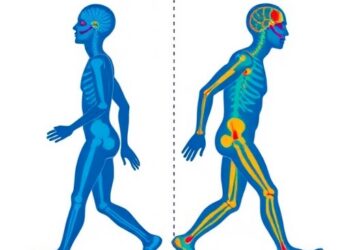
Motor and Non-Motor Symptoms Shape Mobility Capacity and Performance in Parkinson’s Disease
Parkinson’s disease is often introduced through its most visible symptoms: tremor, stiffness and slowed movement. Yet the condition can disrupt ...
Parkinson’s disease is often introduced through its most visible symptoms: tremor, stiffness and slowed movement. Yet the condition can disrupt ...

Parkinson’s disease may alter one of the brain’s most fundamental calculations: whether an action is worth the effort it demands. ...
Parkinson’s disease treatment is entering an era in which the brain may no longer be viewed as a static target, ...
Parkinson’s disease is often described as a disorder of movement, but a new study suggests that the illness may also ...
Parkinson’s disease and multiple system atrophy can begin with remarkably similar symptoms: slowed movement, stiffness, tremor, balance problems and changes ...
Researchers at Weill Cornell Medicine have revealed how LRRK2, a protein strongly associated with Parkinson’s disease, switches between inactive and ...
Parkinson’s disease is widely recognized for its tremor, slowed movement and muscle rigidity, but a new study is drawing attention ...
A new study is bringing molecular precision to one of Parkinson’s disease’s most important biological puzzles: why changes in the ...
Parkinson’s disease research is increasingly turning its attention away from neurons alone. A new study by Smits, Magni, Grzyb and ...
Parkinson’s disease is often described as a disorder of movement, but one of its most disabling symptoms can be defined ...

Embark on a thrilling journey of discovery with Scienmag.com—your ultimate source for cutting-edge breakthroughs. Immerse yourself in a world where curiosity knows no limits and tomorrow’s possibilities become today’s reality!