


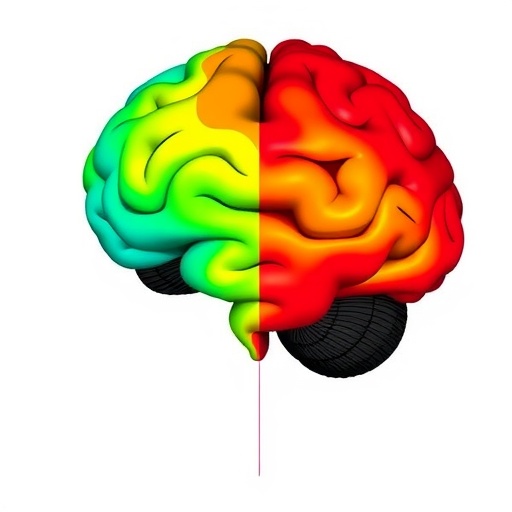
Parkinson’s disease may alter one of the brain’s most fundamental calculations: whether an action is worth the effort it demands. A new study published in npj Parkinson’s Disease reports that the condition’s effect on this calculation may be driven less by a diminished ability to value rewards than by a distorted perception of effort itself. The finding challenges a common assumption about motivation in Parkinson’s disease and points toward a more precise explanation for why everyday tasks can feel disproportionately demanding, even when the expected benefits remain meaningful.
The research, led by J.M. Wood, A.N. Eyssalenne, A.S. Therrien and colleagues, examines the effort–reward trade-off, a decision-making process in which the brain weighs the potential value of an outcome against the physical or mental work required to obtain it. Every choice, from standing up and walking across a room to completing a demanding cognitive task, involves some version of this calculation. In Parkinson’s disease, disruptions to neural circuits involved in movement, motivation and reinforcement learning can change how these decisions are made. The new work suggests that the critical disruption may lie in how costly effort feels, rather than in how attractive a reward appears.
This distinction is scientifically important because “motivation” is not a single process. It includes the ability to detect a reward, assign value to it, anticipate the pleasure or benefit it may provide, and mobilize the effort needed to obtain it. Parkinson’s disease is best known for motor symptoms such as slowness, rigidity and tremor, but many people also experience reduced initiation, fatigue, apathy and difficulty sustaining action. These symptoms can look like a loss of interest or reward sensitivity from the outside. However, a person may still want an outcome while experiencing the route toward it as unusually effortful, physically expensive or psychologically burdensome.
The brain systems most relevant to this problem include networks connecting the prefrontal cortex, striatum and midbrain dopamine centres. Dopamine helps regulate movement, learning and the allocation of energy toward potentially valuable goals. In Parkinson’s disease, the loss of dopamine-producing neurons, particularly in the substantia nigra, disrupts signalling through basal ganglia circuits. These circuits do not simply generate movement; they help the brain select actions, estimate their likely consequences and determine whether the expected payoff justifies the work involved. A change in any part of this system could shift behaviour toward avoiding effort, but the behavioural signature may reveal which calculation has been altered.
To separate these components, the investigators focused on decisions that require participants to compare different levels of exertion with different rewards. Such tasks are designed to distinguish reward sensitivity from effort perception. If reward sensitivity is impaired, a person may respond weakly to larger incentives, showing little increase in willingness to work for a more valuable outcome. If effort perception is impaired, the person may instead judge the same physical or cognitive demand as more costly, leading to a stronger reluctance to choose effortful options even when the reward remains appealing. According to the study’s central finding, Parkinson’s disease was associated with the latter pattern.
The result reframes what may appear to be “low motivation.” A patient who declines an activity may not be indifferent to its outcome. Rather, the anticipated exertion may be inflated by the nervous system’s internal calculations. This distinction could help explain why people with Parkinson’s disease sometimes engage readily in activities that are highly rewarding, externally structured or emotionally significant, yet struggle with routine actions whose benefits are delayed or modest. The barrier may not be a failure to recognize value, but a mismatch between the estimated cost of acting and the actual cost of completing the task.
Effort perception is itself a complex biological process. It incorporates signals from muscles and joints, cardiovascular and respiratory systems, attention networks and motor-control circuits. The brain continually predicts how difficult a task will be and updates that prediction as the action unfolds. In Parkinson’s disease, impaired movement can increase the real physical work required for an action, while altered neural signalling may also magnify the anticipated burden. The result is a feedback loop: movement becomes slower or less efficient, the brain predicts greater effort, and those predictions may further discourage initiation. The study’s interpretation suggests that these subjective cost signals deserve greater attention in both research and clinical care.
The findings may also influence how treatments are evaluated. Dopaminergic medications are commonly used to improve motor symptoms, but their effects on motivation and effort-based decision-making may not be uniform. A treatment that improves movement does not necessarily normalize the perception of effort, and a strategy that changes reward processing may not address an inflated sense of exertion. Understanding which component of the decision is disrupted could lead to more targeted interventions, including medication adjustments, rehabilitation programs, behavioural techniques and environmental changes that reduce unnecessary effort or make goals more immediate and concrete.
At the same time, the study does not suggest that reward processing is irrelevant in Parkinson’s disease, nor does it imply that every patient experiences effort in the same way. Parkinson’s disease is biologically and clinically heterogeneous, with symptoms shaped by disease stage, medication status, mood, cognition, sleep and individual differences in brain circuitry. Effort-related decisions can also vary according to whether the task is physical or mental, whether the reward is immediate or delayed, and whether the activity carries personal or social meaning. The research instead identifies impaired effort perception as the more influential factor in the specific effort–reward trade-off examined by the investigators.
The broader message is that motivation should be treated as a measurable interaction between value and cost, not as a simple presence-or-absence trait. By showing that people with Parkinson’s disease may retain reward sensitivity while perceiving effort as unusually burdensome, the study offers a more nuanced framework for understanding apathy, fatigue and reduced activity. It also highlights a potential path toward more individualized care: asking not only what patients want, but what they believe it will take to achieve it. In the effort–reward calculations that shape daily life, correcting the perceived price of action could be as important as restoring the appeal of the reward.
Cite Scienmag News
Cassandra Pierce. (August 13, 2026). Parkinson’s Disease Effort-Reward Decisions Disrupted by Impaired Effort Perception, Not Reward Sensitivity. Scienmag. https://scienmag.com/parkinsons-disease-effort-reward-decisions-disrupted-by-impaired-effort-perception-not-reward-sensitivity/
Cassandra Pierce. "Parkinson’s Disease Effort-Reward Decisions Disrupted by Impaired Effort Perception, Not Reward Sensitivity." Scienmag, 13 August 2026, https://scienmag.com/parkinsons-disease-effort-reward-decisions-disrupted-by-impaired-effort-perception-not-reward-sensitivity/. Accessed 3 September 2026.
Cassandra Pierce. "Parkinson’s Disease Effort-Reward Decisions Disrupted by Impaired Effort Perception, Not Reward Sensitivity." Scienmag. August 13, 2026. https://scienmag.com/parkinsons-disease-effort-reward-decisions-disrupted-by-impaired-effort-perception-not-reward-sensitivity/


