


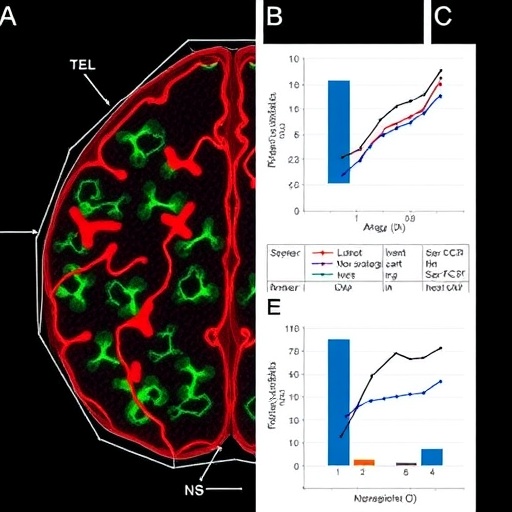
Parkinson’s disease research is increasingly turning its attention away from neurons alone. A new study by Smits, Magni, Grzyb and colleagues reports that the Parkinson’s-associated LRRK2-G2019S mutation may disrupt the development of astrocytes, the star-shaped support cells that help maintain the brain’s chemical balance, protect neurons and regulate local inflammation. The findings, published in npj Parkinson’s Disease, suggest that this widely studied genetic alteration could damage the brain not only by affecting neurons directly, but also by changing the behavior and identity of the cells that surround them.
LRRK2-G2019S is one of the most common genetic mutations linked to inherited Parkinson’s disease. It changes a single amino acid in the LRRK2 protein, an enzyme involved in cellular signaling and membrane trafficking. The mutation increases the kinase activity of LRRK2, effectively turning up a molecular switch that regulates several processes inside cells. Although the mutation has long been associated with neuronal vulnerability, scientists have increasingly recognized that LRRK2 is active in multiple brain cell types, including astrocytes. The new work places astrocyte development at the center of that story.
Astrocytes are not passive structural cells. They absorb excess neurotransmitters, help control potassium and energy levels, support the blood-brain barrier and release molecules that can either protect neurons or intensify inflammation. During development, immature neural cells must pass through carefully controlled stages before becoming fully functional astrocytes. The study indicates that the LRRK2-G2019S mutation impairs this differentiation process, meaning that cells carrying the mutation may fail to acquire the molecular and functional features expected of mature astrocytes.
That developmental disruption could have consequences far beyond a simple change in cell identity. A healthy astrocyte population helps create a stable environment for neuronal communication. If astrocytes remain immature or acquire abnormal properties, they may be less able to regulate synaptic signaling, remove potentially harmful molecules or support the metabolic demands of neurons. In Parkinson’s disease, where dopamine-producing neurons in the substantia nigra are particularly vulnerable, even modest disturbances in the surrounding cellular environment could contribute to progressive damage.
The researchers also identified a senescence-like phenotype associated with the mutation. Cellular senescence is a state in which cells stop dividing and undergo profound changes in gene expression and metabolism. Senescent cells can remain alive, but they often release a mixture of inflammatory signaling molecules, growth factors and enzymes known collectively as the senescence-associated secretory phenotype. The term “senescence-like” is important: it indicates that the cells display characteristics associated with senescence without necessarily proving that they meet every definition of classical, irreversible cellular senescence.
In astrocytes, such a state could be particularly disruptive. These cells communicate continuously with neurons, immune cells and other glial cells. If mutation-bearing astrocytes begin releasing inflammatory mediators or lose their normal support functions, they could help create a self-reinforcing cycle of neural stress. Inflammation may alter neuronal activity, impaired metabolic support may increase vulnerability, and damaged signaling between astrocytes and neurons may further intensify cellular dysfunction. The result would be a biological environment in which Parkinson’s-related pathology can spread or worsen.
The study’s implications extend to how researchers model Parkinson’s disease in the laboratory. Many experiments rely heavily on neurons derived from patient cells, but the new findings underscore the importance of studying the surrounding cellular ecosystem. Human stem-cell-derived models can be used to examine how genetic mutations influence the transition from neural precursor cells to astrocytes and how those astrocytes behave once mature. Comparing cells carrying LRRK2-G2019S with genetically corrected controls may help distinguish mutation-specific effects from changes caused by the process of cell culture itself.
The findings may also influence the search for therapies targeting LRRK2. Several experimental strategies aim to reduce the mutation’s excessive kinase activity, but the consequences of altering LRRK2 signaling may differ between cell types. A treatment that protects neurons could have unexpected effects on astrocyte development or inflammatory behavior, while a therapy that restores astrocyte function might complement neuron-focused approaches. The new results therefore support a broader therapeutic strategy in which LRRK2 biology is investigated across the brain’s interconnected cell populations rather than in dopamine neurons alone.
At the same time, the research does not establish that astrocyte dysfunction is the sole cause of Parkinson’s disease or that every person carrying LRRK2-G2019S will develop the same cellular changes. Parkinson’s disease is biologically diverse, shaped by genetic background, aging, environmental exposures and interactions among neurons, astrocytes, microglia and other cell types. Further studies will be needed to determine whether the senescence-like phenotype occurs in living human brain tissue, whether it can be reversed, and which molecular signals connect impaired astrocyte differentiation to neuronal degeneration.
By highlighting astrocytes as an early and active target of LRRK2-G2019S, the study adds a new layer to the biology of Parkinson’s disease. The mutation appears capable of altering the brain’s support network before researchers even consider the final loss of vulnerable neurons. That possibility is generating interest because it suggests that future interventions may need to preserve cellular identity and tissue communication at the earliest stages of disease. In Parkinson’s research, the message is increasingly clear: understanding the neurons may not be enough unless scientists also understand the cells that keep them alive.
Cite Scienmag News
Cassandra Pierce. (August 5, 2026). Parkinson’s-linked LRRK2 mutation disrupts astrocyte development and induces senescence-like changes. Scienmag. https://scienmag.com/parkinsons-linked-lrrk2-mutation-disrupts-astrocyte-development-and-induces-senescence-like-changes/
Cassandra Pierce. "Parkinson’s-linked LRRK2 mutation disrupts astrocyte development and induces senescence-like changes." Scienmag, 5 August 2026, https://scienmag.com/parkinsons-linked-lrrk2-mutation-disrupts-astrocyte-development-and-induces-senescence-like-changes/. Accessed 3 September 2026.
Cassandra Pierce. "Parkinson’s-linked LRRK2 mutation disrupts astrocyte development and induces senescence-like changes." Scienmag. August 5, 2026. https://scienmag.com/parkinsons-linked-lrrk2-mutation-disrupts-astrocyte-development-and-induces-senescence-like-changes/


