


X-ray scans reveal the wing secrets of a tiny 100-million-year-old singing cricket
Synchrotron microtomography has delivered the first complete 3D reconstruction of a fossil cricket's forewing, revealing the venation of the smallest ...
Synchrotron microtomography has delivered the first complete 3D reconstruction of a fossil cricket's forewing, revealing the venation of the smallest ...
Researchers identified a new species of extinct Paleocene shark, Palaeohypotodus bizzocoi, from 17 teeth collected more than a century ago ...
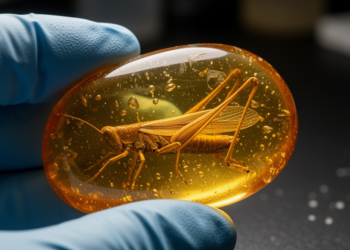
A newly described pygmy grasshopper preserved in 40-million-year-old Baltic amber possesses the longest forewings ever recorded in its family, challenging ...
A wasp fossil overlooked for decades in a French museum collection has been described as a new species of extinct ...
Rediscovered lizard fossils from the Paleocene site of Walbeck in Germany have been reclassified, revealing that lacertids, not amphisbaenians, dominated ...
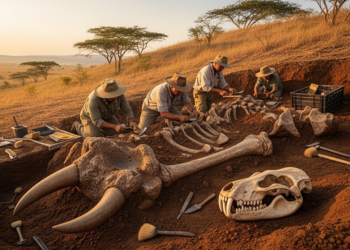
A new Late Pleistocene site in western Venezuela preserves giant sloths, glyptodonts, gomphotheres, horses and an ocelot-like cat, dating to ...
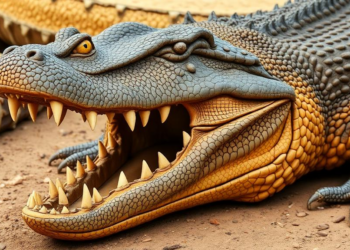
Fossilized jaws from an Arizona quarry, long assigned to Hadrokkosaurus, reveal a distinct brachyopoid temnospondyl with fewer, larger teeth, adding ...
A single plastral fragment from the Messel Pit reveals a turtle species not previously recorded at the famous Eocene fossil ...

Fossilized bird and mammal footprints in Iran's Oligocene Lower Red Formation, including two newly named ichnotaxa and the first record ...
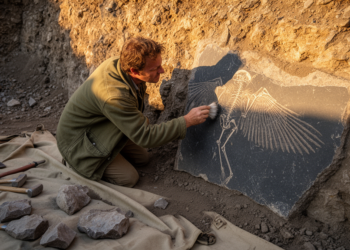
A new Archaeopteryx fossil from Bavaria provides new insights into early bird evolution and highlights the importance of taphonomic analysis ...


Embark on a thrilling journey of discovery with Scienmag.com—your ultimate source for cutting-edge breakthroughs. Immerse yourself in a world where curiosity knows no limits and tomorrow’s possibilities become today’s reality!