

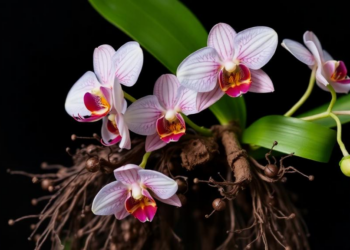
Orchid Species Identity, Not Life Form, Shapes Root Bacterial Communities
In ten Cymbidium orchid species grown under uniform greenhouse conditions, host species identity was a far stronger correlate of root ...
In ten Cymbidium orchid species grown under uniform greenhouse conditions, host species identity was a far stronger correlate of root ...
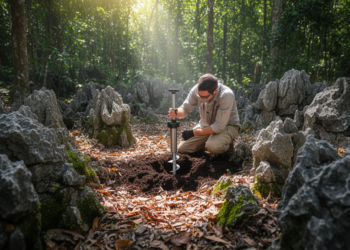
A year-long study in a subtropical karst forest found that soil bacterial communities in forest gaps turned over faster with ...

A six-year study of the Yellow Sea found that marine heatwaves, typhoons, and cyclones sharply reduced fungal plankton diversity, while ...
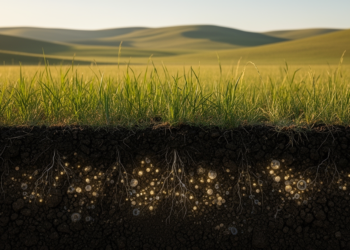
A study of 278 soil samples from Chinese grasslands shows abundant bacteria tolerate nutrient-poor conditions and contribute more to carbon ...
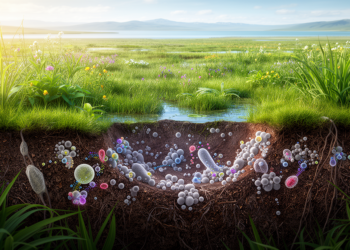
Amplicon surveys across four dominant plant communities around Qinghai Lake reveal that Leymus secalinus soils harbor the richest primer-defined nosZ ...
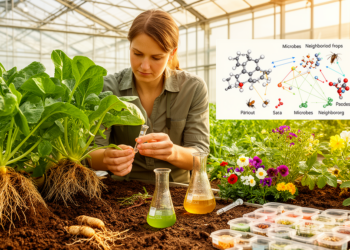
A review finds that agricultural allelopathy depends on plant identity, chemical mixtures, soil processes, microbial transformations and realistic exposure.
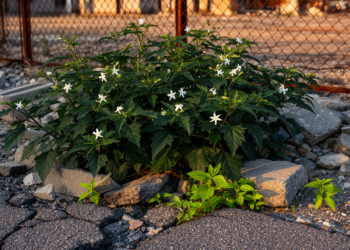
An observational study in northern Poland associated the occurrence of Solanum nitidibaccatum with the environmental conditions, plant traits and diversity ...
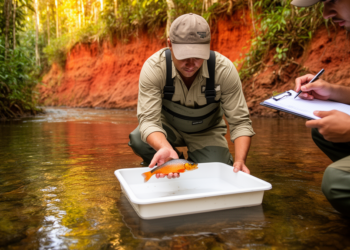
An analysis of 16,014 records representing 905 fish species from the Colombian Western Amazon found strong associations between species composition, ...

A study of Siberian Rubythroat found that dorsal and ventral feather mite abundances were associated differently across wing positions, with ...

A two-season survey of the upper Chishui River found that bacterial communities remained mainly structured by homogeneous selection, while dry-season ...


Embark on a thrilling journey of discovery with Scienmag.com—your ultimate source for cutting-edge breakthroughs. Immerse yourself in a world where curiosity knows no limits and tomorrow’s possibilities become today’s reality!