


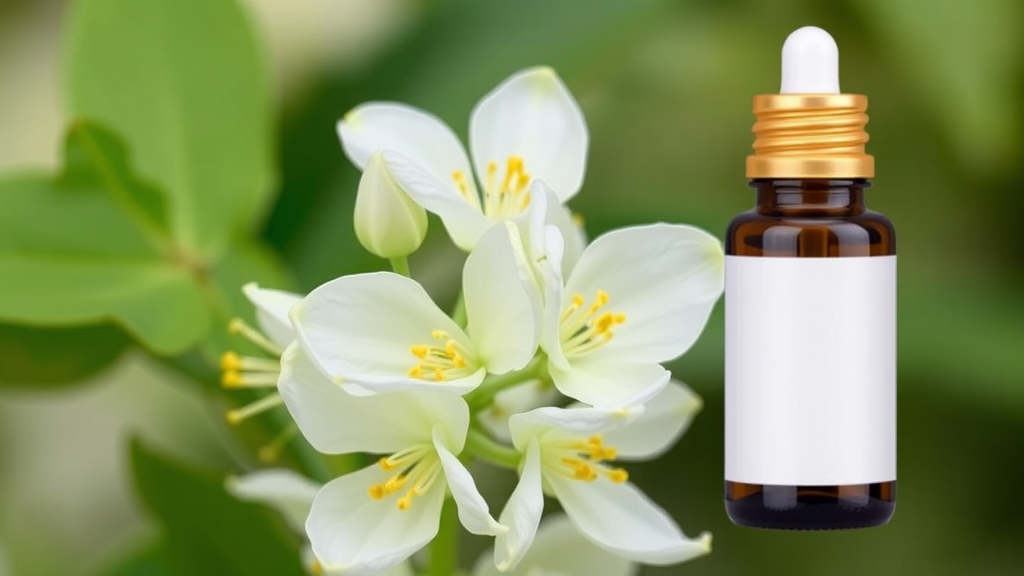
The fragrance industry has long treasured Osmanthus fragrans, the sweet olive tree whose tiny golden blossoms perfume some of the world’s most expensive teas and fine fragrances. A new study published in Applied Microbiology and Biotechnology suggests the flower’s essential oil may deserve attention far beyond the perfume counter. An international team of researchers led by Miroslava Kačániová of the Slovak University of Agriculture, together with colleagues from China, Mexico, Tunisia, Italy, and Poland, has carried out a detailed chemical and biological investigation of Osmanthus fragrans essential oil, known as OFEO. Their findings indicate that the oil is a formidable antimicrobial agent, an effective disruptor of bacterial biofilms, and a surprisingly potent natural insecticide. As the food industry searches for sustainable alternatives to synthetic preservatives and pesticides, the results point to a fragrant flower as a candidate for improving food safety, extending shelf life, and managing insect pests.
The research began with a rigorous chemical characterization of the oil using gas chromatography coupled with mass spectrometry, a standard analytical technique for resolving complex volatile mixtures. GC-MS analysis identified twenty-seven distinct volatile compounds that together define the chemical signature of OFEO. Three constituents dominated the profile: trans-beta-ionone accounted for 24.1 percent of the oil, linalool contributed 18.0 percent, and a furanone compound, 2(3H)-furanone, made up 9.0 percent. This composition matters because these molecules are not merely aromatic; each has a documented reputation in the scientific literature for antimicrobial and antibiofilm effects. Trans-beta-ionone, an ionone-class terpenoid responsible for the floral and woody notes of osmanthus, and linalool, a terpene alcohol found in lavender and coriander, are both known to disrupt microbial membranes. The presence of these compounds at such high concentrations provided the team with a chemical rationale for expecting strong biological activity, and subsequent laboratory testing largely confirmed those expectations.
The antimicrobial evaluation covered a broad spectrum of microorganisms, including both Gram-positive and Gram-negative bacteria as well as yeasts. The researchers quantified activity using minimum inhibitory concentrations, reporting MIC50 values ranging from 0.072 to 3.16 milligrams per milliliter across the tested strains. That range spans two orders of magnitude, which is biologically informative: some microbes are exquisitely sensitive to the oil, while others resist it with considerably more tenacity. Notably, the most resistant organism in the panel was Salmonella enterica, a biofilm-forming strain and one of the most consequential foodborne pathogens worldwide. This tolerance fits with well-established biology. Gram-negative bacteria such as Salmonella are shielded by an outer membrane that limits penetration of hydrophobic compounds like the terpenoids in essential oils, and bacteria embedded in biofilms are further protected by an extracellular matrix that acts as a diffusion barrier. The differential sensitivity observed here reflects these structural defenses and helps define where OFEO might be most useful in practice.
Biofilms, the structured microbial communities that adhere to surfaces and encase themselves in protective polymeric material, are among the food industry’s most persistent problems. Salmonella biofilms colonize food processing equipment, resist routine cleaning, and serve as recurring sources of contamination. To probe how OFEO affects biofilms at a molecular level, the researchers turned to MALDI-TOF mass spectrometry, using spectral profiling to compare biofilms before and after treatment. MALDI-TOF MS works by ionizing a sample’s proteins and other biomolecules and measuring their mass-to-charge ratios, producing a fingerprint that reflects the organism’s overall biochemical state. In this study, the spectral profiles of Salmonella biofilms changed measurably after exposure to OFEO. Those differences indicated that the oil disrupts biological processes essential to the structure and function of the biofilm, weakening the machinery that holds the community together rather than simply killing individual cells. This antibiofilm mechanism is particularly valuable because biofilm-embedded cells tolerate conventional antibiotics and disinfectants at concentrations many times higher than those needed for free-floating planktonic cells.
One of the study’s most practically significant components moved beyond the laboratory dish into in situ testing on real food matrices. The team applied OFEO in the vapor phase to fresh fruits and vegetables, including apple, peach, beetroot, and carrot, and monitored microbial growth on the treated produce. The results showed inhibition of microbial growth, but with an important nuance: the effect was both matrix- and concentration-dependent. In other words, the same dose of oil that effectively suppressed microbes on one type of produce may have performed differently on another. This variability is expected from the physics of essential oil vapors, whose partitioning between the gas phase, the food surface, and the food’s internal tissues varies with composition, water activity, and surface chemistry. Vapor-phase application itself is an appealing strategy for food preservation because it requires no direct contact between the oil and the food, distributes evenly in sealed packaging, and avoids altering the sensory properties of the product as readily as direct liquid application might.
The insecticidal arm of the study added another dimension to OFEO’s potential applications. The researchers tested the oil against Megabruchidius dorsalis, a seed beetle that belongs to the bruchid group of storage pests responsible for substantial post-harvest losses in legumes and other stored goods. The results were striking. At full concentration, the oil achieved one hundred percent mortality of the insects, and even at lower doses it produced significant mortality. These findings matter because conventional synthetic insecticides face mounting regulatory restrictions, consumer resistance, and the persistent problem of resistance development in pest populations. Plant-derived volatile compounds offer an alternative mode of action, often targeting insect nervous systems or respiratory processes through mechanisms distinct from those of conventional insecticides. A floral oil that doubles as a fumigant against storage pests could be integrated into pest management programs for stored products, complementing or partially replacing synthetic chemicals.
Taken together, the study’s three biological activities form a coherent picture. The same volatile constituents that inhibit planktonic bacteria also attack biofilms and kill insects, reflecting the nonspecific but effective ways in which essential oil compounds interact with biological membranes. Terpenoids and related molecules are lipophilic and partition into lipid bilayers, disturbing membrane integrity, dissipating proton motive force, and leaking essential cellular contents. In insects, these same properties interfere with cuticular barriers and respiratory surfaces. The breadth of activity is a feature, not a bug, for food applications where a single agent might simultaneously suppress spoilage organisms, inhibit pathogen colonization, and deter pests. The researchers concluded that their results support the potential of OFEO as a natural antimicrobial, antibiofilm, and insecticidal agent suitable for improving food safety, extending shelf life, and managing pests in the food industry.
The scientific team itself was international and multidisciplinary, reflecting the scale of expertise needed to span analytical chemistry, microbiology, mass spectrometry, and entomology. Alongside Kačániová and Qiao from Nitra, the collaboration included Zhaojun Ban and Jian Lou at Zhejiang University of Science and Technology in Hangzhou, Li Li at Zhejiang University, Joel Horacio Elizondo-Luevano at the Universidad Autónoma de Nuevo León in Mexico, Anis Ben Hsouna and Rania Ben Saad at the Centre of Biotechnology of Sfax in Tunisia, Alessandro Bianchi at the University of Pisa, and Stefania Garzoli of Sapienza University in Rome, who served as corresponding author. The work was funded by Slovak grant programs, including APVV-20-0058 on essential oils from aromatic plants for medical use and food preservation, and VEGA 1/0059/24 on plant volatile mixtures. The authors note that language editing assistance was used but did not contribute to data collection, analysis, or interpretation.
Several caveats and open questions remain before OFEO could reach commercial practice. Laboratory MIC values do not automatically translate into effective, economically viable treatment doses on industrial equipment or packaged produce, and the observed matrix dependence means formulations would need to be optimized for each food type. Regulatory approval for food-contact applications, allergen considerations for consumers sensitive to linalool, and the cost of producing sufficient quantities of osmanthus oil, which comes from one of the more expensive florals in the industry, all present practical hurdles. Yet the study contributes something the field genuinely needed: a complete chemical fingerprint of OFEO paired with quantified antimicrobial, antibiofilm, and insecticidal data, and a molecular-level view of biofilm disruption via MALDI-TOF profiling. Published open access with a permanent DOI, the work invites follow-up studies on formulation, encapsulation to stabilize volatile compounds, and pilot-scale trials. For now, the message is that a flower prized for its scent may also be a chemical arsenal, and the food industry is watching.
Subject of Research: Antimicrobial, antibiofilm, and insecticidal properties of Osmanthus fragrans essential oil for food preservation
Article Title: Osmanthus fragrans essential oil: GC-MS chemical composition, antimicrobial, antibiofilm, and insecticidal properties
Article References: Kačániová, M., Qiao, M., Ban, Z., Li, L., Lou, J., Elizondo-Luevano, J. H., Ben Hsouna, A., Ben Saad, R., Bianchi, A., & Garzoli, S. (2026). Osmanthus fragrans essential oil: GC-MS chemical composition, antimicrobial, antibiofilm, and insecticidal properties. Applied Microbiology and Biotechnology. https://doi.org/10.1007/s00253-026-14048-w
Image Credits: AI Generated
DOI: 10.1007/s00253-026-14048-w
Keywords: Osmanthus fragrans, essential oil, GC-MS, antimicrobial activity, Salmonella enterica, biofilms, MALDI-TOF mass spectrometry, linalool, trans-beta-ionone, food preservation, insecticidal activity, Megabruchidius dorsalis
Cite Scienmag News
Drew Townsend. (September 24, 2026). Sweet Osmanthus Oil Shows Antimicrobial and Insecticidal Power in New Study. Scienmag. https://scienmag.com/sweet-osmanthus-oil-shows-antimicrobial-and-insecticidal-power-in-new-study/
Drew Townsend. "Sweet Osmanthus Oil Shows Antimicrobial and Insecticidal Power in New Study." Scienmag, 24 September 2026, https://scienmag.com/sweet-osmanthus-oil-shows-antimicrobial-and-insecticidal-power-in-new-study/. Accessed 4 October 2026.
Drew Townsend. "Sweet Osmanthus Oil Shows Antimicrobial and Insecticidal Power in New Study." Scienmag. September 24, 2026. https://scienmag.com/sweet-osmanthus-oil-shows-antimicrobial-and-insecticidal-power-in-new-study/


