

Wednesday, October 21, 2026
Science
No Result
View All Result
  • Login
  • HOME
  • SCIENCE NEWS
  • CONTACT US
  • HOME
  • SCIENCE NEWS
  • CONTACT US
No Result
View All Result
Scienmag
No Result
View All Result
Home Science News Agriculture

Sugar beet transformation protocol achieves high direct shoot regeneration

October 21, 2026
in Agriculture
Alan Morgan
By Alan Morgan Scienmag Editorial Profile - Precision Agriculture
Reading Time: 3 mins read
0
Sugar beet transformation protocol achieves high direct shoot regeneration

Sugar beet transformation protocol achieves high direct shoot regeneration

65
SHARES
587
VIEWS
Share on FacebookShare on Twitter
ADVERTISEMENT

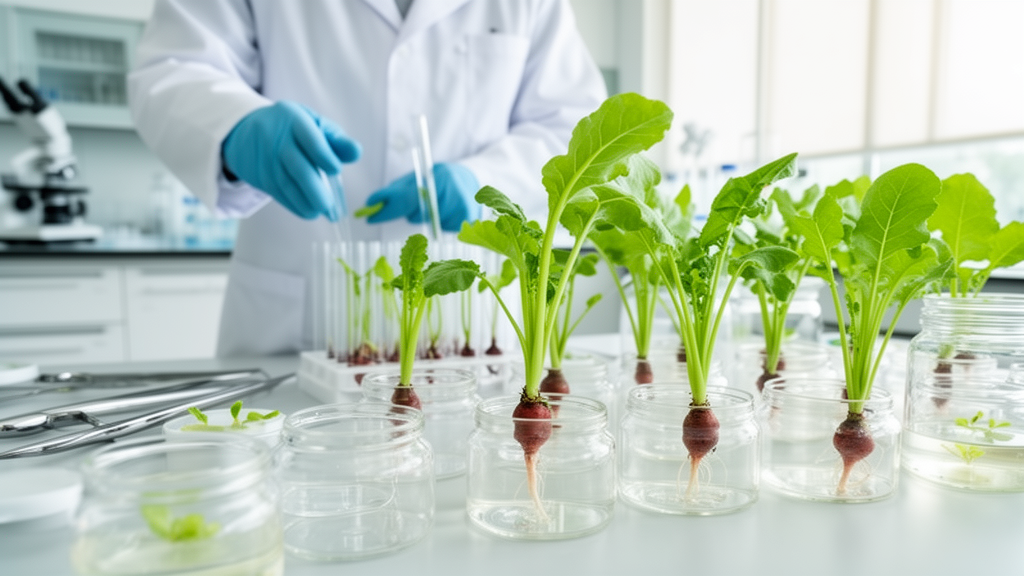
Researchers have developed an Agrobacterium tumefaciens-mediated transformation protocol for sugar beet (Beta vulgaris L.) that bypasses the callus stage and uses direct shoot regeneration from leaf explants. In the reported experiments, the system achieved a maximum regeneration efficiency of 91.67% and produced an average of 10.33 shoots per explant, while regenerated plants exhibited low somaclonal variation. The method is intended to address the difficulties that sugar beet has presented for in vitro regeneration and genetic engineering.

By regenerating shoots directly from leaf tissue, the workflow reduces the number of culture stages required before whole plants are recovered. The study combines this regeneration route with systematically optimized bacterial infection conditions and antibiotic selection, then confirms the resulting plants through molecular assays. Under the most effective conditions tested, 91.67% of explants regenerated shoots, with an average of 10.33 shoots per explant.

No callus phase was required, and the regenerated plants showed low somaclonal variation, indicating that the direct-organogenesis workflow retained a comparatively stable plant population in these experiments. The bacterial infection stage was optimized in a systematic series of trials. These values describe the conditions identified as optimal within the study’s experimental system; they do not establish that the same settings will be equally effective in every sugar beet variety or laboratory context.

Selection conditions also influenced recovery of transformed shoots. The researchers found that a low kanamycin concentration of 60 mg/L was critical to the optimized protocol, reducing phytotoxicity without compromising selection effectiveness among the conditions examined. The reported workflow began with leaf explants, used direct shoot regeneration after Agrobacterium infection, and applied kanamycin selection to recover plants carrying the introduced genetic material.

Transformation was assessed with three complementary molecular approaches. Polymerase chain reaction was used to identify transgene integration, reverse-transcription quantitative PCR was used to assess transgene expression, and histochemical GUS staining was used to detect reporter activity in transformed tissue. These analyses provided evidence of the presence and expression of introduced DNA rather than relying only on plant survival during antibiotic selection.

Among the transgenic plants produced in the study, 70% acclimatized successfully after transfer from tissue culture. The authors described this survival rate as higher than rates previously reported for Beta vulgaris. The combination of direct shoot regeneration, 91.67% maximum regeneration efficiency, low observed somaclonal variation, molecular confirmation of transgene integration and expression, and successful acclimatization forms the principal result of the research.

The protocol is a laboratory research tool rather than a demonstrated crop-improvement outcome. It may support functional genomics studies by providing a route for introducing and detecting genes in sugar beet, and the authors identify potential applications in efforts to enhance the crop’s genetic value. Within the scope of the reported study, the work offers a streamlined direct-regeneration system with a high shoot yield under the tested culture conditions.

Its immediate value lies in the measured laboratory performance: direct formation of shoots without a callus phase, optimized Agrobacterium infection parameters, effective selection at 60 mg/L kanamycin, molecular verification of transgenic plants and a 70% acclimatization rate. The authors present the procedure as a potential foundation for functional genomics and further genetic studies in sugar beet, while the extent of its usefulness beyond the tested system remains to be determined by subsequent research.

Subject of Research: Laboratory development of an Agrobacterium-mediated sugar beet transformation protocol using direct shoot regeneration

Article Title: Establishment of an efficient and genetically stable Agrobacterium-mediated transformation protocol for Beta vulgaris L. (sugar beet) based on direct shoot regeneration

Article References: Husain, Z., Aqsa, A., Guo, H., Wang, Y., Leng, X., & Liao, H. (2026). Establishment of an efficient and genetically stable Agrobacterium-mediated transformation protocol for Beta vulgaris L. (sugar beet) based on direct shoot regeneration. BMC Plant Biology. https://doi.org/10.1186/s12870-026-10221-5

Image Credits: AI Generated

DOI: 10.1186/s12870-026-10221-5

Keywords: sugar beet, Beta vulgaris, Agrobacterium, plant transformation, direct organogenesis, shoot regeneration, tissue culture, kanamycin selection, transgenic plants, functional genomics, Establishment, efficient

Cite Scienmag News

Alan Morgan. (October 21, 2026). Sugar beet transformation protocol achieves high direct shoot regeneration. Scienmag. https://scienmag.com/sugar-beet-transformation-protocol-achieves-high-direct-shoot-regeneration/

Alan Morgan. "Sugar beet transformation protocol achieves high direct shoot regeneration." Scienmag, 21 October 2026, https://scienmag.com/sugar-beet-transformation-protocol-achieves-high-direct-shoot-regeneration/. Accessed 21 October 2026.

Alan Morgan. "Sugar beet transformation protocol achieves high direct shoot regeneration." Scienmag. October 21, 2026. https://scienmag.com/sugar-beet-transformation-protocol-achieves-high-direct-shoot-regeneration/


Tags: AgrobacteriumAgrobacterium tumefaciens-mediated plant transformationBeta vulgarisbypassing callus stage in plant regenerationdirect organogenesisdirect shoot regeneration from leaf explantsefficientestablishmentfunctional genomicsgenetic engineering of sugar beethigh regeneration efficiency in sugar beetin vitro sugar beet tissue culturekanamycin selectionlow somaclonal variation in sugar beetmolecular confirmation of genetically modified sugar beetoptimized bacterial infection conditions for plant transformationplant transformationreducing regeneration steps in plant tissue cultureshoot regenerationstable plant regeneration techniquessugar beetSugar beet transformation protocoltissue culturetransgenic plants
Share26Tweet16
Previous Post

Research report: Doctors’ and residents’ perspectives on artificial intelligence in medicine: a survey on educational needs and curriculum integration

Next Post

Compostable plastic residues preserve compost quality and support lettuce growth

Related Posts

Controlled indoor rice phenotyping links NeRF reconstruction and grain segmentation
Agriculture

Controlled indoor rice phenotyping links NeRF reconstruction and grain segmentation

October 21, 2026
Nova food framework may underserve populations with greatest need
Agriculture

Nova food framework may underserve populations with greatest need

October 21, 2026
Xinjiang wheat stripe rust reveals diverse lineages and uneven resistance breakdown
Agriculture

Xinjiang wheat stripe rust reveals diverse lineages and uneven resistance breakdown

October 21, 2026
Rhizobium and organic-mineral fertilizer improve faba bean in saline soil
Agriculture

Rhizobium and organic-mineral fertilizer improve faba bean in saline soil

October 21, 2026
Two Cactus Populations Reveal Divergent Reproductive Strategies at Short Geographic Scales
Agriculture

2015 field study finds divergent reproduction in two Opuntia robusta populations

October 20, 2026
Plant growth-promoting microorganisms enhance maize performance under salinity stress: a comprehensive meta-analysis of morphological, physiological, and biochemical responses
Agriculture

Plant growth-promoting microorganisms enhance maize performance under salinity stress: a comprehensive meta-analysis of morphological, physiological, and biochemical responses

October 20, 2026
Next Post
Compostable plastic residues preserve compost quality and support lettuce growth

Compostable plastic residues preserve compost quality and support lettuce growth

  • Mothers who receive childcare support from maternal grandparents show more optimized

    Mothers who receive childcare support from maternal grandparents show more parental warmth, finds NTU Singapore study

    27656 shares
    Share 11059 Tweet 6912
  • University of Seville Breaks 120-Year-Old Mystery, Revises a Key Einstein Concept

    1061 shares
    Share 424 Tweet 265
  • Bee body mass, pathogens and local climate influence heat tolerance

    682 shares
    Share 273 Tweet 171
  • Researchers record first-ever images and data of a shark experiencing a boat strike

    546 shares
    Share 218 Tweet 137
  • Groundbreaking Clinical Trial Reveals Lubiprostone Enhances Kidney Function

    531 shares
    Share 212 Tweet 133
Science

Embark on a thrilling journey of discovery with Scienmag.com—your ultimate source for cutting-edge breakthroughs. Immerse yourself in a world where curiosity knows no limits and tomorrow’s possibilities become today’s reality!

RECENT NEWS

  • Compostable plastic residues preserve compost quality and support lettuce growth
  • Sugar beet transformation protocol achieves high direct shoot regeneration
  • Research report: Doctors’ and residents’ perspectives on artificial intelligence in medicine: a survey on educational needs and curriculum integration
  • Cross-sectional study links Douyin overload, fatigue and quitting intentions

Categories

  • Agriculture
  • Anthropology
  • Archaeology
  • Athmospheric
  • Biology
  • Biotechnology
  • Blog
  • Bussines
  • Cancer
  • Chemistry
  • Climate
  • Earth Science
  • Editorial Policy
  • Marine
  • Mathematics
  • Medicine
  • Pediatry
  • Policy
  • Psychology & Psychiatry
  • Science Education
  • Science News
  • Social Science
  • Space
  • Technology and Engineering

Subscribe to Blog via Email

Enter your email address to subscribe to this blog and receive notifications of new posts by email.

Join 5,150 other subscribers

© 2025 Scienmag - Science Magazine

Welcome Back!

Login to your account below

Forgotten Password?

Retrieve your password

Please enter your username or email address to reset your password.

Log In
No Result
View All Result
  • HOME
  • SCIENCE NEWS
  • CONTACT US

© 2025 Scienmag - Science Magazine

Discover more from Science

Subscribe now to keep reading and get access to the full archive.

Continue reading