


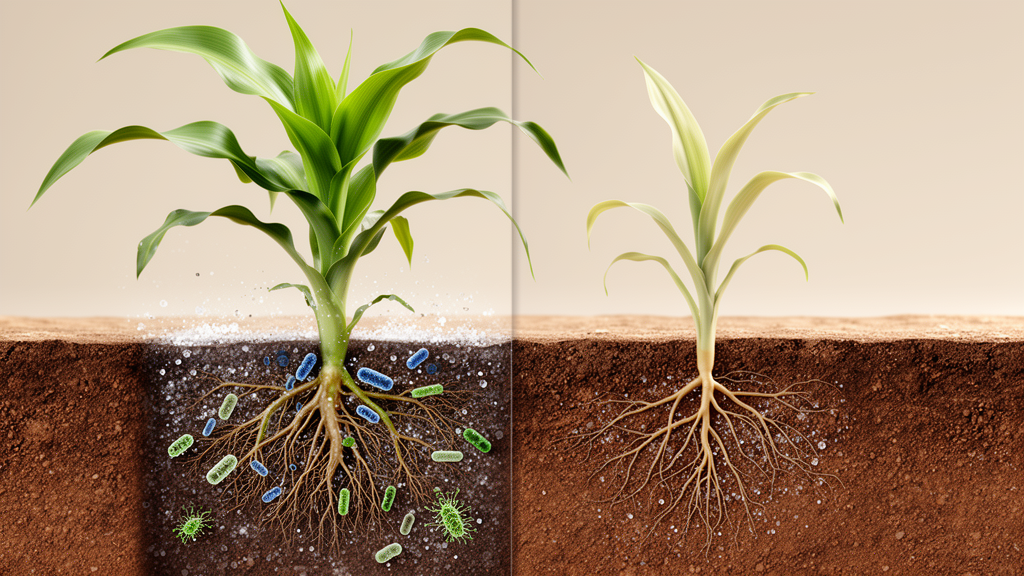
A quantitative systematic review and meta-analysis of 107 peer-reviewed publications found that inoculating maize with plant growth-promoting microorganisms was associated with improved growth, water status, membrane stability and biochemical responses under salinity stress. The pooled results included significant increases in grain weight, shoot and root biomass, and leaf area, with the most consistent morphological effects observed at moderate salinity levels. High variation among studies means the responses were not uniform across microbial taxa, maize genotypes and experimental conditions.
Published in BMC Plant Biology , the analysis followed PRISMA guidelines and used random-effects modelling to combine results from studies involving plant growth-promoting microorganisms, including bacteria and arbuscular mycorrhizal fungi. Its scope was maize exposed to varying salinity conditions, and the outcomes were organized as morphological, physiological and biochemical responses. By synthesizing multiple experimental systems, the analysis estimated associations across the available studies rather than testing a single microorganism under one set of conditions.
The morphological findings were most consistent under moderate salinity stress. Pooled estimates indicated increases of approximately 25–40% for biomass-related traits, including shoot and root biomass. Grain weight and leaf area also improved significantly following inoculation.
These are average estimates across the included publications, not guarantees that every microbial strain will generate the same response in every maize cultivar, soil or salinity treatment. The reported consistency of growth-related effects describes the overall pattern across studies rather than a ranking of traits by the size of their pooled benefits. Physiological responses were consistent with improved water relations and membrane stability.
Relative water content increased by approximately 15–30%, while electrolyte leakage decreased by roughly 20–45% under stress conditions. Inoculation was also associated with improved potassium-to-sodium ratios. Collectively, these measurements indicate that inoculated plants generally maintained more favorable water status and cellular membrane conditions than comparison plants, although the pooled analysis did not establish which specific microbial process produced each response.
Biochemical effects included larger concentrations of compounds associated with osmotic adjustment and antioxidant defense. Glycine betaine increased by an estimated 30–35%, soluble sugars rose by approximately 40–70% under stress, and flavonoids and phenolics increased by about 25–40%. Ascorbic acid also increased by around 30%.
Proline did not follow a uniform pattern: its response varied according to stress intensity, showing that the measured biochemical changes were not identical across salinity conditions. Subgroup analyses found that arbuscular mycorrhizal fungi and 1-aminocyclopropane-1-carboxylate deaminase-producing microorganisms were consistently associated with enhanced stress-related responses, including increased mycorrhizal colonization and modulation of ethylene-related processes. The analysis did not directly prove that these mechanisms caused the overall pooled improvements.
Substantial between-study heterogeneity remained a central limitation, with I² values above 50% for multiple traits. Differences in microbial taxa, maize genotypes, stress intensity and experimental conditions contributed to this variation, limiting direct transfer of the average percentage increases to any one field, cultivar or inoculant. The authors examined potential publication bias using funnel plots and trim-and-fill analysis and tested the influence of individual studies with leave-one-out sensitivity analyses.
They reported that potential small-study effects and individual influential studies did not substantially affect the pooled estimates.
Subject of Research: Meta-analysis of plant growth-promoting microorganisms and maize responses to salinity stress
Article Title: Plant growth-promoting microorganisms enhance maize performance under salinity stress: a comprehensive meta-analysis of morphological, physiological, and biochemical responses
Article References: Mohammadzadeh, A., Ghaffarian, S., Shahriari, A. G., Jacob, F., Hamid, R., & Panahi, B. (2026). Plant growth-promoting microorganisms enhance maize performance under salinity stress: a comprehensive meta-analysis of morphological, physiological, and biochemical responses. BMC Plant Biology. https://doi.org/10.1186/s12870-026-09871-2
Image Credits: AI Generated
DOI: 10.1186/s12870-026-09871-2
Keywords: maize, salinity stress, plant growth-promoting microorganisms, meta-analysis, arbuscular mycorrhizal fungi, bacteria, grain weight, osmolytes, antioxidants, crop resilience, Plant, growth-promoting
Cite Scienmag News
Alan Morgan. (October 20, 2026). Plant growth-promoting microorganisms enhance maize performance under salinity stress: a comprehensive meta-analysis of morphological, physiological, and biochemical responses. Scienmag. https://scienmag.com/plant-growth-promoting-microorganisms-enhance-maize-performance-under-salinity-stress-a-comprehensive-meta-analysis-of-morphological-physiological-and-biochemical-responses/
Alan Morgan. "Plant growth-promoting microorganisms enhance maize performance under salinity stress: a comprehensive meta-analysis of morphological, physiological, and biochemical responses." Scienmag, 20 October 2026, https://scienmag.com/plant-growth-promoting-microorganisms-enhance-maize-performance-under-salinity-stress-a-comprehensive-meta-analysis-of-morphological-physiological-and-biochemical-responses/. Accessed 20 October 2026.
Alan Morgan. "Plant growth-promoting microorganisms enhance maize performance under salinity stress: a comprehensive meta-analysis of morphological, physiological, and biochemical responses." Scienmag. October 20, 2026. https://scienmag.com/plant-growth-promoting-microorganisms-enhance-maize-performance-under-salinity-stress-a-comprehensive-meta-analysis-of-morphological-physiological-and-biochemical-responses/


