


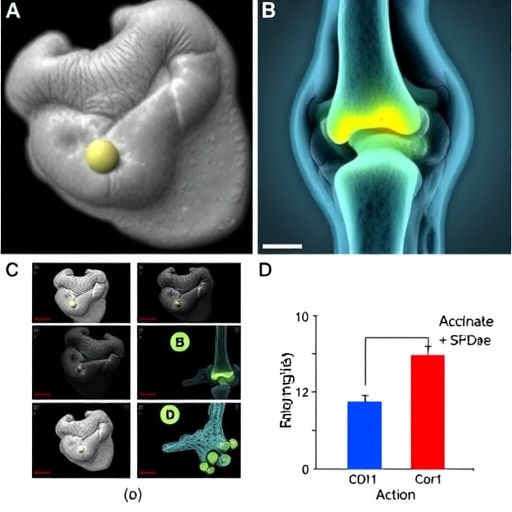
A metabolic by-product best known for its role in cellular energy production may be helping obesity turn osteoarthritis into a more aggressive and destructive disease, according to a new study published in Cell Death Discovery. Researchers Hong, Chen, Zhong and colleagues identify succinate as a key molecular link between excess body weight, mitochondrial failure and damage in the joint. Their findings suggest that succinate is not merely a passive marker of altered metabolism. Instead, it can act as a powerful signal that amplifies inflammation and disrupts the energy systems of cells responsible for maintaining healthy cartilage and joint tissues.
Osteoarthritis has traditionally been described as a “wear-and-tear” condition, in which aging, mechanical stress and injuries gradually erode cartilage. That view is increasingly being replaced by a more complex picture. In obesity-associated osteoarthritis, excess adipose tissue can release inflammatory mediators, while increased body mass places additional mechanical pressure on weight-bearing joints. At the same time, metabolic changes alter the chemical environment surrounding cartilage, synovial tissue and bone. The new research places succinate within this network, proposing that its accumulation may help explain why obesity can intensify joint degeneration beyond the effects of mechanical loading alone.
Succinate is an intermediate of the tricarboxylic acid cycle, or TCA cycle, the central biochemical pathway through which mitochondria process nutrients and generate energy. Under normal conditions, it is produced and consumed as part of that cycle. When mitochondria become stressed or their metabolism is disrupted, however, succinate can build up inside cells and spill into the extracellular environment. Once outside the cell, it can function as a signaling molecule by binding to SUCNR1, a receptor also known as the succinate receptor 1. This receptor is found on several cell types and can activate intracellular pathways associated with inflammation, immune responses and tissue remodeling.
The study’s central finding is that activation of SUCNR1 by elevated succinate appears to worsen the mitochondrial dysfunction associated with obesity-related osteoarthritis. Mitochondria are often called the powerhouses of the cell, but their role extends far beyond producing adenosine triphosphate, or ATP. They also regulate reactive oxygen species, metabolic signaling and cell survival. When mitochondria malfunction, electron transport can become inefficient, ATP production can fall and damaging oxidants can increase. In joint tissues, such stress may weaken the ability of chondrocytes—the cells that maintain cartilage—to preserve the extracellular matrix that gives cartilage its strength and elasticity.
The researchers also focus on succinylation, a chemical modification that can alter the behavior of proteins. Similar to acetylation, succinylation involves the attachment of a succinyl group to lysine residues on target proteins. Because the succinyl group carries a larger negative charge than an acetyl group, this modification can substantially change a protein’s structure, stability, activity or interactions. The availability of succinyl-CoA and the activity of enzymes that add or remove succinyl groups help determine the extent of this modification. The study links altered succinylation patterns to mitochondrial injury, suggesting that excess succinate may influence osteoarthritis through both receptor signaling and direct metabolic reprogramming.
That dual action is what makes the findings particularly significant. SUCNR1 activation can transmit an extracellular warning signal, potentially stimulating inflammatory pathways and changing the behavior of cells in the joint. Succinate-related succinylation, meanwhile, can modify proteins inside the cell, including proteins involved in mitochondrial energy production and stress control. Together, these processes may create a self-reinforcing cycle: mitochondrial dysfunction increases metabolic imbalance, metabolic imbalance raises succinate levels, succinate activates SUCNR1 and modifies proteins, and the resulting inflammation and oxidative stress further damage mitochondrial function.
In cartilage, this cycle could have consequences at several levels. Chondrocytes must continuously monitor and repair the surrounding matrix, which is composed largely of collagen and proteoglycans. Mitochondrial stress can impair this maintenance program and push cells toward inflammatory or degenerative states. It may also increase the production of enzymes that break down cartilage components while reducing the synthesis of molecules needed for repair. Although osteoarthritis lacks the dramatic immune-cell infiltration seen in some autoimmune joint diseases, low-grade inflammation within the synovium and cartilage can significantly accelerate tissue destruction. A metabolic signal such as succinate could therefore connect systemic obesity to local joint inflammation.
The results raise the possibility that the succinate–SUCNR1 pathway could become a target for future treatments aimed specifically at obesity-associated osteoarthritis. Blocking SUCNR1, reducing pathological succinate accumulation or correcting abnormal protein succinylation might help protect mitochondrial function and slow cartilage deterioration. Such strategies would not replace weight management, physical activity, pain control or other established approaches, but they could eventually complement them by addressing molecular processes that current treatments do not directly target. The work also suggests that metabolic measurements could one day help identify patients whose osteoarthritis is being driven by particularly strong mitochondrial or succinate-related signals.
Important questions remain before these findings can be translated into clinical practice. Succinate has essential physiological roles, and completely suppressing its production could interfere with normal energy metabolism. SUCNR1 signaling may also be beneficial in certain tissues or circumstances, meaning that a treatment would need to be highly selective. Researchers will need to determine which cells produce the excess succinate, how its concentration changes during disease progression and whether blocking the pathway can preserve joint function without causing systemic side effects. Even so, the study offers a striking shift in the way obesity-associated osteoarthritis is understood: the disease may be fueled not only by pressure on the joints, but also by a metabolic message that turns cellular energy failure into progressive tissue damage.
Cite Scienmag News
Daisy Hatcher. (August 22, 2026). Succinate Worsens Obesity-Linked Osteoarthritis Through SUCNR1 Activation, Succinylation, and Mitochondrial Dysfunction. Scienmag. https://scienmag.com/succinate-worsens-obesity-linked-osteoarthritis-through-sucnr1-activation-succinylation-and-mitochondrial-dysfunction/
Daisy Hatcher. "Succinate Worsens Obesity-Linked Osteoarthritis Through SUCNR1 Activation, Succinylation, and Mitochondrial Dysfunction." Scienmag, 22 August 2026, https://scienmag.com/succinate-worsens-obesity-linked-osteoarthritis-through-sucnr1-activation-succinylation-and-mitochondrial-dysfunction/. Accessed 3 September 2026.
Daisy Hatcher. "Succinate Worsens Obesity-Linked Osteoarthritis Through SUCNR1 Activation, Succinylation, and Mitochondrial Dysfunction." Scienmag. August 22, 2026. https://scienmag.com/succinate-worsens-obesity-linked-osteoarthritis-through-sucnr1-activation-succinylation-and-mitochondrial-dysfunction/


