

Monday, July 27, 2026
Science
No Result
View All Result
  • Login
  • HOME
  • SCIENCE NEWS
  • CONTACT US
  • HOME
  • SCIENCE NEWS
  • CONTACT US
No Result
View All Result
Scienmag
No Result
View All Result
Home Science News Medicine

Study Shows Dengue Virus Infects Immune Cells Designed to Prevent Infection

July 27, 2026
in Medicine
Reading Time: 2 mins read
0
Study Shows Dengue Virus Infects Immune Cells Designed to Prevent Infection

Study Shows Dengue Virus Infects Immune Cells Designed to Prevent Infection

65
SHARES
587
VIEWS
Share on FacebookShare on Twitter
ADVERTISEMENT

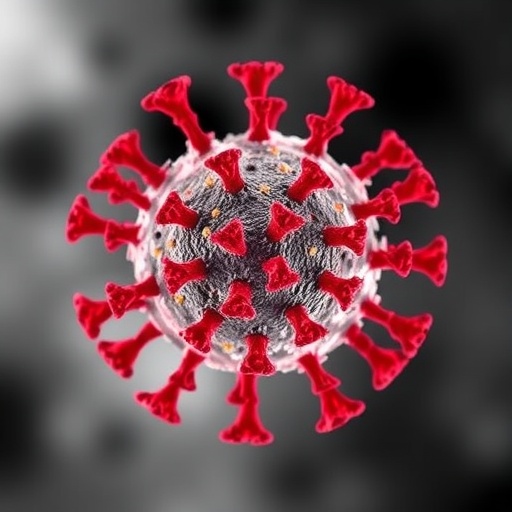
Researchers at the University of Vermont Robert Larner, M.D. College of Medicine and Upstate Medical University report that dengue virus can not only enter but also replicate within memory B cells—immune cells best known for generating protective antibodies. The study, published July 20 in Journal of Virology, challenges a long-held view of how adaptive immunity restrains flaviviruses.

Dengue is transmitted by tropical mosquitoes, infecting an estimated 100 million people annually worldwide, with more than four billion living in dengue-prone regions. Symptoms range from fever and severe headache to dangerous complications driven by vascular damage and abnormal blood pressure.

A major explanation for why second infections can be worse involves antibody-dependent enhancement (ADE). In ADE, non-neutralizing antibodies from a prior dengue episode bind the next viral strain and facilitate its entry into susceptible immune cells.

The new work builds on an alternative route termed B cell receptor-dependent enhancement (BDE). Earlier experiments showed that dengue virus can engage the B cell receptor (BCR), a surface molecule that normally recognizes pathogens and triggers B cell signaling.

Here, the researchers demonstrate that dengue-specific memory B cells can be infected by all four dengue virus types (DENV1–4) and subsequently produce infectious virus. Because memory B cells persist for years, they may become a long-lived portal for viral amplification during later exposures.

Using advanced microscopy, the team directly visualized dengue virus entry into memory B cells and mapped how BCR-activated signaling contributes to productive infection. By targeting key molecular pathways downstream of the receptor, the study identified vulnerabilities required for viral replication.

The findings suggest that previously unrecognized mechanisms of immune subversion may help explain severe outcomes following heterologous dengue infections. They also expand the conceptual boundary between “protective” and “permissive” components of the immune system.

Importantly, the paper points toward therapeutic ideas. While no dengue-specific antivirals are currently approved, several B cell–targeting drugs already exist for cancers and autoimmune diseases, raising the possibility of repurposing or adaptation.

In parallel, future strategies could aim to selectively eliminate or modify high-risk memory B cell subsets after an initial dengue infection, potentially reducing the likelihood of severe disease in subsequent encounters. Overall, the work provides a mechanistic foundation for interventions designed to interrupt BCR-dependent enhancement.

Subject of Research: Cells
Article Title: Molecular and biophysical requirements for B cell receptor-dependent enhancement of dengue virus infection
News Publication Date: 20-Jul-2026
Web References: https://journals.asm.org/doi/10.1128/jvi.02216-25
References: 10.1128/jvi.02216-25
Image Credits: Courtesy of the Robert Larner, M.D. College of Medicine at the University of Vermont

Keywords: dengue virus; memory B cells; immune evasion; B cell receptor; BDE; ADE; virology; microscopy; antiviral strategies; immune signaling

Tags: antibody-dependent enhancement in dengueB cell receptor-dependent enhancementdengue virus immune evasion mechanismsdengue virus infection in tropical regionsDengue virus infection of immune cellsdengue virus replication in immune cellsdengue virus transmission and symptomsimmune cell-targeted dengue researchimpact of dengue on adaptive immunityimplications for dengue vaccine developmentlong-term persistence of dengue-infected B cellsmemory B cell involvement in dengue
Share26Tweet16
Previous Post

UTEP Researcher Develops Low-Cost Spray to Grow Tomatoes in Salty Soil

Next Post

University of Tennessee Establishes Governor’s Chair in Nuclear Medicine

Related Posts

Phase-Uniform Mixed-Halide Perovskites Enable Stable Tandem Solar Cells
Medicine

Phase-Uniform Mixed-Halide Perovskites Enable Stable Tandem Solar Cells

July 27, 2026
Personalized Phage Therapy in ICU Patient Treating Polymicrobial Lung Infections
Medicine

Personalized Phage Therapy in ICU Patient Treating Polymicrobial Lung Infections

July 27, 2026
Breast Milk Odor Exposure Influences Early Oral Feeding in Preterm Infants
Medicine

Breast Milk Odor Exposure Influences Early Oral Feeding in Preterm Infants

July 27, 2026
APCDd1 Identified as Highly Specific Marker for Ventral Midbrain Dopaminergic Progenitors
Medicine

APCDd1 Identified as Highly Specific Marker for Ventral Midbrain Dopaminergic Progenitors

July 27, 2026
First patient enrolled in Phase 3 trial of mocertatug rezetecan for platinum-resistant ovarian cancer
Medicine

First patient enrolled in Phase 3 trial of mocertatug rezetecan for platinum-resistant ovarian cancer

July 27, 2026
Pyridoxal Photoenzymes Enable Asymmetric Radical–Radical Cross-Coupling Reactions
Medicine

Pyridoxal Photoenzymes Enable Asymmetric Radical–Radical Cross-Coupling Reactions

July 27, 2026
Next Post
University of Tennessee Establishes Governor’s Chair in Nuclear Medicine

University of Tennessee Establishes Governor’s Chair in Nuclear Medicine

  • Mothers who receive childcare support from maternal grandparents show more

    Mothers who receive childcare support from maternal grandparents show more parental warmth, finds NTU Singapore study

    27656 shares
    Share 11059 Tweet 6912
  • University of Seville Breaks 120-Year-Old Mystery, Revises a Key Einstein Concept

    1061 shares
    Share 424 Tweet 265
  • Bee body mass, pathogens and local climate influence heat tolerance

    682 shares
    Share 273 Tweet 171
  • Researchers record first-ever images and data of a shark experiencing a boat strike

    546 shares
    Share 218 Tweet 137
  • Groundbreaking Clinical Trial Reveals Lubiprostone Enhances Kidney Function

    531 shares
    Share 212 Tweet 133
Science

Embark on a thrilling journey of discovery with Scienmag.com—your ultimate source for cutting-edge breakthroughs. Immerse yourself in a world where curiosity knows no limits and tomorrow’s possibilities become today’s reality!

RECENT NEWS

  • FGFR4-Associated APOBEC3 Mutagenesis Defines HER2-Enriched Human Breast Cancer Subtype
  • Variable Super-PeVatron in Cygnus X-3 Enables New Era of Time-Domain Astronomy
  • MIT Engineers Create Recyclable Elastic Yarn for Sustainable Textiles
  • Researchers Find Potentially Harmful Substance in Solid Waste

Categories

  • Agriculture
  • Anthropology
  • Archaeology
  • Athmospheric
  • Biology
  • Biotechnology
  • Blog
  • Bussines
  • Cancer
  • Chemistry
  • Climate
  • Earth Science
  • Editorial Policy
  • Marine
  • Mathematics
  • Medicine
  • Pediatry
  • Policy
  • Psychology & Psychiatry
  • Science Education
  • Social Science
  • Space
  • Technology and Engineering

Subscribe to Blog via Email

Success! An email was just sent to confirm your subscription. Please find the email now and click 'Confirm Follow' to start subscribing.

Join 5,146 other subscribers

© 2025 Scienmag - Science Magazine

Welcome Back!

Login to your account below

Forgotten Password?

Retrieve your password

Please enter your username or email address to reset your password.

Log In
No Result
View All Result
  • HOME
  • SCIENCE NEWS
  • CONTACT US

© 2025 Scienmag - Science Magazine
