


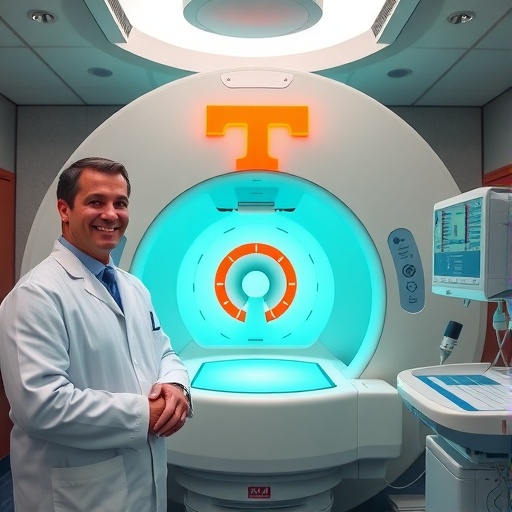
The University of Tennessee, Knoxville, has appointed radiopharmaceutical scientist Carolyn J. Anderson as a UT–Oak Ridge National Laboratory (ORNL) Governor’s Chair for Nuclear Medicine: Radiopharmaceutical Therapies. Beginning Aug. 1, Anderson will investigate how ORNL-produced radioisotopes can be optimized for cancer treatment, while translating preclinical insights into practical therapeutic pathways with collaborators across UT Health Science Center and ORNL.
Anderson’s work will concentrate on the physics and chemistry that determine whether therapeutic isotopes can reliably reach tumors and deliver lethal radiation in a controlled, patient-relevant manner. A central focus will be targeted alpha-emitting radioisotopes, which generate high linear energy transfer radiation over short ranges, enabling precise destruction of cancer cells while limiting collateral exposure to surrounding healthy tissue.
A major obstacle in alpha-therapy development is isotope decay. Therapeutic radioisotopes can rapidly transform into daughter isotopes with different emission characteristics, potentially introducing secondary biological and imaging complications. Anderson’s research aims to manage these decay-linked effects, improving both treatment efficacy and the predictability of biodistribution and radiation behavior inside the body.
The Governor’s Chair program is designed to align institutional investments with strategic, high-impact research themes. UT and ORNL identified radiopharmaceutical therapies as a convergent initiative in 2024, supported by a $20 million, five-year commitment intended to accelerate innovation in next-generation oncology. This initiative seeks to position Tennessee as a leading hub for theranostic and radiopharmaceutical development.
Anderson brings extensive experience spanning molecular imaging and targeted radiotherapy. She previously co-created and directed the University of Missouri’s Molecular Imaging and Theranostics Center, where her laboratory conducted basic research and preclinical translation—designing, synthesizing, and evaluating radiopharmaceuticals for both diagnostic imaging and targeted therapeutic applications.
Radioisotopes manufactured at ORNL are attractive for tackling drug-resistant cancers and metastatic disease because a single treatment course could potentially target distributed tumor sites throughout the body. Anderson’s appointment strengthens the pipeline needed to convert isotope production capabilities into clinically meaningful therapies, from candidate formulation to performance evaluation in preclinical models.
UT leadership emphasized that recruiting top researchers in areas of existing institutional strength can address local health challenges. Chancellor Donde Plowman highlighted the urgency of improving outcomes for communities facing high cancer burden, linking faculty recruitment to accelerated solution development.
Anderson described her role as both advanced research and a return to fundamentals, emphasizing how alpha-emitting radioisotopes work and what capabilities they ultimately offer. She also plans to mentor junior faculty, graduate students, and undergraduates, aiming to broaden training pathways that connect nuclear chemistry to emerging medical applications.
She views the appointment as an opportunity to strengthen industry partnerships in radiopharmaceutical tools and technologies. By encouraging additional startups and small businesses to join the regional ecosystem, the work can move more efficiently toward clinical trial translation.
Cite Scienmag News
Nathaniel Bowman. (July 27, 2026). University of Tennessee Establishes Governor’s Chair in Nuclear Medicine. Scienmag. https://scienmag.com/university-of-tennessee-establishes-governors-chair-in-nuclear-medicine/
Nathaniel Bowman. "University of Tennessee Establishes Governor’s Chair in Nuclear Medicine." Scienmag, 27 July 2026, https://scienmag.com/university-of-tennessee-establishes-governors-chair-in-nuclear-medicine/. Accessed 4 September 2026.
Nathaniel Bowman. "University of Tennessee Establishes Governor’s Chair in Nuclear Medicine." Scienmag. July 27, 2026. https://scienmag.com/university-of-tennessee-establishes-governors-chair-in-nuclear-medicine/


