


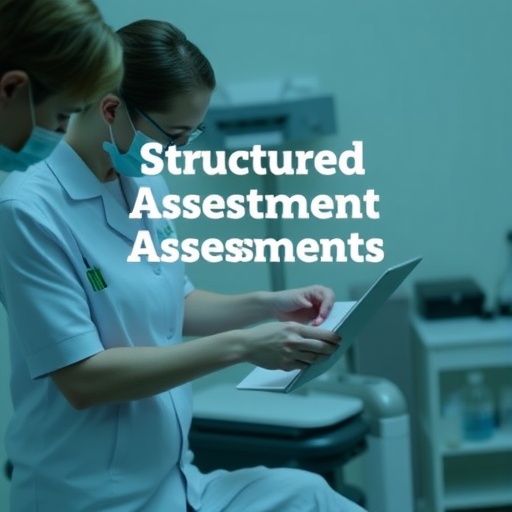
In a groundbreaking study published in BMC Medical Education, researchers R.F. Elemam and H.M. Abdelaal investigate the vital role of structured assessment attempts and instructor feedback in the development of clinical competency among dental assistant trainees. The research offers fresh insights into how systematic evaluations and constructive feedback can profoundly influence the learning and performance of dental assistants, a field often overshadowed in medical training discussions. With a focus on the training methodologies in dental education, this study promises to reshape conventional teaching practices.
The research emerges at a pivotal moment when the importance of quality dental care is more pressing than ever. As healthcare systems globally strive to improve patient outcomes, the role of dental assistants has evolved significantly. They are no longer merely supportive figures; rather, they are integral contributors to patient care. Consequently, this study emphasizes the need for enhanced training programs that emphasize clinical competency through structured assessment and feedback.
Structured assessment methods are systematically designed evaluation processes aimed at gauging students’ clinical skills. These assessments can take various forms, including practical exams, simulations, and peer evaluations. The study conducted by Elemam and Abdelaal meticulously outlines how these structured attempts not only provide a benchmark for students’ progress but also cultivate essential skills necessary for successful dental practice. As the authors highlight, the key to effective learning lies in the clarity and consistency of the assessments.
In exploring the relationship between structured assessment and clinical competency development, the researchers utilized qualitative and quantitative methodologies to gather comprehensive data. They observed dental assistant trainees in a variety of assessment scenarios, analyzing both their performance outcomes and their subjective experiences. This dual approach allowed for a nuanced understanding of how structured assessments impact learners from multiple angles—both in terms of hard skills and self-efficacy.
One of the critical findings of the study highlights the transformative power of instructor feedback. Feedback is an essential component of the learning process, yet its effectiveness often depends on how it is delivered. The study proposes that timely, specific, and actionable feedback significantly increases trainees’ strengths while addressing their weaknesses. By instilling a culture of continuous improvement, instructors can inspire students to engage more deeply with their training, ultimately leading to higher levels of competency and confidence.
Furthermore, feedback is not merely a one-way street; it thrives in interactive learning environments where instructors encourage dialogue and reflection. The exploration of this dynamic relationship between feedback and student development reveals fascinating insights into how communication styles impact learning outcomes. The research highlights the importance of a supportive and collaborative atmosphere where students feel comfortable discussing their challenges and successes.
The implications of this study extend beyond the classroom walls. As healthcare educators and administrators look to implement policies that enhance training programs, the insights gleaned from Elemam and Abdelaal’s research can serve as a valuable roadmap. Institutions that prioritize structured assessment and feedback mechanisms are likely to witness improved clinical competencies in their graduates, leading to enhanced patient care and outcomes.
Moreover, the research underscores the necessity of adapting educational practices to meet the demands of evolving dental care environments. In an era where technology increasingly shapes health care, integrating innovative assessment tools and feedback systems can bridge the gap between traditional training methods and the skills required in modern clinical settings. As such, dental assistant programs must continuously evolve to stay aligned with professional expectations and patient needs.
The findings from this study resonate with a broader call in healthcare education for evidence-based practices that actively engage students in their learning journeys. This paradigm shift is essential in nurturing a new generation of healthcare professionals who are not just competent but also confident in their abilities to provide exceptional patient care. In this regard, structured assessments and constructive feedback are not merely educational tools; they are essential components of a holistic approach to dental education.
In conclusion, the importance of structured assessments and constructive instructor feedback in clinical competency development among dental assistant trainees cannot be overstated. The research by Elemam and Abdelaal offers significant contributions to our understanding of effective training methodologies, shedding light on how these strategies can enhance not only individual performance but also the overall quality of dental care delivered to patients. As the field of dental education continues to advance, fostering an environment of continuous assessment and feedback will be paramount in shaping skilled and confident dental assistants ready to meet the challenges of modern healthcare head-on.
This study is a clarion call for educational institutions to reassess and refine their training approaches. By leveraging the findings of Elemam and Abdelaal, dental assistant programs can enhance their instructional designs, ultimately fostering a culture of excellence that benefits students and patients alike. The ongoing evolution of dental education will be critical in ensuring that healthcare meets the growing needs of populations worldwide.
The implications of these findings are profound, suggesting that educational methods must adapt to foster true competency among dental assistants. Future research is encouraged to explore the dynamic interaction of structured assessments and feedback in diverse educational contexts, further solidifying our understanding of effective training practices. As we look to the future, one thing remains clear: investing in the development of clinical skills through structured assessments and instructor feedback is vital for nurturing the next generation of healthcare professionals.
Elemam, R.F., Abdelaal, H.M. The impact of structured assessment attempts and instructor feedback on clinical competency development in dental assistant training.
BMC Med Educ 25, 1412 (2025). https://doi.org/10.1186/s12909-025-07842-z
Cite Scienmag News
Courtney Benton. (October 15, 2025). Structured Assessments Boost Dental Assistant Competency. Scienmag. https://scienmag.com/structured-assessments-boost-dental-assistant-competency/
Courtney Benton. "Structured Assessments Boost Dental Assistant Competency." Scienmag, 15 October 2025, https://scienmag.com/structured-assessments-boost-dental-assistant-competency/. Accessed 4 September 2026.
Courtney Benton. "Structured Assessments Boost Dental Assistant Competency." Scienmag. October 15, 2025. https://scienmag.com/structured-assessments-boost-dental-assistant-competency/


