


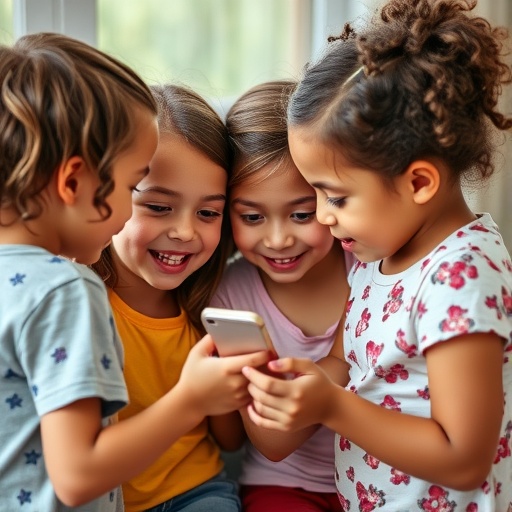
The most effective way to protect children from the psychological risks of social media may begin long before they create their first account. Rather than relying on age restrictions alone, counsellor Madhavi Nawana Parker argues that children should be taught how to form resilient, face-to-face friendships from an early age. Her new book, The Friendship Blueprint, places emotional intelligence at the centre of a growing debate over how children can be prepared for a digital world without allowing online platforms to define their identity, confidence or sense of belonging.
The argument comes as Australia’s legislation restricting social media access for children under 16 takes effect. The policy is designed to reduce young people’s exposure to harmful content, addictive platform design, cyberbullying and social comparison. However, educators and child-development specialists warn that removing access does not automatically provide children with the social tools they need to manage future digital experiences. According to Nawana Parker, the period before children gain unrestricted access to social media represents a critical opportunity to strengthen the psychological systems that support healthy relationships.
At the foundation of her approach is emotional regulation, the capacity to recognise feelings, understand their causes and manage responses without being overwhelmed by them. This ability develops gradually through interactions with parents, teachers and peers. In practical terms, children learn emotional regulation when they negotiate a disagreement, cope with being excluded from a game, apologise after hurting someone or tolerate frustration without immediately reacting. These experiences help strengthen connections between emotional processing and higher-order cognitive functions involved in decision-making, impulse control and perspective taking.
“Delaying device use gives the brain more time to develop social skills,” Nawana Parker says. Her claim reflects a broader developmental concern: digital platforms can provide rapid social rewards before children have fully developed the capacity to interpret complex interpersonal situations. Likes, comments and follower counts create visible measures of approval, while algorithms continuously select content designed to maximise attention. For a child whose self-worth is still forming, this feedback can become disproportionately important, particularly when it is not balanced by secure relationships in the physical world.
Nawana Parker, chief executive of Positive Minds Australia, has worked in Australian schools for almost three decades. She argues that strong friendships can act as a psychological buffer when children eventually encounter online environments that are highly curated and sometimes hostile. Face-to-face relationships expose young people to subtle social signals that are difficult to reproduce through screens, including tone of voice, body language, hesitation and emotional expression. Learning to interpret these signals helps children distinguish between intention and impact, respond to ambiguity and recognise when a friend may need support.
The core abilities she identifies include self-awareness, communication, empathy, perspective taking, cooperation, inclusion and conflict resolution. These capacities are closely linked to emotional intelligence, a set of skills associated with recognising one’s own emotional state and responding appropriately to the emotions of others. Self-awareness allows a child to identify anger, embarrassment or jealousy before those feelings dictate behaviour. Empathy enables the child to consider another person’s experience, while communication and conflict-resolution skills provide ways to repair a relationship after a disagreement.
Childhood friendship conflicts, although painful, may therefore function as informal training for later relationships. A disagreement over a game, a period of exclusion or a sudden change in friendship dynamics can teach children how to negotiate competing needs and recover from social disappointment. With adult guidance, these events can become opportunities to practise listening, compromise and respectful disagreement. The goal is not to eliminate every upsetting experience, Nawana Parker explains, but to help children process those experiences safely and develop strategies for repairing trust.
This process may also influence how young people respond to social media pressures. A child who has learned to tolerate rejection and seek support from trusted friends may be less likely to interpret a lack of online engagement as evidence of personal failure. Conversely, children who have had limited opportunities to practise social problem-solving may find digitally amplified rejection, public criticism or comparison especially difficult to manage. Online platforms can transform a private moment of insecurity into an apparently measurable social judgement, making emotional resilience increasingly important.
Research cited in The Friendship Blueprint emphasises that peer relationships influence children’s values, behaviour and sense of belonging. Social connection is not simply a source of entertainment; it contributes to psychological development by giving children repeated opportunities to practise cooperation, emotional communication and social identity formation. Nawana Parker contrasts the superficial visibility of hundreds of online followers with the deeper security provided by a small number of friends who notice when something is wrong. Her central message is that connection should be measured by genuine care rather than by digital engagement statistics.
The book’s wider argument is that social and emotional learning should be treated as a basic component of childhood education, alongside academic development and digital safety. Restrictions may delay exposure to harmful online environments, but they cannot replace the real-world experiences through which children learn trust, boundaries and self-control. “It’s urgent that we act now to nurture our children’s social intelligence and protect their future,” Nawana Parker says. As governments debate the regulation of young people’s online lives, her work highlights a parallel question: whether children are being given enough opportunities to build the human relationships that make digital connection safer and more meaningful.
Web References:
https://www.routledge.com/The-Friendship-Blueprint-The-Power-of-Social-Connection-for-School-Family-and-Career-Success/NawanaParker/p/book/9781041020578
http://dx.doi.org/10.4324/9781003617570
References:
DOI: 10.4324/9781003617570
Cite Scienmag News
Courtney Benton. (August 5, 2026). Strong childhood friendships may protect against lifelong social media harms, counsellor suggests. Scienmag. https://scienmag.com/strong-childhood-friendships-may-protect-against-lifelong-social-media-harms-counsellor-suggests/
Courtney Benton. "Strong childhood friendships may protect against lifelong social media harms, counsellor suggests." Scienmag, 5 August 2026, https://scienmag.com/strong-childhood-friendships-may-protect-against-lifelong-social-media-harms-counsellor-suggests/. Accessed 4 September 2026.
Courtney Benton. "Strong childhood friendships may protect against lifelong social media harms, counsellor suggests." Scienmag. August 5, 2026. https://scienmag.com/strong-childhood-friendships-may-protect-against-lifelong-social-media-harms-counsellor-suggests/


