Saturday, October 24, 2026
Science
No Result
View All Result
  • Login
  • HOME
  • SCIENCE NEWS
  • CONTACT US
  • HOME
  • SCIENCE NEWS
  • CONTACT US
No Result
View All Result
Scienmag
No Result
View All Result
Home Science News Earth Science

Soil Bunds Boost Farm Income in Ethiopia’s Upper Blue Nile Basin, Study Finds

October 24, 2026
in Earth Science
Alan Morgan
By Alan Morgan Scienmag Editorial Profile - Precision Agriculture
Reading Time: 3 mins read
0
Soil Bunds Boost Farm Income in Ethiopia’s Upper Blue Nile Basin, Study Finds

Soil Bunds Boost Farm Income in Ethiopia's Upper Blue Nile Basin, Study Finds

65
SHARES
587
VIEWS
Share on FacebookShare on Twitter
ADVERTISEMENT

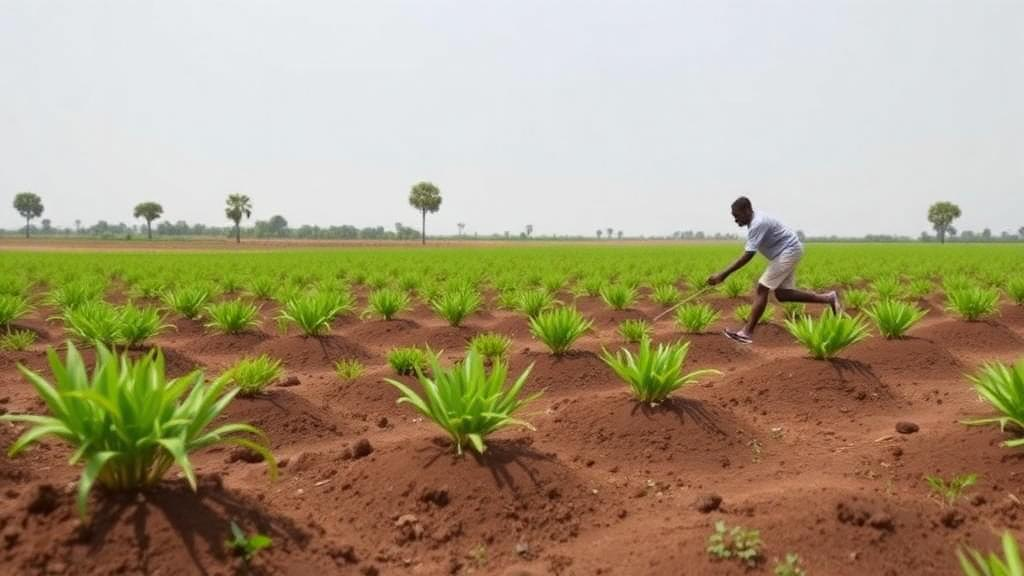
Farmers in Ethiopia's Upper Blue Nile Basin who adopt sustainable land management practices earn significantly more from their crops than they would without them, according to a new economic evaluation published in Discover Sustainability. Land degradation is a key global problem that affects sustainability and household welfare, and sustainable land management practices are increasingly promoted as a strategy to address it. The analysis draws on household survey data from 385 farming households, yielding 733 plot-level observations across the Upper Blue Nile Basin.

This plot-level design allowed the researcher to compare outcomes on parcels where bunds and related practices had been installed against those where they had not, within the same farming population. A central challenge in this kind of evaluation is that adoption is not random. Farmers who choose to build bunds may differ systematically from those who do not, in ways that also affect their crop returns, creating selection bias and endogeneity problems that can distort simple comparisons.

To address this, the study employed an endogenous switching regression model, which jointly models the adoption decision and the productivity outcome. The approach generates a counterfactual estimate of what each farm would have earned under the alternative choice, allowing the true effect of adoption to be isolated. The results confirmed that selection bias was indeed present, validating the use of the more demanding econometric framework.

The estimated treatment effects reveal gains on both sides of the adoption divide. Among adopters, the expected net crop value with the practices in place was US$ 777.43, compared with a counterfactual of US$ 704.03 had they not adopted, an average treatment effect on the treated of US$ 73.40. Among non-adopters, observed net crop value stood at US$ 565.29, but the model estimates they would have earned US$ 832.69 had they adopted, an average treatment effect on the untreated of US$ 267.40.

Both estimates were statistically significant. Perhaps the most striking result is the negative transitional heterogeneity effect of US$ 194.00, which indicates that the benefits of adoption would be larger for current non-adopters than for those who have already adopted. The findings carry direct policy implications.

Because the estimated impacts are positive under current circumstances, the study concludes that sustainable land management practices should be promoted in the basin. The author specifically recommends policies that include economic incentives to cover transitional disadvantages that farmers may face during the adoption process, thereby increasing net crop value while easing the burden of the transition. Nevertheless, the combination of a large plot-level dataset, a validated econometric approach, and consistent positive effects across both adopters and non-adopters strengthens the case that bunds and related practices are economically worthwhile investments.

For a basin where land degradation threatens both agricultural sustainability and household welfare, the message from the numbers is that conservation and income can move in the same direction.

Subject of Research: Economic impacts of sustainable land management practices on agricultural productivity in the Upper Blue Nile Basin, Ethiopia

Article Title: Impacts of selected land management practices on agricultural productivity in the Upper Blue Nile Basin, Ethiopia

Article References: Alemu, G. T. (2026). Impacts of selected land management practices on agricultural productivity in the Upper Blue Nile Basin, Ethiopia. Discover Sustainability. https://doi.org/10.1007/s43621-026-05110-8

Image Credits: AI Generated

DOI: 10.1007/s43621-026-05110-8

Keywords: Ethiopia, sustainable land management, soil bunds, agricultural productivity, Upper Blue Nile Basin, endogenous switching regression, land degradation, net crop value, smallholder farming, adoption incentives, Impacts, selected

Cite Scienmag News

Alan Morgan. (October 24, 2026). Soil Bunds Boost Farm Income in Ethiopia’s Upper Blue Nile Basin, Study Finds. Scienmag. https://scienmag.com/soil-bunds-boost-farm-income-in-ethiopias-upper-blue-nile-basin-study-finds/

Alan Morgan. "Soil Bunds Boost Farm Income in Ethiopia’s Upper Blue Nile Basin, Study Finds." Scienmag, 24 October 2026, https://scienmag.com/soil-bunds-boost-farm-income-in-ethiopias-upper-blue-nile-basin-study-finds/. Accessed 24 October 2026.

Alan Morgan. "Soil Bunds Boost Farm Income in Ethiopia’s Upper Blue Nile Basin, Study Finds." Scienmag. October 24, 2026. https://scienmag.com/soil-bunds-boost-farm-income-in-ethiopias-upper-blue-nile-basin-study-finds/

Tags: adoption incentivesagricultural productivitycrop productivity enhancementendogenous switching regressionEthiopiafarm income improvementhousehold survey analysishousehold welfare in Ethiopiaimpact of soil conservation methodsimpactsLand degradationland degradation mitigationnet crop valueselectedsmallholder farmingsoil bundssoil bunds effectssoil conservation practicessustainable farming practicessustainable land managementsustainable land management in EthiopiaUpper Blue Nile BasinUpper Blue Nile Basin agriculture
Share26Tweet16
Previous Post

Improved Swarm Algorithm Targets Convergence and Solution Spread in Benchmarks

Next Post

Diode laser fenestration improves drainage in miniature pony case report

Related Posts

Data-driven model maps Kabul’s shrinking groundwater and redraws its well network
Earth Science

Data-driven model maps Kabul’s shrinking groundwater and redraws its well network

October 24, 2026
Whale-Optimized Neural Network Curbs Temperature Drift in CO2 Sensors
Earth Science

Whale-Optimized Neural Network Curbs Temperature Drift in CO2 Sensors

October 24, 2026
High PFOS Levels Linked to Higher Kidney Cancer Odds in Okinawa Study
Earth Science

High PFOS Levels Linked to Higher Kidney Cancer Odds in Okinawa Study

October 24, 2026
Slope and Elevation Steer Vegetation Recovery in Brazilian Landslide Scars
Earth Science

Slope and Elevation Steer Vegetation Recovery in Brazilian Landslide Scars

October 24, 2026
Algae Conversion Advances Point Toward Integrated Biorefineries for Biofuels
Earth Science

Algae Conversion Advances Point Toward Integrated Biorefineries for Biofuels

October 24, 2026
AI Is Reshaping Solar Power, Review Finds, but Hurdles Remain
Earth Science

AI Is Reshaping Solar Power, Review Finds, but Hurdles Remain

October 24, 2026
Next Post
Diode laser fenestration improves drainage in miniature pony case report

Diode laser fenestration improves drainage in miniature pony case report

  • Mothers who receive childcare support from maternal grandparents show more optimized

    Mothers who receive childcare support from maternal grandparents show more parental warmth, finds NTU Singapore study

    27656 shares
    Share 11059 Tweet 6912
  • University of Seville Breaks 120-Year-Old Mystery, Revises a Key Einstein Concept

    1061 shares
    Share 424 Tweet 265
  • Bee body mass, pathogens and local climate influence heat tolerance

    682 shares
    Share 273 Tweet 171
  • Researchers record first-ever images and data of a shark experiencing a boat strike

    546 shares
    Share 218 Tweet 137
  • Groundbreaking Clinical Trial Reveals Lubiprostone Enhances Kidney Function

    531 shares
    Share 212 Tweet 133
Science

Embark on a thrilling journey of discovery with Scienmag.com—your ultimate source for cutting-edge breakthroughs. Immerse yourself in a world where curiosity knows no limits and tomorrow’s possibilities become today’s reality!

RECENT NEWS

  • Nurses’ Ability to Apply the Nursing Process Falls into Three Distinct Profiles
  • Calcium Switches Mitochondrial Motors to Drive Filopodia and Cell Migration
  • Data-driven model maps Kabul’s shrinking groundwater and redraws its well network
  • Copper cell death splits into two distinct routes converging on mitochondria

Categories

  • Agriculture
  • Anthropology
  • Archaeology
  • Athmospheric
  • Biology
  • Biotechnology
  • Blog
  • Bussines
  • Cancer
  • Chemistry
  • Climate
  • Earth Science
  • Editorial Policy
  • Marine
  • Mathematics
  • Medicine
  • Pediatry
  • Policy
  • Psychology & Psychiatry
  • Science Education
  • Science News
  • Social Science
  • Space
  • Technology and Engineering

Subscribe to Blog via Email

Enter your email address to subscribe to this blog and receive notifications of new posts by email.

Join 5,152 other subscribers

© 2025 Scienmag - Science Magazine

Welcome Back!

Login to your account below

Forgotten Password?

Retrieve your password

Please enter your username or email address to reset your password.

Log In
No Result
View All Result
  • HOME
  • SCIENCE NEWS
  • CONTACT US

© 2025 Scienmag - Science Magazine

Discover more from Science

Subscribe now to keep reading and get access to the full archive.

Continue reading