


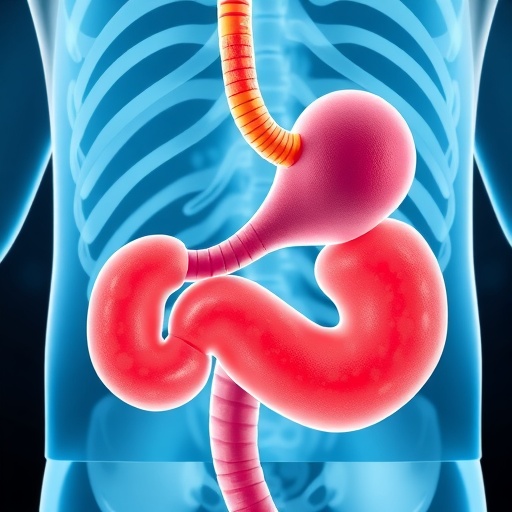
Advanced gastric and gastroesophageal junction cancers are receiving renewed attention after researchers reported a clinical study testing a three-part first-line treatment strategy that combines immunotherapy, targeted anti-angiogenic therapy and chemotherapy. The study, led by Cheng, Zhang, Hu and colleagues, investigates sintilimab together with IBI305, a biosimilar version of bevacizumab, and conventional chemotherapy in patients with advanced gastric or gastroesophageal junction adenocarcinoma. Published in Nature Communications in 2026, the trial is described as a single-arm, phase Ib/II study, a design intended to examine both the safety of the combination and its early signs of clinical activity. The work reflects a broader shift in oncology toward treatment regimens that attack cancer through several biological pathways at once rather than relying on chemotherapy alone.
Gastric cancer and cancer arising at the junction between the esophagus and stomach remain difficult to treat when they have spread beyond the site where they began. In advanced disease, surgery is often no longer sufficient, and systemic therapy becomes the central approach. Chemotherapy can damage rapidly dividing tumor cells, but its effects may be limited by resistance, tumor heterogeneity and the ability of malignant cells to adapt. At the same time, tumors can manipulate their surrounding tissue to create an environment that suppresses immune responses and supplies the growing mass with new blood vessels. The SBAGA study is based on the idea that interrupting several of these processes simultaneously could produce a more durable therapeutic effect than targeting any single mechanism.
Sintilimab is a monoclonal antibody designed to block programmed cell death protein 1, or PD-1, an immune checkpoint found on the surface of T cells. Under normal conditions, the PD-1 pathway helps prevent excessive immune activation and protects healthy tissues from immune attack. Many cancers exploit this regulatory system by using PD-1-related signaling to weaken T-cell activity against tumor cells. By preventing the interaction that suppresses T cells, sintilimab may help restore part of the immune system’s ability to recognize and attack malignant cells. This does not mean that every tumor will respond: immune activation depends on factors such as tumor biology, antigen presentation, the condition of the surrounding immune cells and the presence of other suppressive signals.
IBI305 contributes a second targeted mechanism. It is a biosimilar of bevacizumab, an antibody that binds vascular endothelial growth factor, or VEGF. VEGF is a major signal that encourages the formation of new blood vessels, a process known as angiogenesis. Tumors often require an expanded blood supply to obtain oxygen and nutrients as they grow, and VEGF can help establish that supply. Blocking VEGF may restrict tumor vascular development and can also alter the abnormal structure of tumor blood vessels. In theory, this vascular remodeling may make it easier for immune cells and anticancer drugs to enter tumor tissue. The combination therefore seeks not only to starve the tumor of support but also to make its local environment less hostile to immune attack.
The use of a biosimilar is an important practical feature of the trial. Biosimilars are biological medicines developed to be highly similar to an already approved reference product, with no clinically meaningful differences expected in quality, safety or effectiveness for their authorized uses. Unlike simple chemical drugs, biological medicines are produced in living systems and cannot be copied molecule-for-molecule in the same way as conventional generics. Their development requires analytical comparisons and clinical or pharmacological evidence showing that the biosimilar performs as expected. If IBI305 can provide comparable anti-VEGF activity at a lower cost or with improved availability, it could influence how combination treatment is delivered, particularly in health systems where access to expensive biologic medicines remains uneven.
Chemotherapy forms the third component of the SBAGA regimen. Although newer therapies have transformed cancer care, cytotoxic drugs continue to play a major role in advanced gastric cancer because they can act rapidly against dividing cells and may affect tumor populations that are less responsive to immune or vascular therapies. Chemotherapy can also release tumor antigens as cancer cells die, potentially giving the immune system additional material to recognize. At the same time, it can suppress immune cells and cause substantial side effects, making dose selection and treatment scheduling critical. The phase Ib portion of a study is commonly used to evaluate tolerability, identify dose-limiting toxicities and establish a practical regimen for later testing, while the phase II portion generally explores preliminary antitumor activity in a larger group.
The single-arm design means that participants receive the investigational combination without being randomly assigned to a comparison group within the study. This approach can be efficient when researchers are seeking an early signal of benefit or determining whether a treatment is suitable for a larger randomized trial. It also creates important interpretive limits. Without a concurrent control group, it is difficult to determine how much of an observed effect comes from the new combination rather than from patient selection, changes in supportive care or the expected performance of existing treatments. Historical comparisons can provide context, but they are vulnerable to differences in disease stage, biomarker status, previous treatment practices and methods of assessing response. The findings should therefore be viewed as evidence-generating rather than definitive proof that the regimen is superior to standard care.
The biological logic of the combination is compelling but also complex. Immune checkpoint blockade can cause inflammatory complications when activated T cells attack normal organs, while VEGF inhibition may contribute to hypertension, bleeding, impaired wound healing, blood-clotting events or kidney-related problems. Chemotherapy adds risks such as fatigue, nausea, reduced blood-cell counts, infection and damage to rapidly renewing tissues. When these treatments are used together, side effects may overlap or interact, and clinicians must distinguish treatment-related inflammation from symptoms caused by cancer or infection. Careful monitoring of blood pressure, blood counts, organ function and immune-related symptoms is therefore central to evaluating whether the strategy is clinically manageable.
Another question concerns which patients are most likely to benefit. Advanced gastric and gastroesophageal junction adenocarcinomas are not biologically uniform diseases. Tumors can differ in their immune-cell content, PD-L1 expression, DNA repair features, genetic alterations, vascular behavior and sensitivity to chemotherapy. A treatment that works well in one molecular or immunological subgroup may be less effective in another. The SBAGA study may help researchers understand whether clinical outcomes are associated with measurable biomarkers, although the citation alone does not provide the trial’s numerical results, response rates, survival data or subgroup analyses. Those details will be essential for determining whether the regimen should move toward randomized comparison and for identifying the patients in whom its risks are justified.
The study arrives at a time when cancer therapy is increasingly organized around combinations designed to reshape the tumor microenvironment. The central challenge is not simply to kill cancer cells, but to overcome the protective ecosystem that tumors build around themselves. By pairing PD-1 blockade with VEGF inhibition and chemotherapy, the researchers are testing whether immune activation, vascular modulation and direct cytotoxic treatment can reinforce one another. The importance of the report will ultimately depend on the full clinical data, including treatment exposure, adverse events, objective tumor responses, progression-free survival and overall survival. For now, the phase Ib/II investigation represents a carefully structured attempt to evaluate whether a biosimilar-based immunotherapy combination can expand treatment options for patients facing advanced gastric or gastroesophageal junction cancer.
Cite Scienmag News
Nathaniel Bowman. (August 15, 2026). Sintilimab, IBI305, and Chemotherapy Show Promise in First-Line Advanced Gastric and GEJ Adenocarcinoma. Scienmag. https://scienmag.com/sintilimab-ibi305-and-chemotherapy-show-promise-in-first-line-advanced-gastric-and-gej-adenocarcinoma/
Nathaniel Bowman. "Sintilimab, IBI305, and Chemotherapy Show Promise in First-Line Advanced Gastric and GEJ Adenocarcinoma." Scienmag, 15 August 2026, https://scienmag.com/sintilimab-ibi305-and-chemotherapy-show-promise-in-first-line-advanced-gastric-and-gej-adenocarcinoma/. Accessed 3 September 2026.
Nathaniel Bowman. "Sintilimab, IBI305, and Chemotherapy Show Promise in First-Line Advanced Gastric and GEJ Adenocarcinoma." Scienmag. August 15, 2026. https://scienmag.com/sintilimab-ibi305-and-chemotherapy-show-promise-in-first-line-advanced-gastric-and-gej-adenocarcinoma/


