


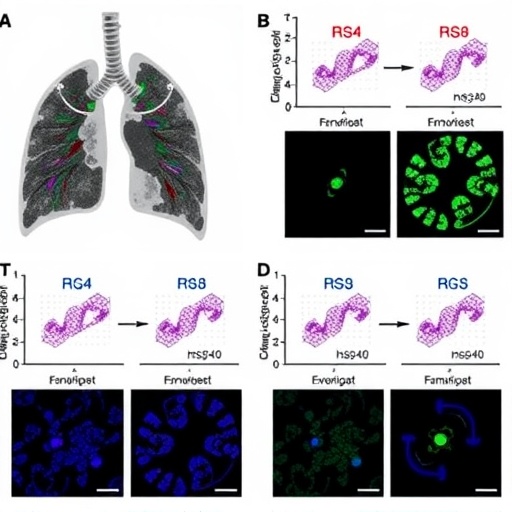
Colorectal cancer is often treatable when detected early, yet its danger changes dramatically once malignant cells escape the intestine and establish colonies in distant organs. The lungs are among the most common destinations for this spread, or metastasis, and patients with colorectal cancer lung metastases face fewer effective treatment options and a substantially worse prognosis. A new study published in Cell Death Discovery reports that levistilide A, a naturally occurring compound, may attack this process by pushing metastatic colorectal cancer cells toward ferroptosis, a form of regulated cell death driven by iron and uncontrolled lipid oxidation. The researchers identify the RNF40–HSP90α axis as a crucial molecular pathway connecting the compound to this lethal vulnerability.
Ferroptosis differs from apoptosis, the highly organized cell-suicide program targeted by many conventional cancer therapies. In ferroptosis, iron-dependent chemical reactions damage polyunsaturated fatty acids embedded in cellular membranes. As oxidized lipids accumulate, the membrane loses its structural integrity and the cell eventually collapses. Healthy cells normally prevent this outcome through antioxidant systems, including glutathione and enzymes such as glutathione peroxidase 4, or GPX4. Cancer cells can become unusually dependent on these protective mechanisms because their accelerated growth, altered metabolism and high levels of oxidative stress place them close to the threshold of lipid damage. That dependence has made ferroptosis an increasingly attractive target in the search for treatments that can kill malignant cells while bypassing resistance to apoptosis.
Levistilide A belongs to a class of bioactive molecules associated with Ligusticum chuanxiong, a traditional medicinal plant used in East Asian medicine. Although natural products have frequently provided starting points for anticancer drug discovery, their effects on metastatic disease must be understood at the level of precise molecular mechanisms. In the new work, He, Li, Liu and colleagues investigated whether levistilide A could suppress the aggressive behavior of colorectal cancer cells and whether its activity involved ferroptosis rather than a nonspecific toxic effect. Their results link exposure to the compound with biochemical changes characteristic of iron-dependent lipid peroxidation and with a reduction in the ability of tumor cells to survive and spread.
At the center of the proposed mechanism is RNF40, a protein better known as an E3 ubiquitin ligase. E3 ligases help determine which proteins are marked with ubiquitin, a molecular tag that can alter a protein’s stability, location or activity. RNF40 is also involved in histone H2B monoubiquitination, an epigenetic modification connected to the regulation of gene expression. By examining the RNF40–HSP90α relationship, the researchers suggest that levistilide A does more than simply increase oxidative stress. It appears to interfere with a regulatory system that helps tumor cells preserve the proteins and signaling networks required for survival, creating conditions in which ferroptotic damage can proceed.
HSP90α is a stress-responsive molecular chaperone, meaning that it assists other proteins in achieving and maintaining functional shapes. Cancer cells often rely heavily on HSP90 family proteins because rapid proliferation and oncogenic signaling generate a demanding environment for protein stability. HSP90α can support pathways involved in growth, invasion, stress tolerance and treatment resistance. The study’s findings indicate that RNF40 influences HSP90α and that levistilide A disrupts this relationship. When the chaperone system is destabilized, colorectal cancer cells may lose an important defense against metabolic and oxidative pressure. The resulting imbalance appears to favor the accumulation of lipid peroxides, a biochemical signature of ferroptosis.
The researchers used cellular experiments to examine how colorectal cancer cells responded to levistilide A and to test whether the observed effects could be reversed by pharmacological inhibitors of ferroptosis. Such rescue experiments are important because loss of cell viability alone cannot establish the type of cell death involved. A compound may kill cells through apoptosis, necrosis, autophagy-associated mechanisms or general membrane toxicity. By assessing iron dependence, lipid oxidation and the behavior of ferroptosis-related molecular markers, the investigators built a case that levistilide A activates a ferroptotic program. Manipulating RNF40 or HSP90α further connected the pathway to the compound’s effects, supporting the idea that the axis is not merely correlated with the response but contributes to it.
The study also examined the consequences for metastasis, the multistep process through which cancer cells detach from a primary tumor, enter the circulation, survive physical and immune stress, exit into another organ and begin growing again. Colorectal cancer cells that reach the lungs must adapt to a new tissue environment while maintaining the capacity to invade and proliferate. According to the researchers, levistilide A reduced metastatic progression in experimental models, consistent with its ability to eliminate or weaken cells capable of colonizing the lung. The findings suggest that ferroptosis may be particularly damaging to metastatic cells because their migration and adaptation can increase oxidative stress, potentially making them more dependent on antioxidant and chaperone systems.
The work is significant because it places a natural compound within a mechanistically defined strategy against metastatic colorectal cancer rather than presenting levistilide A as a broadly acting herbal extract. By identifying RNF40 and HSP90α as components of the response, the study points toward possible biomarkers that could help predict which tumors are most vulnerable. Tumors with elevated reliance on HSP90α, altered RNF40 activity or weakened lipid-repair systems might be especially sensitive to ferroptosis-inducing treatment. The pathway could also become relevant in combination therapies, although such approaches would require careful testing. Drugs that inhibit antioxidant defenses, alter iron handling or disrupt chaperone activity might amplify levistilide A’s effects, but they could also increase toxicity in normal tissues.
Important questions remain before the findings can be translated into a human treatment. Natural compounds can have limited solubility, unstable pharmacokinetics or poor delivery to the tissues where metastatic tumors grow. Ferroptosis is not automatically tumor-selective; excessive lipid oxidation and iron dysregulation could damage healthy organs if the therapeutic window is narrow. Researchers will need to determine how levistilide A is absorbed, metabolized and distributed, which molecular features define responsive tumors, and whether resistant cells can adapt by strengthening alternative antioxidant pathways. The safety of repeated dosing and the compound’s interaction with existing chemotherapy, targeted drugs and immunotherapy will also require rigorous evaluation.
For now, the study offers a compelling molecular narrative: levistilide A appears to pressure metastatic colorectal cancer cells through the RNF40–HSP90α system until their defenses against iron-driven lipid damage fail. By converting a vulnerability in protein maintenance and oxidative-stress control into a lethal ferroptotic response, the compound may provide a new direction for research into colorectal cancer lung metastasis. The discovery does not yet establish levistilide A as a clinical therapy, but it highlights how the biology of ferroptosis could be used to expose weaknesses that conventional treatments leave untouched. As scientists search for ways to stop colorectal cancer after it has reached the lungs, this natural molecule has emerged as a promising lead in the effort to make metastatic cells unable to survive their own biochemical stress.
Cite Scienmag News
Nathaniel Bowman. (August 15, 2026). Levistilide A Drives Ferroptosis via RNF40-HSP90α Axis, Suppressing Colorectal Cancer Lung Metastasis. Scienmag. https://scienmag.com/levistilide-a-drives-ferroptosis-via-rnf40-hsp90%ce%b1-axis-suppressing-colorectal-cancer-lung-metastasis/
Nathaniel Bowman. "Levistilide A Drives Ferroptosis via RNF40-HSP90α Axis, Suppressing Colorectal Cancer Lung Metastasis." Scienmag, 15 August 2026, https://scienmag.com/levistilide-a-drives-ferroptosis-via-rnf40-hsp90%ce%b1-axis-suppressing-colorectal-cancer-lung-metastasis/. Accessed 3 September 2026.
Nathaniel Bowman. "Levistilide A Drives Ferroptosis via RNF40-HSP90α Axis, Suppressing Colorectal Cancer Lung Metastasis." Scienmag. August 15, 2026. https://scienmag.com/levistilide-a-drives-ferroptosis-via-rnf40-hsp90%ce%b1-axis-suppressing-colorectal-cancer-lung-metastasis/


