

Saturday, September 5, 2026
Science
No Result
View All Result
  • Login
  • HOME
  • SCIENCE NEWS
  • CONTACT US
  • HOME
  • SCIENCE NEWS
  • CONTACT US
No Result
View All Result
Scienmag
No Result
View All Result
Home Science News Medicine

Single-Cell Multi-Omics Reveals Cancer-Associated Fibroblast Programs in Breast Cancer

July 11, 2026
in Medicine
Nathaniel Bowman
By Nathaniel Bowman Scienmag Editorial Profile - Precision Oncology
Reading Time: 2 mins read
0
Single-Cell Multi-Omics Reveals Cancer-Associated Fibroblast Programs in Breast Cancer

Single-Cell Multi-Omics Reveals Cancer-Associated Fibroblast Programs in Breast Cancer

65
SHARES
587
VIEWS
Share on FacebookShare on Twitter
ADVERTISEMENT

A groundbreaking study has unveiled new insights into the complex biology of cancer-associated fibroblasts (CAFs) within triple-negative breast cancer (TNBC), a particularly aggressive and hard-to-treat form of breast cancer. Utilizing single-cell multi-omics techniques, researchers have dissected the intricate myofibro-inflammatory program that drives these stromal cells, revealing potential therapeutic targets that could revolutionize TNBC treatment.

TNBC remains a major clinical challenge due to its lack of hormone receptors or HER2 expression, which limits the effectiveness of targeted therapies. Stromal components, particularly CAFs, play a pivotal role in shaping tumor progression, immune evasion, and therapeutic resistance. However, heterogeneity within CAF populations and their multifunctional roles have historically obscured attempts to therapeutically exploit these cells.

The team deployed single-cell transcriptomic, epigenomic, and proteomic profiling simultaneously on isolated CAFs from TNBC patient samples. This integrative approach allowed unprecedented resolution in identifying distinct CAF subsets and unraveling their specific functional states. Notably, they characterized a unique myofibro-inflammatory program marked by concurrent activation of contractile myofibroblast features and inflammatory signaling pathways.

Functionally, this dual phenotype equips CAFs with the ability to remodel extracellular matrix and secrete pro-inflammatory cytokines, creating a tumor microenvironment that supports cancer cell invasion and suppresses effective anti-tumor immunity. These findings suggest that targeting either the contractile or inflammatory axes alone may be insufficient, emphasizing the need for combinatorial approaches.

Moreover, the study discovered epigenetic mechanisms driving this myofibro-inflammatory signature, offering deeper mechanistic understanding of how CAFs adopt and maintain these states in response to local cues. Modulation of these epigenetic regulators demonstrated potential in reprogramming CAFs toward less tumor-promoting phenotypes, opening new avenues for therapeutic intervention.

The integration of multi-omics data also enabled the identification of cell surface markers specific to pathogenic CAF subsets, laying the groundwork for future development of diagnostic tools and targeted delivery systems. This advancement could facilitate stratification of TNBC patients based on stromal composition and predict responses to stroma-targeted therapies.

This research not only provides a detailed atlas of CAF diversity within TNBC but also redefines the stromal dynamics as a critical component of tumor biology. It challenges the previous notion of CAFs as a uniform cell population and highlights their plasticity and complex role in tumor progression.

As clinical research moves toward more precise anti-cancer strategies, this study represents a significant leap, suggesting that disrupting the myofibro-inflammatory CAF program may synergize with current immunotherapies and chemotherapies to achieve durable remission in TNBC patients.

The publication challenges the existing paradigm and marks a promising step toward overcoming one of the deadliest breast cancer subtypes by illuminating the hidden choreography of the tumor microenvironment.


Subject of Research: Cancer-associated fibroblasts and their role in triple-negative breast cancer tumor microenvironment

Article Title: Single-cell multi-omics deciphers the myofibro-inflammatory program of cancer-associated fibroblasts in triple-negative breast cancer

Article References: Li, M., Lin, J., Yang, C., Yang, J., Mo, C., Zhang, Z., Liu, A., Lin, W., lin, L., Li, W., Wang, Y., & Hou, X. (2026). Single-cell multi-omics deciphers the myofibro-inflammatory program of cancer-associated fibroblasts in triple-negative breast cancer. Cell Death Discovery. https://doi.org/10.1038/s41420-026-03255-z

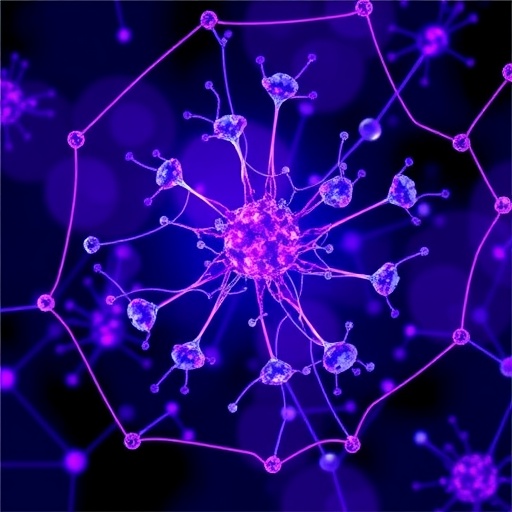
Image Credits: AI Generated

DOI: 10.1038/s41420-026-03255-z

Keywords: cancer immunomodulation, cancer-associated fibroblasts in breast cancer, extracellular matrix remodeling, fibroblast heterogeneity, myofibro-inflammatory program, single-cell multi-omics, single-cell transcriptomics, stromal cell profiling, therapeutic targets in TNBC, triple-negative breast cancer, tumor invasion and immune evasion, tumor microenvironment

Cite Scienmag News

Nathaniel Bowman. (July 11, 2026). Single-Cell Multi-Omics Reveals Cancer-Associated Fibroblast Programs in Breast Cancer. Scienmag. https://scienmag.com/single-cell-multi-omics-reveals-cancer-associated-fibroblast-programs-in-breast-cancer/


Nathaniel Bowman. "Single-Cell Multi-Omics Reveals Cancer-Associated Fibroblast Programs in Breast Cancer." Scienmag, 11 July 2026, https://scienmag.com/single-cell-multi-omics-reveals-cancer-associated-fibroblast-programs-in-breast-cancer/. Accessed 5 September 2026.

Nathaniel Bowman. "Single-Cell Multi-Omics Reveals Cancer-Associated Fibroblast Programs in Breast Cancer." Scienmag. July 11, 2026. https://scienmag.com/single-cell-multi-omics-reveals-cancer-associated-fibroblast-programs-in-breast-cancer/

Tags: cancer immunomodulationcancer-associated fibroblasts in breast cancerextracellular matrix remodelingfibroblast heterogeneitymyofibro-inflammatory programsingle-cell multi-omicssingle-cell transcriptomicsstromal cell profilingtherapeutic targets in TNBCtriple-negative breast cancertumor invasion and immune evasiontumor microenvironment
Share26Tweet16
Previous Post

Real-Time Tracking of Pathogen Spread Using Wastewater Analysis

Next Post

Epigenetic Brain Effects of Ketamine and MDMA as Psychoplastogens

Related Posts

Multi-omics reveal SHBG links to subclinical atherosclerosis in men with HIV
Medicine

Multi-omics reveal SHBG links to subclinical atherosclerosis in men with HIV

September 5, 2026
Multimorbidity patterns shape mobility disability prevention in frail older adults
Medicine

Multimorbidity patterns shape mobility disability prevention in frail older adults

September 5, 2026
Pregnancy haemoglobin levels linked to maternal and newborn health outcomes
Medicine

Pregnancy haemoglobin levels linked to maternal and newborn health outcomes

September 5, 2026
Machine learning predicts survival and chemotherapy benefit in gastric cancer
Medicine

Machine learning predicts survival and chemotherapy benefit in gastric cancer

September 5, 2026
Adolescent vaccine attitudes revealed through co-produced thematic analysis study
Medicine

Adolescent vaccine attitudes revealed through co-produced thematic analysis study

September 5, 2026
AI models predict blood clot risk in septic ICU patients
Medicine

AI models predict blood clot risk in septic ICU patients

September 5, 2026
Next Post
Epigenetic Brain Effects of Ketamine and MDMA as Psychoplastogens

Epigenetic Brain Effects of Ketamine and MDMA as Psychoplastogens

  • Mothers who receive childcare support from maternal grandparents show more optimized

    Mothers who receive childcare support from maternal grandparents show more parental warmth, finds NTU Singapore study

    27656 shares
    Share 11059 Tweet 6912
  • University of Seville Breaks 120-Year-Old Mystery, Revises a Key Einstein Concept

    1061 shares
    Share 424 Tweet 265
  • Bee body mass, pathogens and local climate influence heat tolerance

    682 shares
    Share 273 Tweet 171
  • Researchers record first-ever images and data of a shark experiencing a boat strike

    546 shares
    Share 218 Tweet 137
  • Groundbreaking Clinical Trial Reveals Lubiprostone Enhances Kidney Function

    531 shares
    Share 212 Tweet 133
Science

Embark on a thrilling journey of discovery with Scienmag.com—your ultimate source for cutting-edge breakthroughs. Immerse yourself in a world where curiosity knows no limits and tomorrow’s possibilities become today’s reality!

RECENT NEWS

  • Low immunoglobulin levels carry different risks in lymphoma patients before and during treatment
  • Multi-omics reveal SHBG links to subclinical atherosclerosis in men with HIV
  • Mutant p53 drives ferroptosis resistance through metabolic plasticity in pancreatic cancer
  • Multimorbidity patterns shape mobility disability prevention in frail older adults

Categories

  • Agriculture
  • Anthropology
  • Archaeology
  • Athmospheric
  • Biology
  • Biotechnology
  • Blog
  • Bussines
  • Cancer
  • Chemistry
  • Climate
  • Earth Science
  • Editorial Policy
  • Marine
  • Mathematics
  • Medicine
  • Pediatry
  • Policy
  • Psychology & Psychiatry
  • Science Education
  • Social Science
  • Space
  • Technology and Engineering

Subscribe to Blog via Email

Enter your email address to subscribe to this blog and receive notifications of new posts by email.

Join 5,151 other subscribers

© 2025 Scienmag - Science Magazine

Welcome Back!

Login to your account below

Forgotten Password?

Retrieve your password

Please enter your username or email address to reset your password.

Log In
No Result
View All Result
  • HOME
  • SCIENCE NEWS
  • CONTACT US

© 2025 Scienmag - Science Magazine

Discover more from Science

Subscribe now to keep reading and get access to the full archive.

Continue reading