


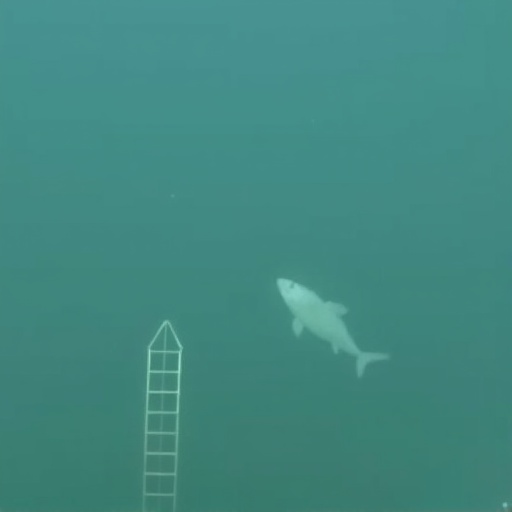
In the face of escalating threats to marine ecosystems worldwide, a groundbreaking study has provided compelling evidence of robust and thriving marine life within the protected waters surrounding the Isles of Scilly. Utilizing advanced baited remote underwater video systems (BRUVs), this research delivers unprecedented insights into how well-managed marine protected areas (MPAs) can sustain biodiversity and support the resurgence of key species in UK waters. These findings arrive at a critical juncture when marine conservation strategies are desperately needed to reverse centuries of environmental decline caused by overfishing, destructive fishing practices, pollution, and climate change.
The Isles of Scilly, an archipelago off the southwest coast of England, represents a rare example of relatively intact marine habitats in the UK. Unlike many coastal regions where marine ecosystems have suffered extensive damage, the ecosystems here remain close to their natural states thanks to effective local fisheries management and geographic isolation. The research team, led by the University of Exeter in collaboration with the Isles of Scilly Inshore Fisheries and Conservation Authority and Natural England, employed stereo-BRUV technology to capture nearly 12,000 individual animals spanning 64 species. This impressive diversity highlights the potential for MPAs to maintain and even restore complex marine communities.
Stereo-BRUVs, the innovative technology employed in this study, consist of dual video cameras within a baited frame strategically deployed on the seabed. These cameras capture stereoscopic images, enabling scientists to accurately estimate the size and density of fish and other marine fauna without physical interference or habitat disruption. This non-invasive methodology represents a significant advancement over traditional surveying techniques, such as trawling or diver-based observations, which can be damaging or limited in scale. The low cost and scalability of BRUVs open new avenues for long-term, repeatable monitoring of marine ecosystems.
One of the most striking outcomes of the research is the confirmation that commercially valuable species, including lobsters and various shark species, remain abundant in the Isles of Scilly’s waters. The presence of bluefin tuna—species that had been largely absent from UK waters for decades due to overexploitation—further underscores the ecological value of well-protected habitats. Bluefin tuna are apex predators whose return signals a recovering food web, indicating a healthier marine environment overall. These ecological rebounds provide hope and a tangible benchmark for other regions struggling to recover depleted fish populations.
The study also accentuates the importance of protecting habitats characterized by complex seabed structures, such as reefs and mixed sediment environments. These habitats provide essential ecological niches and foster higher biodiversity compared to less structurally complex areas. Unfortunately, such habitats are disproportionately threatened by bottom trawling, a fishing practice wherein weighted nets drag across the ocean floor causing severe destruction. The UK government is currently contemplating expanding bans on bottom trawling within certain MPAs, a policy shift supported by this evidence showcasing the biological richness of habitats spared from trawling.
From a technical perspective, the stereo-BRUV sampling approach applied here incorporates spatially robust deployment designs and analytical frameworks to control for environmental variability and ensure reproducible data across sites. These methodological refinements enhance the reliability of biodiversity assessments and provide stronger scientific bases for conservation decision-making. Capturing both presence-absence and relative abundance data, the cameras deliver high-resolution insights into species assemblages, enabling researchers to track ecological dynamics over time.
The application of this technology within the Isles of Scilly resonates beyond regional conservation efforts. It exemplifies a model for integrating cutting-edge scientific tools with policy frameworks and local management to achieve tangible conservation outcomes. The seamless cooperation among academic institutions, local authorities, and national regulators illustrates an effective governance model that balances ecological preservation with sustainable fisheries. Such partnerships are critical to ensuring MPAs fulfill their intended conservation objectives.
Researchers involved emphasize that while the Isles of Scilly waters remain comparatively pristine, they are not immune to human impacts. Ongoing monitoring using BRUVs is imperative to detect emergent threats such as increased fishing pressure or climate-induced habitat changes. Regular biodiversity assessments facilitated by these video systems can provide early warning signals and inform adaptive management strategies. This proactive approach could ultimately enhance the resilience of marine ecosystems amidst accelerating environmental changes.
Another notable contribution of the study is supporting the designation of the Isles of Scilly as an Important Shark and Ray Area (ISRA). This designation highlights the archipelago’s ecological significance as a habitat for several shark species, predominantly catsharks, alongside nursehounds, blue sharks, and porbeagle sharks. Unlike regulatory designations that impose restrictions, ISRAs serve as science-based frameworks guiding conservation priorities and attracting funding. Thus, the research not only advances scientific knowledge but also influences policy and stewardship activities.
The BRUV systems deployed in the study, developed by the technology company Blue Abacus, incorporate stereo imaging that facilitates size estimation and species identification with precision. These features mark a substantial improvement in marine monitoring capabilities, enabling more comprehensive assessments of fish assemblages and their changes over time. Importantly, the technology’s adaptability allows deployment across diverse marine environments, offering wide applicability for global conservation monitoring efforts.
This research was supported through a doctoral studentship funded by the Natural Environment Research Council’s GW4+ Doctoral Training Partnership, reflecting the growing recognition of interdisciplinary and collaborative approaches in marine conservation science. The study’s publication in the journal Ecological Applications further signals scientific endorsement of BRUVs as a transformative tool in marine ecology.
In conclusion, the robust biodiversity recorded around the Isles of Scilly demonstrates that effectively managed MPAs can harbor rich marine life, including economically and ecologically vital species. The use of stereo-BRUV technology offers a powerful, scalable, and non-destructive means to monitor such ecosystems, providing crucial data for conservation management. As efforts intensify to safeguard marine environments globally, studies like this both inspire optimism and underscore the indispensable role of innovative science in shaping sustainable ocean futures.
- https://esajournals.onlinelibrary.wiley.com/doi/10.1002/eap.70104
- https://sharkrayareas.org/
- https://www.blueabacus.org/
- https://www.gov.uk/government/news/government-proposes-to-extend-ban-on-destructive-bottom-trawling
References: Exeter, O. et al. (2025). “Application of spatially robust stereo-BRUV sampling for quantifying fish assemblages in UK marine protected areas.” Ecological Applications. DOI: 10.1002/eap.70104
Image Credits: Dr Owen Exeter
Keywords: Marine conservation, Conservation biology, Ecosystem management, Marine biodiversity
Cite Scienmag News
Margaret Porter. (September 15, 2025). Scilly Isles Cameras Offer Rare Glimpse into Britain’s Untouched Marine Ecosystems. Scienmag. https://scienmag.com/scilly-isles-cameras-offer-rare-glimpse-into-britains-untouched-marine-ecosystems/
Margaret Porter. "Scilly Isles Cameras Offer Rare Glimpse into Britain’s Untouched Marine Ecosystems." Scienmag, 15 September 2025, https://scienmag.com/scilly-isles-cameras-offer-rare-glimpse-into-britains-untouched-marine-ecosystems/. Accessed 4 September 2026.
Margaret Porter. "Scilly Isles Cameras Offer Rare Glimpse into Britain’s Untouched Marine Ecosystems." Scienmag. September 15, 2025. https://scienmag.com/scilly-isles-cameras-offer-rare-glimpse-into-britains-untouched-marine-ecosystems/


