


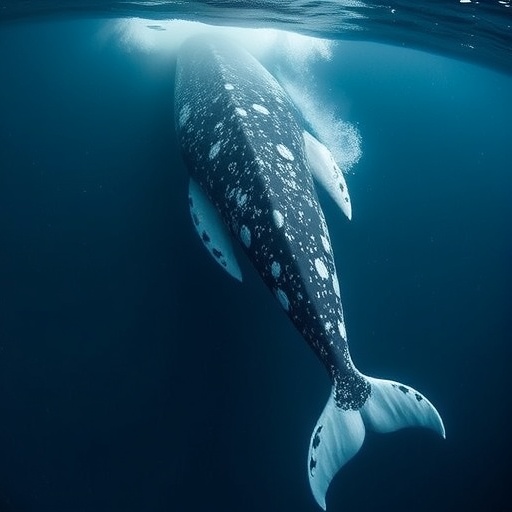
For the first time ever, researchers have verified the extraordinary long-distance migration of humpback whales traveling between the widely separated breeding grounds of eastern Australia and Brazil, covering an astounding expanse of more than 14,000 kilometers of open ocean. This unprecedented documentation reveals not only new records for the longest distances traveled by individual humpback whales but also provides critical insights into the complexity of their migratory behaviors and population connectivity across the Southern Hemisphere.
This groundbreaking discovery emerged from a comprehensive international cooperative effort involving multi-decadal datasets combined with cutting-edge image recognition technologies. By meticulously analyzing thousands of high-resolution photographs of whale flukes—the distinctively patterned undersides of humpback whale tails—scientists were able to identify individual whales showing up in both Australian and Brazilian breeding zones. These photographic matches conclusively demonstrate bi-directional movement between two distinct ocean basins, a phenomenon previously conjectured but never empirically documented over such distances.
One whale initially cataloged in Hervey Bay, Queensland, in 2007 and again observed there in 2013, was later identified off the coast of São Paulo, Brazil, during 2019. The straight-line oceanic distance separating these points measures approximately 14,200 kilometers, roughly equivalent to the air travel distance between Sydney and London. Such an immense migration distance challenges existing understanding of humpback whale spatial ecology and raises significant questions about their navigational capabilities and energy expenditures during these transoceanic voyages.
Even more striking was the second whale documented, first sighted in 2003 at Brazil’s Abrolhos Bank—one of the country’s most important humpback whale nurseries—among a large group of adults. Remarkably, this individual was observed again twenty-two years later in Hervey Bay, Australia, during September 2025. This finding establishes a new world record for the longest confirmed distance between repeated sightings of the same humpback whale, with an estimated travel distance of 15,100 kilometers. This extraordinary journey highlights the persistence and resilience of these marine mammals and underscores the importance of long-term longitudinal research.
The methodology integrated into this research exemplifies the convergence of citizen science and artificial intelligence. The study utilized an extensive database of 19,283 high-quality whale fluke photographs collected over four decades, drawn from contributions by scientists and citizen scientists worldwide through the Happywhale platform. An automated image recognition algorithm was employed to preliminarily scan and compare photographic data, while every potential match underwent rigorous independent human verification. This hybrid approach significantly enhanced the accuracy and scale of individual whale identifications, facilitating discoveries that would not have been feasible with traditional methods alone.
The implications of these findings extend beyond mere documentation of remarkable migratory distances. Genetic interchange between geographically distant breeding populations, facilitated by such rare, long-range movements, is vital for maintaining the genetic diversity and adaptive potential of humpback whale populations on a global scale. Furthermore, these migratory overlaps may facilitate the cultural transmission of behaviors—such as the propagation of complex humpback whale songs—across ocean basins, revealing a form of acoustic connectivity with parallels in human cultural exchanges.
Importantly, these monumental journeys support what is known in marine biology as the “Southern Ocean Exchange” hypothesis. This concept posits that humpback whales from disparate breeding populations congregate in shared feeding grounds in the Antarctic, allowing for intermingling before individuals embark on divergent migratory routes back to different breeding regions. The Southern Ocean thus serves as a biological and ecological nexus, connecting otherwise distant whale populations in a dynamic ecological network.
The potential drivers behind these extraordinary migrations are complex and multifaceted. Climate change-induced alterations in the Southern Ocean’s environmental conditions—including shifts in sea ice extent and modifications in the distribution and abundance of Antarctic krill, the primary prey for these whales—may be increasing the likelihood of such transoceanic exchanges over time. As oceanographic conditions continue to evolve, the migratory patterns and population connectivity of humpback whales may undergo profound transformations, with substantial implications for conservation and management.
This research provides a compelling case study in the value of integrating long-term collaborative research programs, citizen science participation, and advanced technological tools in marine biology. It illuminates the immense migratory capabilities of humpback whales and their adaptive responses to global environmental changes. Moreover, it challenges researchers to reconsider traditional assumptions about population structuring and connectivity in marine megafauna across ocean basins separated by vast distances.
It is rare—on the scale of decades and tens of thousands of individual photo records—that such direct evidence of bidirectional movement occurs; only two individuals out of nearly 20,000 cataloged whales demonstrated this extraordinary exchange between regions. Despite their rarity, the biological significance of these exchanges cannot be overstated, as they represent a critical component of the species’ resilience and capacity to maintain genetic heterogeneity and cultural dynamism.
In essence, this discovery opens new avenues for future research focusing on the mechanisms and ecological drivers facilitating such extraordinary animal migrations. How these giants of the ocean navigate, the physiological adaptations enabling extended long-distance travel without conventional feeding stops, and the potential impacts of increasingly anthropogenic-altered marine environments remain critical questions. Addressing them will enhance understanding not only of humpback whale biology but also of broader marine ecosystem processes under changing global conditions.
This landmark study titled “First evidence of bidirectional exchange between distant humpback whale breeding populations in eastern Australia and Brazil” was published in the reputed journal Royal Society Open Science. It underscores the profound power of international cooperation, interdisciplinary approaches, and public engagement in unraveling the mysteries of marine life on our planet.
Cite Scienmag News
Violet Maxwell. (May 19, 2026). Fearless Journey: Fluke Photos Reveal Humpback Whales’ 14,000 km Open Ocean Migration to Breeding Grounds. Scienmag. https://scienmag.com/fearless-journey-fluke-photos-reveal-humpback-whales-14000-km-open-ocean-migration-to-breeding-grounds/
Violet Maxwell. "Fearless Journey: Fluke Photos Reveal Humpback Whales’ 14,000 km Open Ocean Migration to Breeding Grounds." Scienmag, 19 May 2026, https://scienmag.com/fearless-journey-fluke-photos-reveal-humpback-whales-14000-km-open-ocean-migration-to-breeding-grounds/. Accessed 4 September 2026.
Violet Maxwell. "Fearless Journey: Fluke Photos Reveal Humpback Whales’ 14,000 km Open Ocean Migration to Breeding Grounds." Scienmag. May 19, 2026. https://scienmag.com/fearless-journey-fluke-photos-reveal-humpback-whales-14000-km-open-ocean-migration-to-breeding-grounds/


