


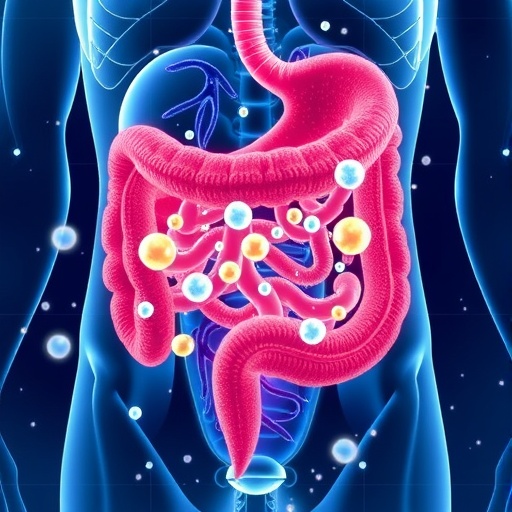
For decades, hydrogen gas has been the butt of many jokes, primarily due to its association with flatulence. But recent groundbreaking research from a team of international scientists led by Monash University and the Hudson Institute of Medical Research is transforming our understanding of hydrogen gas in the human digestive system. Far from being just a flammable nuisance, hydrogen plays a pivotal role in maintaining the balance and function of the gut microbiome, opening new vistas in gastrointestinal health research.
The human gut is a bustling metropolis of microbes, each performing specialized roles to digest, ferment, and synthesize nutrients from our diet. Among the by-products of microbial metabolism is hydrogen gas, created predominantly when bacteria ferment carbohydrates that evade digestion in the upper gastrointestinal tract. While some of this hydrogen is expelled as flatulence and some exhaled via the lungs, a significant portion is recycled within the gut by other microbial residents, demonstrating a complex, interdependent system that sustains gut homeostasis.
This intricate hydrogen cycle within the gut microbiome has remained elusive until now. The recent study, published in Nature Microbiology, elucidates the biochemical mechanisms by which specific bacterial enzymes manufacture and consume hydrogen, thereby supporting microbial growth and the overall fermentative ecosystem. Central to this discovery is the identification of an enzyme group, specifically the Group B [FeFe]-hydrogenases, as the main architects of hydrogen production within the human gut.
These [FeFe]-hydrogenases are metalloenzymes characterized by their iron-sulfur clusters that facilitate electron transfer during fermentation reactions. Operating within bacteria prevalent in healthy individuals, these enzymes catalyze the reversible oxidation of hydrogen, harnessing electrons from reduced ferredoxin — an iron–sulfur protein integral to electron transport in microbial metabolism. The ability to produce hydrogen efficiently through this enzyme not only allows bacteria to thrive but also influences the composition and function of the entire microbial community.
A striking revelation of the research is the correlation between enzyme prevalence and gut health. While healthy individuals exhibit a predominance of Group B [FeFe]-hydrogenase activity contributing to balanced hydrogen homeostasis, patients suffering from Crohn’s disease demonstrate a decline in these enzymes and an upsurge in other hydrogenases, suggesting a dysregulation of hydrogen metabolism in inflammatory bowel conditions. This shift may perturb microbial energetics and fermentation pathways, potentially exacerbating disease symptoms or reflecting the altered gut environment.
Hydrogen gas produced in the gut serves more than just a metabolic by-product; it acts as a signaling molecule and a substrate that other microbes use for respiration and energy generation, especially in syntrophic relationships. This recycling of hydrogen minimizes its accumulation, mitigating the risk of excessive gas production that can translate into discomfort, bloating, and pathological states when dysregulated.
Professor Chris Greening, the co-senior author and leader of the One Health Microbiology group at Monash University, emphasized the significance of hydrogen: “Gas production in the gut is not just a trivial side process. Hydrogen fuels key microbial interactions that sustain digestion and microbial diversity, highlighting its centrality in gut physiology.” The research thus repositions hydrogen from a mere gaseous bystander to a fundamental component of microbial ecology and host health.
Moreover, Dr. Caitlin Welsh, the study’s first author, underscores that understanding hydrogen’s multifaceted role could revolutionize the management of gastrointestinal disorders. Since abnormal hydrogen levels are already utilized diagnostically in breath tests, this research invites a reinterpretation of these measures, potentially refining diagnostic accuracy and prognostic value by linking them to microbial enzymatic activities and community structures.
While therapeutic applications were not the primary focus, associate professor Sam Forster points out the exciting prospects ahead. “Deciphering the molecular functions and interactions of hydrogenases unveils novel targets for microbiome-based therapies, ranging from probiotic formulations to live biotherapeutic products, which could restore microbial balance by modulating hydrogen metabolism.” Such interventions might pave the way for personalized treatment strategies that address the root causes of microbiome dysbiosis.
The implications extend beyond gut health. Given the established links between gut microbiota and systemic diseases, including metabolic syndromes, immune dysfunctions, and even certain cancers, understanding hydrogen’s role opens avenues for multidisciplinary research. The subtle interplay between microbial metabolites like hydrogen and host physiology underscores a need for integrative approaches combining microbiology, biochemistry, and clinical sciences.
This research embodies a collaboration of global experts, pooling advanced experimental methodologies ranging from metagenomics to enzymology and microbial cultivation. Stool samples and gut tissue biopsies were meticulously analyzed, employing state-of-the-art techniques to quantify enzyme activity and map microbial populations, underpinning the robustness of the findings.
In essence, this study disrupts traditional narratives around gut gases by revealing hydrogen as a keystone metabolite. Its production and utilization orchestrate microbial fermentative growth, influencing gut ecology with consequences for human health. As the scientific community delves deeper into these microbial processes, we edge closer to harnessing our microbiome’s full therapeutic potential.
With daily hydrogen gas production reaching approximately one liter in normal individuals — half of which originates from the gut — recognizing and manipulating this invisible fermentative currency could redefine preventive and interventional gastroenterology. The humble hydrogen molecule may soon become a celebrated protagonist in the ongoing quest to understand and optimize gut health.
News Publication Date: 23-Oct-2025
Web References:
https://www.nature.com/articles/s41564-025-02154-w
References:
Welsh, C. et al. “A widespread hydrogenase supports fermentative growth of gut bacteria in healthy people.” Nature Microbiology. 2025.
Cite Scienmag News
Morgan Morrow. (October 23, 2025). Scientists Uncover Hydrogen’s Crucial Role in the Gut. Scienmag. https://scienmag.com/scientists-uncover-hydrogens-crucial-role-in-the-gut/
Morgan Morrow. "Scientists Uncover Hydrogen’s Crucial Role in the Gut." Scienmag, 23 October 2025, https://scienmag.com/scientists-uncover-hydrogens-crucial-role-in-the-gut/. Accessed 3 September 2026.
Morgan Morrow. "Scientists Uncover Hydrogen’s Crucial Role in the Gut." Scienmag. October 23, 2025. https://scienmag.com/scientists-uncover-hydrogens-crucial-role-in-the-gut/


