


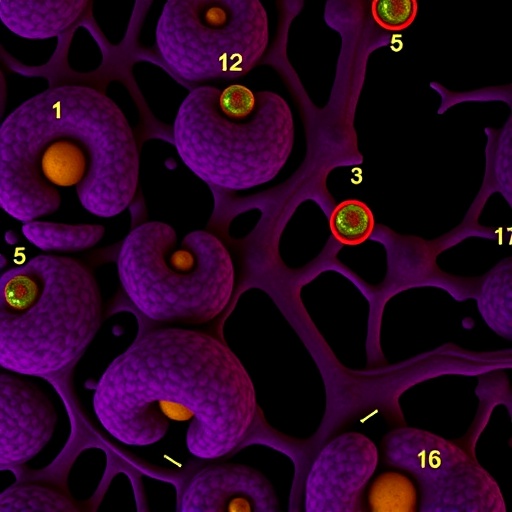
Pancreatic ductal adenocarcinoma remains one of the most lethal malignancies in modern oncology, with five-year survival rates that have barely moved in decades and a therapeutic landscape defined by modest gains. Now, a team of researchers in South Korea has developed a new way to grow miniature replicas of a patient’s tumor from fluid that would otherwise be discarded, and in doing so has uncovered a three-gene signature that drives resistance to chemotherapy. The work, published as an open-access research article in Cancer Cell International, offers both a faster laboratory platform for testing drugs against an individual patient’s cancer and a molecular clue about why so many pancreatic tumors shrug off standard treatment.
The platform relies on patient-derived organoids, three-dimensional clusters of tumor cells grown in a supportive gel that recapitulate key architectural and molecular features of the original cancer. Organoids have generated enormous enthusiasm in precision oncology because they allow clinicians to screen multiple drugs against a living surrogate of a patient’s tumor before committing that patient to a regimen. Yet the conventional route to building them, which begins with surgically resected or biopsied tissue, carries substantial drawbacks. Tissue acquisition is invasive, often requires a procedure that may not be clinically justified, and yields samples with low tumor cellularity. The resulting cultures can be contaminated with stromal and immune cells that dilute the tumor-specific signal, and establishment rates for pancreatic cancer organoids have historically been frustratingly low.
The Yonsei University team, led by researchers from the Division of Gastroenterology in collaboration with the Departments of Pathology and Hepatobiliary and Pancreatic Surgery at Severance Hospital, took a different route entirely. Rather than solid tissue, they started with malignant effusions, the pleural fluid that accumulates around the lungs and the ascitic fluid that pools in the abdomen of patients with advanced pancreatic ductal adenocarcinoma. These fluids are collected routinely for symptom management through minimally invasive drainage procedures, meaning that the raw material for organoid culture is essentially a clinical byproduct. Because the fluid already contains free-floating tumor cells shed from metastatic deposits, the researchers reasoned that it could serve as a rich, relatively pure starting inoculum.
Their reasoning proved correct. Fluid-derived organoids, or FDOs, established from these effusions grew faster than organoids generated from matched tissue samples, showed a higher establishment success rate, and carried markedly less non-tumor contamination. The comparison was not simply a matter of convenience. The team performed extensive quality control to demonstrate that FDOs faithfully mirror the biology of the parental tumors. Histopathological examination of hematoxylin and eosin stained sections showed that the organoids retained the glandular architecture characteristic of pancreatic ductal adenocarcinoma. Immunostaining for cytokeratin 7, an epithelial marker expressed in pancreatic ductal cells, confirmed ductal origin. Critically, mutation analysis confirmed that the organoids carried the same KRAS driver mutations as the original tumors. Since activating mutations in KRAS, most commonly at codon 12, occur in the vast majority of pancreatic cancers and anchor much of the field’s targeted drug development, this genetic concordance is essential for the model to have any translational value.
To characterize organoid morphology and drug response in fine detail without destructive processing, the researchers turned to holotomography, a label-free imaging technique that uses coherent light to reconstruct three-dimensional refractive index maps of living cells. This allowed quantitative measurement of cellular and organoid morphology and of how the structures changed in response to drug exposure, complementing conventional viability assays.
One of the most clinically significant demonstrations involved MRTX1133, a selective inhibitor of the KRAS G12D mutant protein. KRAS G12D is among the most common KRAS variants in pancreatic cancer, and MRTX1133 has emerged as a preclinical benchmark for direct KRAS targeting in this tumor type. In the study, FDOs harboring the KRAS G12D mutation showed marked sensitivity to the inhibitor, confirming that the fluid-derived platform can reproduce the drug-response behavior expected of a genetically defined tumor. The result establishes a proof of concept that FDOs can serve as a rapid and scalable test bed for emerging targeted agents, potentially shortening the path from genetic diagnosis to an individualized treatment decision.
The second major contribution of the study goes beyond the platform itself and into the molecular roots of chemotherapy failure. Gemcitabine, a nucleoside analog that has anchored pancreatic cancer chemotherapy for years, frequently stops working as tumors evolve resistance. To understand why, the team performed transcriptomic profiling, comparing gene expression in FDOs that responded to chemotherapy with expression in those that did not. Gene set enrichment and differential expression analysis converged on three genes that were consistently upregulated in the resistant cultures: CEMIP, which encodes cell migration inducing hyaluronidase 1; CALB2, which encodes calbindin 2, also known as the heart and neural crest derivatives expressed protein; and LY6D, a member of the lymphocyte antigen 6 family of glycosylphosphatidylinositol-anchored cell surface proteins.
Expression alone does not prove causation, so the researchers moved to functional validation. When they manipulated the activity of these genes in pancreatic cancer cell lines, the results were unambiguous: elevated CEMIP, CALB2, and LY6D suppressed apoptosis, the programmed cell death pathway that gemcitabine is designed to trigger, and thereby conferred resistance to the drug. CEMIP in particular has been previously implicated in hyaluronic acid metabolism and epithelial-mesenchymal transition, processes that pancreatic tumors exploit to remodel their microenvironment and escape cytotoxic stress. The new findings place all three genes squarely in the mechanistic chain linking cellular stress to survival.
The clinical implications of the three-gene signature were reinforced by outcome data. In analyses of patient cohorts, high expression of the CEMIP, CALB2, and LY6D signature correlated with worse progression-free survival and worse overall survival, indicating that the same genes that protect organoids from gemcitabine in a dish are associated with poorer outcomes in patients. This dual role, as both a mechanistic driver and a prognostic marker, is what gives the finding its translational weight. A test measuring the three-gene signature could in principle identify patients unlikely to benefit from standard chemotherapy, steering them toward alternative regimens or clinical trials of targeted and resistance-overcoming strategies. The genes themselves also represent candidate therapeutic targets, since interfering with their activity might restore sensitivity to apoptosis-inducing drugs.
The work also carries broader implications for how organoid models are built across oncology. Effusions are not unique to pancreatic cancer; malignant pleural and peritoneal effusions arise in ovarian, gastric, lung, and breast cancers, among others. A methodology that converts a routine drainage procedure into a high-fidelity drug-screening platform within days rather than weeks could be adapted widely, particularly for patients with advanced disease for whom tissue biopsy is impractical or unsafe. The scalability of the approach addresses one of the persistent bottlenecks of precision oncology: the sheer logistics of generating a personalized model quickly enough for it to influence a treatment decision made under time pressure.
The study was conducted under ethical approval from the Institutional Review Board of Yonsei University with written informed consent from all patients, and it was supported by grants from the National Research Foundation of Korea and the Korea Health Technology R&D Project through the Korea Health Industry Development Institute. The research article was published as an accepted, citable open-access version carrying a permanent digital object identifier, with the final version of record to follow.
Taken together, the findings advance pancreatic cancer research on two fronts simultaneously. They provide a minimally invasive, rapid, and genetically faithful organoid platform derived from malignant effusions, validated against a state-of-the-art KRAS targeted inhibitor. And they expose a concrete molecular mechanism of chemotherapy resistance, distilled into a three-gene signature with demonstrated prognostic power. For a disease in which treatment options remain scarce and clinical timelines are unforgiving, tools that accelerate both drug selection and biomarker discovery are welcome indeed. The next steps, which the researchers and the field more broadly will be watching closely, involve prospective validation of the gene signature in larger patient cohorts and exploration of whether targeting CEMIP, CALB2, or LY6D can resensitize resistant tumors to gemcitabine and other cytotoxic agents.
Cite Scienmag News
Nathaniel Bowman. (September 3, 2026). Pancreatic cancer organoids uncover genes driving chemotherapy resistance. Scienmag. https://scienmag.com/pancreatic-cancer-organoids-uncover-genes-driving-chemotherapy-resistance/
Nathaniel Bowman. "Pancreatic cancer organoids uncover genes driving chemotherapy resistance." Scienmag, 3 September 2026, https://scienmag.com/pancreatic-cancer-organoids-uncover-genes-driving-chemotherapy-resistance/. Accessed 10 September 2026.
Nathaniel Bowman. "Pancreatic cancer organoids uncover genes driving chemotherapy resistance." Scienmag. September 3, 2026. https://scienmag.com/pancreatic-cancer-organoids-uncover-genes-driving-chemotherapy-resistance/


