


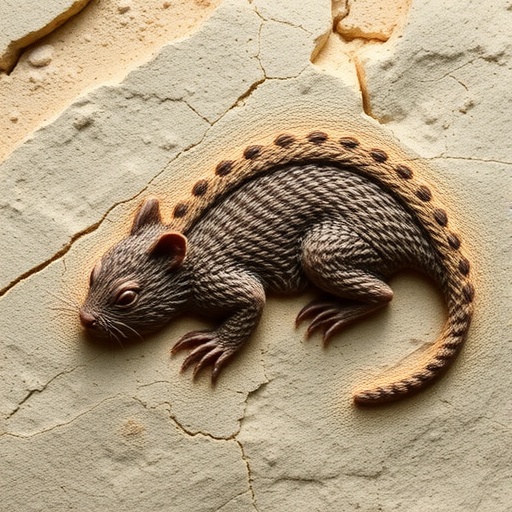
In a groundbreaking discovery that sheds new light on mammalian evolution during the twilight of the dinosaur era, researchers have identified a new species within the genus Cimolodon, dating back approximately 75 million years. Unearthed from the Upper Cretaceous El Gallo Formation in Baja California, México, this fossil discovery provides unprecedented insight into the morphology, ecology, and survival strategies of multituberculate mammals that navigated life alongside the last dinosaurs.
The newly identified species, named Cimolodon desosai, measures about the size of a modern golden hamster. This size characteristic is not trivial; it implies adaptations for agility and an omnivorous diet, traits that likely gave C. desosai and its descendants a selective advantage during the catastrophic Cretaceous-Paleogene mass extinction approximately 66 million years ago. The extinction event annihilated three-quarters of all life on Earth, including non-avian dinosaurs, yet these small mammals survived, offering critical clues into mammalian resilience and evolutionary pathways.
Cimolodons belong to the order Multituberculata, a diverse and long-lived clade that first appeared in the Jurassic Period and endured for more than 100 million years. These mammals are remarkable for their specialized teeth, which feature multiple rows of cusps adapted to processing a variety of foods. Investigating C. desosai’s dental morphology allows paleontologists to reconstruct its dietary habits accurately and to differentiate it from closely related species, which is paramount when skeletal remains are incomplete.
The fossil assemblage from Baja California includes not only teeth but also partial cranial, jaw, and postcranial elements such as femur and ulna bones. This relatively complete set of remains is exceptional, especially considering the rarity of multituberculate fossils that include more than isolated teeth. The presence of limb bones indicates C. desosai might have been at home both on the forest floor and in arboreal environments, capable of rapid movement and possibly adept climbing, supporting hypotheses about its omnivorous diet that encompassed fruits and insects.
The researchers employed advanced digital imaging techniques, particularly micro-computed tomography (micro-CT), to non-destructively peer inside the fossilized rock matrix and obtain high-resolution, three-dimensional images of the delicate bone structures. This high-level imaging technology permits detailed morphological analyses that are critical for accurate taxonomic classification, especially in taxa where tooth morphology defines species boundaries. It also facilitates biomechanical interpretations that help illuminate locomotion and feeding strategies of extinct species.
Cimolodon desosai’s discovery also highlights the significance of collaborative paleontological efforts, combining expertise from the University of Washington, University of Rhode Island, and Universidad Nacional Autónoma de México. The integration of cross-border academic initiatives enriches the quality of scientific interpretations and broadens contextual understanding of ancient North American faunas.
The naming of the species honors Michael de Sosa VI, the field assistant who first uncovered the fossilized remains during an expedition in 2009. His untimely passing during the analytical phase of the research adds a poignant human element to the narrative, underscoring the challenges and sacrifices often intertwined with paleontological fieldwork. The dedication embeds both scientific and personal significance within the species’ name, cementing a legacy in the evolutionary record.
The genus Cimolodon itself has surfaced repeatedly in Late Cretaceous strata across western North America, from Canada to Mexico, indicating a widespread and adaptable group. Understanding the evolutionary trajectory of this genus elucidates patterns of mammalian diversity before and after the K-Pg boundary. The relatively small and omnivorous nature of C. desosai and its kin may exemplify ecological flexibility that buffered these species against extinction forces that eliminated larger, more specialized taxa.
The findings documented in the Journal of Vertebrate Paleontology provide a crucial extension to the multituberculate fossil record, contributing significantly to broader debates about ecological dynamics and mammal-dinosaur interactions during one of Earth’s most volatile intervals. By reconstructing the morphology and behavior of C. desosai, scientists enhance the narrative of mammalian adaptation and survival in a world dominated by dinosaurs.
This research not only fills a gap in the fossil continuum but also enriches our understanding of the evolutionary underpinnings that facilitated the rise of mammals. It underscores the importance of detailed fossil analysis supported by cutting-edge imaging technologies and collaborative expertise. The approach sets a precedent for future studies aiming to unravel the complex web of life during the Cretaceous and beyond.
Funding for this research came from an array of prestigious sources, reflecting a commitment to multidisciplinary and international paleontological efforts. Support from UC MEXUS-CONACYT, the UW College of Arts and Sciences, and others facilitated the comprehensive approach necessary to uncover and detail this new species, illustrating how diverse funding streams can synergize to pioneer scientific advances.
Ultimately, the discovery of Cimolodon desosai advances our understanding of how early mammals survived environmental upheavals and ecological challenges. It serves as a testament to the resilience and adaptability of early mammals and informs present-day evolutionary biology by providing a window into life millions of years before our time.
News Publication Date: 22-Apr-2026
Web References: DOI link to the article
Cite Scienmag News
Gavin Prescott. (April 24, 2026). Scientists Uncover Fossil of a New Hamster-Sized Mammal That Coexisted with Dinosaurs on the Pacific Coast. Scienmag. https://scienmag.com/scientists-uncover-fossil-of-a-new-hamster-sized-mammal-that-coexisted-with-dinosaurs-on-the-pacific-coast/
Gavin Prescott. "Scientists Uncover Fossil of a New Hamster-Sized Mammal That Coexisted with Dinosaurs on the Pacific Coast." Scienmag, 24 April 2026, https://scienmag.com/scientists-uncover-fossil-of-a-new-hamster-sized-mammal-that-coexisted-with-dinosaurs-on-the-pacific-coast/. Accessed 4 September 2026.
Gavin Prescott. "Scientists Uncover Fossil of a New Hamster-Sized Mammal That Coexisted with Dinosaurs on the Pacific Coast." Scienmag. April 24, 2026. https://scienmag.com/scientists-uncover-fossil-of-a-new-hamster-sized-mammal-that-coexisted-with-dinosaurs-on-the-pacific-coast/


