


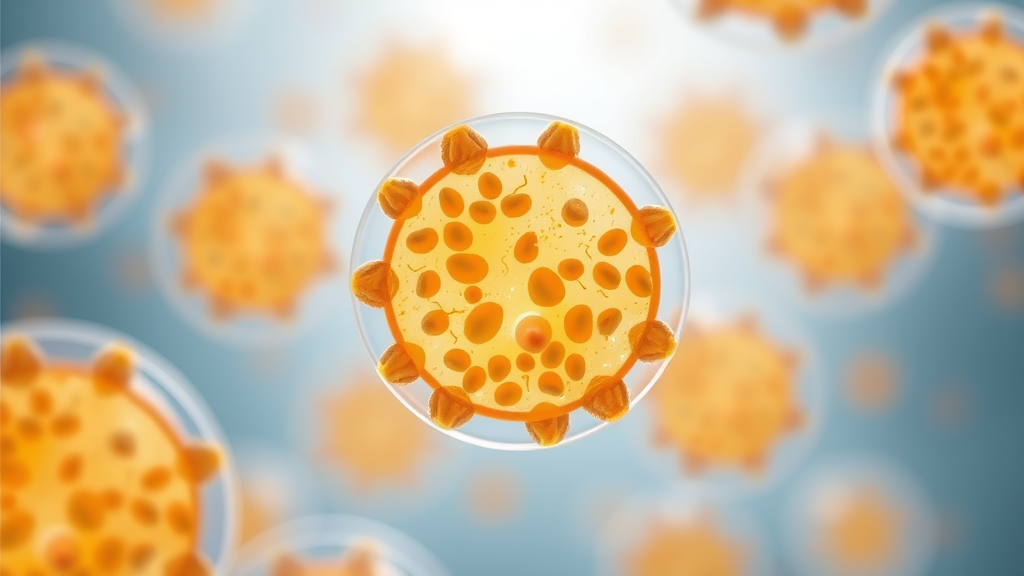
Probiotics have become one of the fastest-growing categories in the global functional food market, celebrated for their ability to ease colitis, strengthen immunity, and rebalance the gut microbiota. Yet behind the marketing labels lies a stubborn scientific problem: probiotic cells are extraordinarily fragile. From the moment they are manufactured, they face heat, dehydration, and oxidative stress; on the shelf they contend with oxygen and moisture; and inside the body they must endure stomach acid and bile salts before they can reach the intestine in a viable, functional state. A new review published in Current Research in Food Science argues that improving survival at any single stage is no longer enough, and it lays out a systematic engineering framework for protecting probiotics across their entire lifecycle.
The review, led by Wenmin Wu and colleagues, centers on complex coacervation, an encapsulation technique driven by electrostatic attraction between oppositely charged polymers such as proteins and polysaccharides. When conditions such as pH and polymer ratio are tuned correctly, the two biopolymers separate into a dense, polymer-rich phase that wraps around probiotic cells, forming a protective shell. The method offers high encapsulation efficiency, simple processing, and relatively low cost, and its composition, interfacial structure, and environmental responsiveness can all be tuned. But the authors stress that the technology is not a one-size-fits-all solution. Oxygen-sensitive Bifidobacterium species need stronger antioxidant protection than hardier Lactobacillus strains, and the central engineering challenge is balancing mutually competing demands: processing and storage stability, gastric protection, and timely intestinal release.
The first pillar of the framework is drying. Pairing coacervation with spray-drying or freeze-drying transforms soft, charge-balanced coacervate droplets into shelf-stable powders, but the review emphasizes that drying is not merely dehydration—it restructures the matrix through vitrification and compaction, altering water activity, glass transition behavior, and permeability. The evidence shows striking formulation-specific effects. Lactobacillus rhamnosus GG encapsulated in pea protein isolate and sugar beet pectin retained 8.5 to 9.0 log CFU/g initially, losing only about 1 log during two hours of simulated gastric fluid. Lactobacillus plantarum 550 in soy protein isolate and peach gum survived six hours of sequential gastric and intestinal exposure with roughly 1 log of loss, while free cells died completely within half an hour. Whey protein–starch coacervates achieved over 96 percent survival after spray-drying, with free-cell counts collapsing from 10.12 to 2.47 log CFU/mL during digestion.
Importantly, neither drying route is universally superior. Spray-drying rapidly removes water and promotes glass-state formation, generating dense matrices that resist bile salts, oxygen, and moisture—ideal for low-water-activity stability and powder handling—but the thermal and shear stresses of atomization can inflict sublethal damage. Freeze-drying minimizes thermal stress and better preserves cellular integrity, yet the porous structure left after ice sublimation invites moisture uptake and oxygen diffusion, demanding careful packaging. A telling example: storing Lactobacillus plantarum LN66 microcapsules in glass bottles instead of aluminum foil improved viability 1.1-fold at 4 degrees Celsius and 1.4-fold at 25 degrees, revealing that packaging and moisture ingress are hidden variables that can masquerade as differences in drying performance. The authors call for standardized reporting of residual moisture, water activity, and drying thermograms to make cross-study comparisons meaningful.
Beyond powders, the review examines tableting as a macro-scale second shield. In one representative study, three nanochitin morphologies were coacervated with whey protein isolate, oven-dried at 42 degrees Celsius, and compressed into tablets that showed improved structural integrity over the powder alone. The tablet matrix limits particle-particle friction and provides geometric shielding during storage and gastrointestinal transit, while controlled disintegration and enteric coatings can complement the pH-responsive coacervate shell. But the authors caution that hardness should not be maximized independently of disintegration: denser tablets protect better but slow water penetration and release. Compression force, lubrication, and hygroscopic excipients all introduce coupled trade-offs, and direct head-to-head comparisons of the same formulation before and after compression remain scarce.
Perhaps the most visually striking strategy is emulsion-templated coacervation, which builds multi-compartment carriers. In water-in-oil systems, a protein-stabilized fat layer surrounds the aqueous probiotic suspension before a polyelectrolyte shell is deposited; in water-in-oil-in-water double emulsions, gelatin–carboxymethyl cellulose shells built around the droplets achieved high encapsulation and controlled intestinal release. One double-emulsion design placed retinyl palmitate in the oil layer and probiotics in the inner water phase, leveraging both hydrophobic and electrostatic barriers. The same gelatin–carboxymethyl cellulose platform showed real biological efficacy in mice: the microcapsules mitigated chemically induced colitis, increased fecal short-chain fatty acids, and shifted the microbiota. Adding krill oil to the middle oil phase compacted the shell through phospholipid–gelatin interactions, reducing freeze-drying injury. However, each added interface is also a potential site of instability, from coalescence and osmotic pumping to lipid oxidation, so structural complexity must be matched by careful osmotic balancing and antioxidant protection.
Crosslinking offers yet another lever, introducing covalent or ionic bonds that densify the polyelectrolyte network. Sodium tripolyphosphate-crosslinked gum arabic–chitosan coacervates boosted encapsulation efficiency from 26 to 110 percent and prolonged storage survival, especially with the cryoprotectant trehalose. Vanillin-crosslinked casein–chitosan microparticles maintained Lactobacillus plantarum viability for 260 days at 25 degrees and, remarkably, reached the distal ileum and colon in vivo, stimulating Th1 and Th17 immune responses. Enzymatic crosslinking with transglutaminase kept Lactobacillus acidophilus stable in orange juice for 63 days. But the review highlights a counterintuitive finding: combining coacervation with enzymatic crosslinking in soy protein systems actually weakened protection, because compact coacervate networks restricted enzyme access to crosslinking sites. Two individually beneficial strategies do not guarantee synergy when their molecular requirements conflict in space and time.
The review also surveys a clean-label frontier: low-frequency static magnetic fields in the 1 to 300 millitesla range, which can influence ion transport, hydration shells, and molecular orientation without heating. In a proof-of-concept study, exposing casein–highland barley polysaccharide coacervation to the field amplified protein aggregation, yielding greater coacervate yield, larger particles, higher viscoelasticity, and stronger probiotic protection—all without adding any chemical crosslinker. The authors temper enthusiasm, noting that field parameters are inconsistently reported, responsiveness is strongly material-dependent, and maintaining homogeneous fields in industrial-scale reactors is nontrivial. For now, magnetic modulation is an experimental process lever, not an established technology.
Finally, the review explores co-delivery: encapsulating probiotics alongside polyphenols, phytosterols, and omega-3 oils. Co-encapsulating Lactobacillus casei Zhang with diacylglycerol oil improved freeze-drying survival to 96.24 percent, while soy lecithin in algal oil systems lifted probiotic freeze-drying survival to 90 percent and DHA lipolysis efficiency to 64.8 percent. Yet synergy has limits: quercetin at 0.05 percent improved probiotic survival in zein–chitosan coacervates, but higher polyphenol concentrations turned protective compounds inhibitory. The authors propose that true synergy must be evaluated bidirectionally, since probiotic enzymes can also transform polyphenols into more bioavailable metabolites. Looking ahead, they argue the field must move beyond counting colony-forming units toward membrane integrity, transcriptomics, in vivo colonization studies, and computational modeling of coacervate assembly and gut release. Only then, they conclude, can coacervation-based platforms deliver on their promise of safer, smarter, precisely targeted probiotic products.
Subject of Research: Engineering complex coacervation-based encapsulation systems for targeted probiotic delivery and bioactive co-encapsulation
Article Title: Next-generation probiotic delivery: Engineering complex coacervation systems for targeted gut release and bioactive synergy
Article References: Wu, W., Zhang, L., Chen, R., Li, D., Lai, J., Liao, E., Xu, W., Xu, J., & Yuan, Y. (2026). Next-generation probiotic delivery: Engineering complex coacervation systems for targeted gut release and bioactive synergy. Current Research in Food Science, Article 101565. https://doi.org/10.1016/j.crfs.2026.101565
Image Credits: AI Generated
DOI: 10.1016/j.crfs.2026.101565
Keywords: probiotics, complex coacervation, encapsulation, targeted gut release, spray-drying, freeze-drying, crosslinking, double emulsions, co-delivery, bioactive compounds, gut microbiota, functional foods
Cite Scienmag News
Morgan Morrow. (September 21, 2026). Scientists engineer smarter probiotic shields that survive the gut and deliver more. Scienmag. https://scienmag.com/scientists-engineer-smarter-probiotic-shields-that-survive-the-gut-and-deliver-more/
Morgan Morrow. "Scientists engineer smarter probiotic shields that survive the gut and deliver more." Scienmag, 21 September 2026, https://scienmag.com/scientists-engineer-smarter-probiotic-shields-that-survive-the-gut-and-deliver-more/. Accessed 4 October 2026.
Morgan Morrow. "Scientists engineer smarter probiotic shields that survive the gut and deliver more." Scienmag. September 21, 2026. https://scienmag.com/scientists-engineer-smarter-probiotic-shields-that-survive-the-gut-and-deliver-more/


