


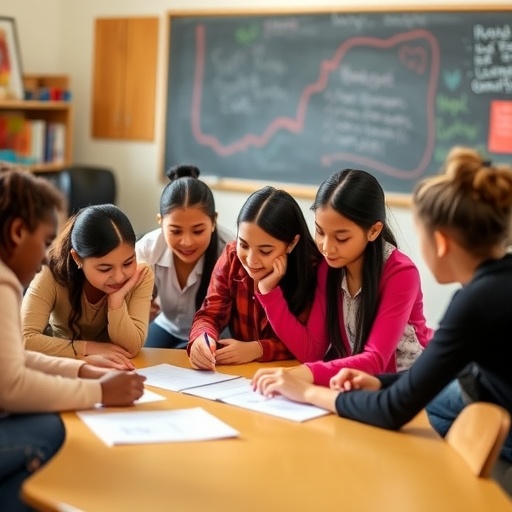
An extensive Indigenous-led research initiative conducted in Perth’s primary schools has unveiled a critical shortfall in how educational institutions engage with Aboriginal students. Rather than embracing substantial, culturally meaningful actions, many educators have defaulted to symbolic gestures which fall short of adequately supporting the unique needs of Aboriginal children in the classroom. This alarming revelation has catalyzed urgent calls for the systematic integration of Noongar storytelling, ceremonial practices, and language revival directly into school curricula, alongside instituting mandatory cultural competence training for non-Aboriginal teachers.
The Moombaki Cultural Learnings Project, spearheaded by Curtin University in collaboration with local Elders, families, educators, and students across three urban Boorloo (Perth) schools, offers a groundbreaking framework for authentic community-led educational transformation. This four-year longitudinal study meticulously documented how embedding Indigenous epistemologies and pedagogies significantly enhances Aboriginal children’s wellbeing, fosters a robust sense of belonging, cultivates cultural pride, and bolsters academic engagement. The project’s empirical evidence suggests that such culturally anchored initiatives lay a vital foundation not only for scholastic success but also for lifelong positive outcomes extending beyond formal education.
Integral to the Moombaki project’s success was its adoption of a multi-method research approach, incorporating qualitative tools such as in-depth interviews, culturally anchored yarning circles, and systematic classroom observations. These methodologies facilitated a comprehensive analysis of the lived educational experiences of Aboriginal students, their families, and educators. Co-designing program components ensured the cultural validity and community relevance of interventions, countering the prevalent top-down approaches that often marginalize Indigenous perspectives in educational reform.
A cardinal recommendation emerging from the findings emphasizes mandatory professional development for all non-Aboriginal educators to establish foundational racial literacy. This pedagogical recalibration is not merely superficial but seeks to empower school leaders and teachers with the competencies required to operate with cultural integrity. Such training is imperative to create and sustain culturally safe learning environments where Aboriginal students are recognized not only as learners but also as bearers of rich cultural heritage.
To further institutionalize cultural inclusivity, the project advocates for a centralized repository that houses approved cultural content, detailed lesson plans, and effective strategies for community engagement. This digital infrastructure intends to democratize access to culturally authentic educational resources, transcending geographic and socioeconomic barriers. By equipping teachers with accessible tools and knowledge, schools can embed Noongar values consistently and meaningfully within the curriculum.
Professor Cheryl Kickett-Tucker, the project’s lead researcher, highlighted the disproportionate cultural burden borne by Aboriginal educators, who frequently assume roles as cultural custodians without adequate institutional support or recognition. This imbalance often leads to burnout and ineffective implementation of cultural programs. Moreover, she cautioned about the misinterpretation of symbolic acts by non-Indigenous school leaders, who may conflate superficial acknowledgments with genuine cultural integration, thereby stifling the transformative potential of Indigenous-led initiatives.
Central to the Moombaki model is the incorporation of Noongar cultural values such as humor, trust, warmth, and connection, which serve as pedagogical cornerstones shaping both interpersonal relationships and learning environments. Embedding these principles nurtures a classroom culture that not only supports Aboriginal students in their identity formation but also fosters mutual respect among all learners, contributing overall to the Closing the Gap objectives aimed at rectifying educational inequities.
Technological innovation featured prominently in the Moombaki project through the development of a virtual reality game that immerses students in Aboriginal knowledge systems, language, and storytelling traditions. This VR-based educational tool presents a dual function: it bridges the digital divide by delivering immersive learning experiences to underserved communities, and it modernizes cultural transmission methods, aligning traditional knowledge with contemporary digital literacy imperatives.
Another pragmatic contribution of the research is the creation of a Cultural Integrity Audit. This evaluative instrument allows schools to rigorously assess their progress toward delivering culturally safe education, shifting the focus from performative gestures to measurable outcomes. The audit emphasizes embedding Noongar values across teaching practices, recognizing Aboriginal educators as cultural leaders, and fostering genuine school-community partnerships, thereby setting tangible benchmarks for accountability.
The project reinforced and deepened alliances between educational settings and local Aboriginal communities, emphasizing intergenerational knowledge transfer and genuine collaborative governance. These partnerships serve as vital conduits for sustaining cultural traditions and ensuring that Indigenous voices remain central in shaping the educational landscape.
In the current socio-political milieu marked by the setback of the Voice Referendum and stagnated efforts in Closing the Gap, the Moombaki study emerges as a timely and crucial intervention. It offers empirical evidence supporting a model wherein Indigenous leadership, sufficient resourcing, and authentic partnerships replace tokenism and symbolic acts, turning aspirational rhetoric into concrete actions that foster equity and cultural integrity within Australian education.
The findings from this research resonate with key policy frameworks such as the Australian government’s Closing the Gap targets, Western Australia’s Aboriginal Cultural Standards Framework, and international mandates, including the United Nations Declaration on the Rights of Indigenous Peoples. Together, these alignments underscore the necessity for systemic reforms that institutionalize Indigenous cultural knowledge as a core educational pillar, ensuring sustained progress and reconciliation.
In conclusion, the Moombaki Cultural Learnings Project provides a transformative blueprint for educational reform premised on Indigenous epistemologies and community collaboration. It calls upon schools, policymakers, and educators to transition from superficial symbolism to substantive, culturally grounded action. Embedding Aboriginal knowledge, practices, and values within mainstream education is not a discretionary agenda but an imperative for nurturing healthier, more engaged Aboriginal students and fostering inclusive, respectful classrooms for all Australians.
- Moombaki Cultural Learnings Project: https://research.curtin.edu.au/research-areas/aboriginal-and-torres-strait-islander-knowledge/moombaki-cultural-learnings/
- Closing the Gap: https://www.closingthegap.gov.au/national-agreement/targets
- WA Department of Education Aboriginal Cultural Standards Framework: https://www.education.wa.edu.au/dl/jjpzned
- UN Declaration on the Rights of Indigenous Peoples: https://humanrights.gov.au/our-work/aboriginal-and-torres-strait-islander-social-justice/projects/un-declaration-rights
- Moombaki Cultural Learnings Program (video): https://youtu.be/vrwk5R9pR3w
- Virtual Reality Game (Dropbox link): https://www.dropbox.com/scl/fo/6vozhk53pedmqeiu9fbyk/AIm8n14ecJRZb_msTLEKUoQ?e=4&preview=Moombaki+VR.mp4&rlkey=t2bjqoaypzzhw8pbh7y9tdsln&st=w22jbvwf&dl=0
References: Australian Research Council funding details, collaboration with Murdoch University, The University of Western Australia, Michigan State University
Keywords: Cultural practices, Curriculum reform, Education policy, Educational methods, Minority students, Indigenous peoples
Cite Scienmag News
Courtney Benton. (April 20, 2026). Schools Need Deeper Engagement Beyond Checklists to Support Indigenous Students: Report. Scienmag. https://scienmag.com/schools-need-deeper-engagement-beyond-checklists-to-support-indigenous-students-report/
Courtney Benton. "Schools Need Deeper Engagement Beyond Checklists to Support Indigenous Students: Report." Scienmag, 20 April 2026, https://scienmag.com/schools-need-deeper-engagement-beyond-checklists-to-support-indigenous-students-report/. Accessed 4 September 2026.
Courtney Benton. "Schools Need Deeper Engagement Beyond Checklists to Support Indigenous Students: Report." Scienmag. April 20, 2026. https://scienmag.com/schools-need-deeper-engagement-beyond-checklists-to-support-indigenous-students-report/


