


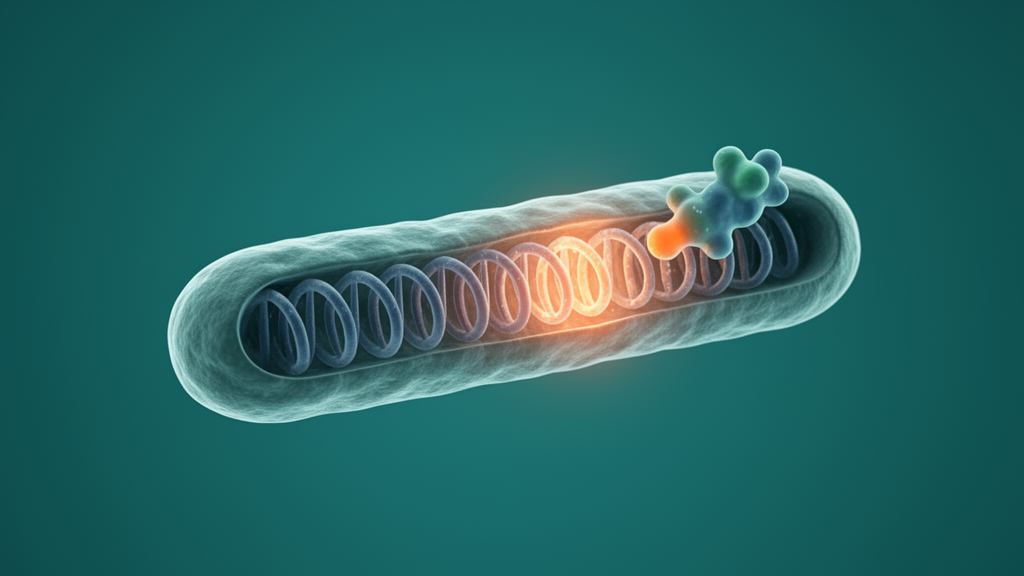
Salmonella Typhimurium is one of the most familiar villains in foodborne illness, a gram-negative bacterium responsible for severe gastrointestinal disease in both animals and humans. Yet behind the familiar clinical picture lies an intricate molecular choreography that allows the pathogen to survive hostile environments inside its host. A new study published in Molecular Biology Reports has uncovered an unexpected connection in that choreography: a transcriptional regulator best known for its role in nitrogen metabolism appears to directly control a gene dedicated to repairing damaged DNA. The finding, reported by Pravas Ranjan Sahoo of Odisha University of Agriculture and Technology and colleagues at the ICAR-Indian Veterinary Research Institute and Rani Lakshmi Bai Central Agricultural University, suggests that the bacterium may coordinate its DNA repair machinery with the metabolic state of its surroundings.
The gene at the center of the study is ogt, which encodes O6-methylguanine DNA methyltransferase, or Ogt. This enzyme belongs to a family of suicide repair proteins that directly reverse a particularly dangerous form of DNA damage: the alkylation of guanine at its O6 position. If left unrepaired, O6-methylguanine mispairs with thymine during replication, producing mutations that can cripple the bacterium or, in some contexts, help it evolve resistance to stresses. Earlier work by other groups has shown that alkyltransferase systems contribute to the virulence of Salmonella enterica, making the question of how ogt is switched on and off a matter of genuine pathogenic relevance. Until now, however, the transcriptional regulation of ogt in Salmonella Typhimurium remained poorly characterized.
The regulatory suspect in this study was NarL, a response regulator from the two-component signaling systems that bacteria use to sense and adapt to environmental change. NarL is activated as part of the nitrate and nitrite respiration pathway, which becomes important when Salmonella finds itself in the oxygen-poor depths of the intestinal tract. Previous research from the same and other laboratories had implicated narL in the pathogenesis of Salmonella Typhimurium under anaerobic conditions, and deletion of both fnr and narL, the two major anaerobic regulators, has been shown to compromise the bacterium’s ability to colonize a mouse model. The idea that such a metabolism-oriented regulator might also reach into the DNA repair program was intriguing enough to test directly.
To do so, the team first needed purified NarL protein. They cloned the narl gene into the pET32a expression vector and produced the recombinant protein in Escherichia coli BL21 (DE3), a standard workhorse strain for protein expression. On the DNA side, they selected the promoter region of the ogt gene, amplified it, and cloned it so that both its binding behavior and its activity could be evaluated. This combination of a purified regulator and a defined promoter fragment set the stage for a series of experiments designed to answer a deceptively simple question: does NarL physically attach itself to the ogt promoter, and if so, does that attachment matter for gene expression?
The first line of evidence came from electrophoretic mobility shift assays, a classic technique in which a DNA fragment is mixed with a candidate binding protein and run through a gel. If the protein binds, the DNA-protein complex migrates more slowly than the free DNA, producing a visible shifted band. The assays showed that NarL interacts specifically with the ogt promoter, indicating a direct physical association rather than an indirect effect mediated by other cellular components. Molecular docking simulations were used to complement this picture, providing a structural view of how the regulator might engage the promoter DNA.
The biophysical confirmation came from isothermal titration calorimetry, a technique that measures the heat released or absorbed as one molecule binds to another and thereby yields thermodynamic parameters for the interaction. The ITC measurements supported a favorable binding interaction between NarL and the ogt promoter, with a calculated free energy change of −9.42 kilocalories per mole. A negative free energy of that magnitude indicates a spontaneous, thermodynamically stable interaction, consistent with a regulator that genuinely recognizes its target sequence rather than sticking to DNA nonspecifically. Together, the EMSA, docking, and ITC results formed a converging case that NarL is a bona fide DNA-binding partner of the ogt promoter.
Physical binding alone does not prove biological relevance, so the researchers turned to living bacteria. Using quantitative reverse-transcription PCR, they compared ogt transcript levels between wild-type Salmonella Typhimurium and a strain in which narl had been deleted. The deletion significantly reduced ogt expression, with the difference reaching statistical significance at P ≤ 0.01. A β-galactosidase reporter assay, in which the ogt promoter drives expression of the lacZ gene so that promoter activity can be measured through an enzymatic readout, told the same story: removing narl significantly decreased promoter activity relative to the wild-type strain.
Perhaps the most convincing experiment was the rescue. When the researchers supplemented the narl deletion strain with exogenous recombinant NarL protein, ogt expression was restored. That reversal is important because it argues that the loss of ogt expression was specifically due to the absence of NarL rather than to some collateral damage caused by deleting the gene. It also demonstrates that the regulatory relationship operates at the level of the protein finding its target, a direct and mechanistically interpretable connection between regulator and promoter.
The broader significance of the study lies in what it says about how Salmonella integrates its survival strategies. NarL sits at the junction of nitrogen metabolism, responding to nitrate and nitrite availability during anaerobic respiration. Ogt sits at the junction of genome maintenance, reversing alkylation damage that can arise from reactive nitrogen and oxygen species generated during infection. By connecting the two, the study suggests a model in which the bacterium ramps up DNA repair capacity in response to environmental signals associated with nitrosative stress, the chemically hostile conditions it encounters in inflamed host tissues. The authors propose that this NarL-ogt link may contribute to bacterial survival under exactly those conditions.
There are caveats worth keeping in mind. The study reports no animal experiments, and the authors note that no datasets were generated or analyzed beyond those described in the work itself, so the physiological consequences of the NarL-ogt connection in a living host remain to be tested. The precise binding sequence within the promoter, the exact structural contacts revealed by docking, and the interplay with other regulators of ogt expression are all questions for future work. Nevertheless, the convergence of in vitro binding data, thermodynamic measurements, structural modeling, and in vivo expression analysis makes a strong case that NarL is a genuine transcriptional regulator of the ogt DNA repair gene. For a pathogen whose success depends on both metabolic flexibility and genomic integrity, that connection may prove to be more than a molecular curiosity.
Subject of Research: Binding of the NarL response regulator to the ogt gene promoter in Salmonella Typhimurium
Article Title: Binding analysis of the response regulator NarL protein to the promoter of the O6-methylguanine-DNA methyltransferase (ogt) gene in Salmonella Typhimurium
Article References: Sahoo, P. R., Kumar, A., Pashupathi, M., & Sahoo, J. R. (2026). Binding analysis of the response regulator NarL protein to the promoter of the O6-methylguanine-DNA methyltransferase (ogt) gene in Salmonella Typhimurium. Molecular Biology Reports, 53(1), Article 1535. https://doi.org/10.1007/s11033-026-12687-w
Image Credits: AI Generated
DOI: 10.1007/s11033-026-12687-w
Keywords: Salmonella Typhimurium, NarL, ogt, DNA repair, gene regulation, EMSA, isothermal titration calorimetry, molecular docking, RT-qPCR, promoter activity, nitrosative stress, response regulator
Cite Scienmag News
Juliet Wilcox. (October 19, 2026). Salmonella Response Regulator NarL Found to Control Key DNA Repair Gene. Scienmag. https://scienmag.com/salmonella-response-regulator-narl-found-to-control-key-dna-repair-gene/
Juliet Wilcox. "Salmonella Response Regulator NarL Found to Control Key DNA Repair Gene." Scienmag, 19 October 2026, https://scienmag.com/salmonella-response-regulator-narl-found-to-control-key-dna-repair-gene/. Accessed 19 October 2026.
Juliet Wilcox. "Salmonella Response Regulator NarL Found to Control Key DNA Repair Gene." Scienmag. October 19, 2026. https://scienmag.com/salmonella-response-regulator-narl-found-to-control-key-dna-repair-gene/


