


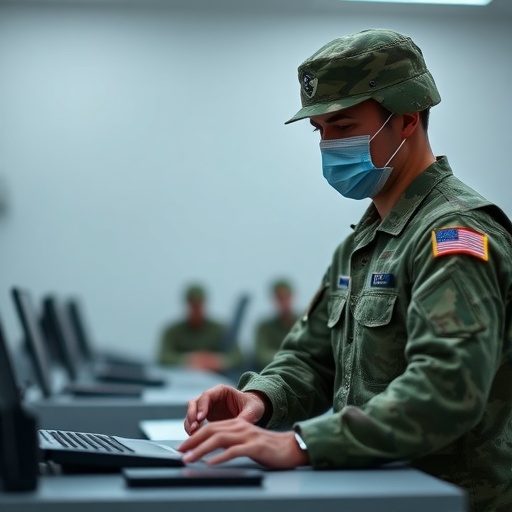
A routine blood test for testosterone could become a powerful new tool in men’s health—but only if military screening programs avoid turning a complex hormone question into a simplistic numbers game. In a new perspective published in Nature Reviews Urology, Mubarak and Modgil argue that the armed forces may provide an important opportunity to examine how evidence-based testosterone testing could be implemented at scale. Their proposal arrives as interest in testosterone deficiency, often called hypogonadism, continues to surge among clinicians, service members and the wider public.
Testosterone is central to male reproductive biology, but its effects extend throughout the body. The hormone contributes to sperm production, sexual function, muscle maintenance, bone strength, red blood cell formation, mood and energy regulation. Levels vary substantially between individuals and fluctuate with age, sleep, illness, stress, body composition, medications and the time of day. That biological variability makes testosterone testing deceptively difficult: a single low result does not automatically mean that a man has a medical disorder requiring treatment.
The authors’ focus on military personnel is significant because service members operate in environments where physical performance, mental resilience and long-term health are closely monitored. Military populations also share structured medical systems, standardized occupational demands and detailed health records, creating conditions in which screening strategies could be evaluated more rigorously than in fragmented healthcare settings. If designed carefully, routine testing could reveal how testosterone levels relate to symptoms, fitness, recovery, metabolic health and deployment-related stress without assuming that every abnormal result represents disease.
A major technical challenge is deciding what constitutes a genuinely low testosterone level. Testosterone follows a circadian rhythm, generally reaching its highest concentrations in the morning and declining later in the day. Concentrations can also fall temporarily during acute infection, severe calorie restriction, sleep deprivation or intense physical stress. For that reason, clinical assessment typically depends on a combination of symptoms and consistently low measurements, ideally obtained through properly timed morning blood samples and confirmed with repeat testing. Laboratory methods also matter, because different assays can produce meaningfully different results.
The hormone circulating in blood exists in several forms. Some testosterone is tightly bound to proteins, while another fraction is loosely bound or remains unbound and is considered more biologically available. Conditions that alter sex hormone-binding globulin, including obesity, thyroid disorders, liver disease and aging, can change total testosterone without producing the same change in active hormone. A technically sound screening program would therefore need to account for these variables and use validated laboratory techniques rather than relying on a single universal cutoff.
The prospect of routine screening is likely to attract attention because testosterone therapy has become increasingly visible in popular culture. Clinics and online companies frequently market testosterone as a solution for fatigue, reduced libido, weight gain or declining athletic performance. Yet these symptoms are nonspecific and may arise from depression, sleep apnea, medication effects, overtraining, diabetes, obesity or chronic disease. Expanding testing without clinical safeguards could encourage unnecessary treatment, expose healthy men to avoidable risks and reinforce the misleading idea that testosterone is a general-purpose performance enhancer.
Testosterone replacement can be appropriate for men with confirmed hormone deficiency and compatible clinical symptoms, but it is not risk-free. Treatment can suppress the body’s own testosterone production and reduce sperm production, making it unsuitable for men seeking fertility in the near term. It can also increase red blood cell production, requiring monitoring for erythrocytosis, and may worsen untreated sleep apnea or complicate the evaluation of prostate health. Cardiovascular safety remains an area of active clinical discussion, which further underscores the importance of individualized assessment rather than automatic treatment after a low laboratory result.
For military organizations, the consequences of poorly designed screening could extend beyond individual medical decisions. A test result might affect deployment eligibility, career progression, insurance, privacy or perceptions of physical capability. Any program would therefore need strict rules governing informed consent, confidentiality, data access and the separation of health protection from disciplinary or employment decisions. Service members should not be pressured into testing or treatment merely because a hormone measurement is available, and abnormal results should trigger careful clinical evaluation rather than administrative labeling.
The authors’ argument is ultimately less about testing everyone than about building a reliable evidence base for men’s health. Military health systems could help researchers study how testosterone measurements perform across different ages, occupations, training loads and environmental conditions. Long-term data might clarify which symptoms and biological markers best predict clinically meaningful deficiency, which men benefit from treatment and whether screening improves outcomes compared with symptom-led testing. Such research could also expose important gaps, including how testosterone-related care should be adapted for diverse ethnic groups, transgender and gender-diverse personnel, and men with chronic illness.
As testosterone moves from a niche endocrine concern into a viral topic in wellness culture, the call for evidence-based implementation is timely. Routine screening could improve recognition of genuine hormone disorders, but only if it is paired with accurate assays, repeat testing, symptom assessment, fertility counseling and protection against overtreatment. The military may offer a uniquely organized setting to test that model, yet the broader lesson applies far beyond the barracks: testosterone is a clinically meaningful hormone, not a standalone scorecard for health, masculinity or performance.
Cite Scienmag News
Ophelia Keating. (August 3, 2026). Routine Military Testosterone Screening Could Advance Evidence-Based Men’s Health. Scienmag. https://scienmag.com/routine-military-testosterone-screening-could-advance-evidence-based-mens-health/
Ophelia Keating. "Routine Military Testosterone Screening Could Advance Evidence-Based Men’s Health." Scienmag, 3 August 2026, https://scienmag.com/routine-military-testosterone-screening-could-advance-evidence-based-mens-health/. Accessed 3 September 2026.
Ophelia Keating. "Routine Military Testosterone Screening Could Advance Evidence-Based Men’s Health." Scienmag. August 3, 2026. https://scienmag.com/routine-military-testosterone-screening-could-advance-evidence-based-mens-health/


