

Wednesday, October 21, 2026
Science
No Result
View All Result
  • Login
  • HOME
  • SCIENCE NEWS
  • CONTACT US
  • HOME
  • SCIENCE NEWS
  • CONTACT US
No Result
View All Result
Scienmag
No Result
View All Result
Home Science News Biology

Review assesses network pharmacology for herbal medicines in rheumatoid arthritis

October 21, 2026
in Biology
Louis Brooks
By Louis Brooks Scienmag Editorial Profile - Medicinal Chemistry
Reading Time: 3 mins read
0
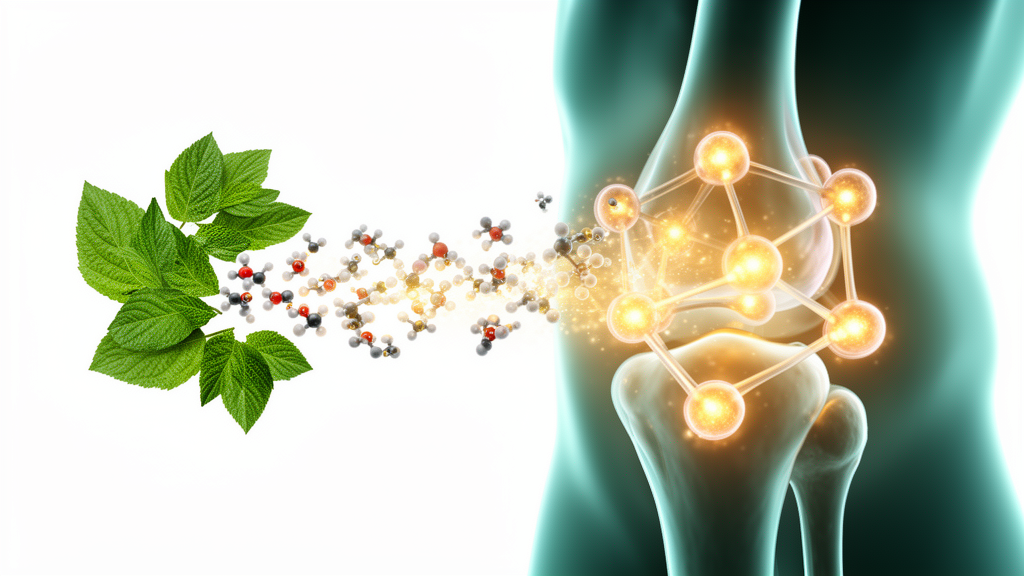
Network Pharmacology Maps How Herbal Compounds Strike Rheumatoid Arthritis From Multiple Angles

Network Pharmacology Maps How Herbal Compounds Strike Rheumatoid Arthritis From Multiple Angles

65
SHARES
587
VIEWS
Share on FacebookShare on Twitter
ADVERTISEMENT

A review published in Molecular Biology Reports examines how network pharmacology is being used to investigate herbal medicines and bioactive compounds in rheumatoid arthritis (RA). The authors describe the approach as a systems-level strategy combining bioinformatics, multi-omics data, molecular docking and experimental validation to study interactions among compounds, molecular targets and disease pathways.

The review covers research published from January 2020 through April 2026 that was identified through searches of PubMed, Scopus, Web of Science and Google Scholar. Eligible studies investigated network pharmacology for herbal or traditional-medicine therapies for RA and reported molecular targets, pathways, phytochemicals, docking, omics analyses or experimental validation. The review was critical in summarizing the evidence; it did not generate or analyse a new dataset.

Across the studies considered, network analyses repeatedly identified pathways involving TNF, NF-κB, IL-17, Toll-like receptor signaling, PI3K/Akt, MAPK, JAK/STAT, NLRP3, oxidative stress, angiogenesis and bone-related processes. These pathways are associated in the source studies with inflammatory signaling, immune-cell regulation, synoviocyte proliferation, apoptosis, osteoclastogenesis and joint destruction in RA.

Compounds that appeared repeatedly across different herbal preparations included quercetin, kaempferol, luteolin, berberine, celastrol and triptolide. The review describes computational and experimental associations between these compounds and targets such as TNF, IL-6, PTGS2, AKT1, RELA and MAPKs. For example, studies reported effects on inflammatory pathways, macrophage or fibroblast-like synoviocyte activity, and osteoclast-related processes in cell or animal models.

The evidence was not uniform. Some investigations included molecular docking, molecular or cellular assays, metabolomics or experiments in rheumatoid arthritis models. Others relied mainly on database-based target prediction, network construction and pathway enrichment. The review notes that comparisons among studies are difficult because proposed targets, herbal materials and experimental validation methods differ substantially.

Several findings were based on preclinical models rather than human clinical outcomes. Results reported in collagen-induced arthritis or other animal models, and in cultured synoviocytes or other cell systems, cannot by themselves establish safety or effectiveness in people with RA. A small number of reviewed studies included clinical trials, but the review emphasizes limited clinical validation overall.

The authors identify several limitations in the field. They report heterogeneity among public databases, including differences in compound-target annotations and update practices, which can introduce false positives and affect network results. They also note that static target-prediction methods may not represent dynamic cellular conditions and often do not establish whether a compound acts as an agonist, antagonist or other modulator. Pharmacokinetics, botanical variation, extraction methods and formulation standardization remain additional issues.

Overall, the review concludes that network pharmacology offers a framework for target prioritization and mechanism-based investigation of multi-component herbal medicines in RA. It presents the approach as a possible bridge between traditional medicinal knowledge and systems-based drug discovery, while emphasizing that computational predictions need standardized products, experimental confirmation and controlled clinical studies before they can support therapeutic claims.

Subject of Research: Network pharmacology analysis of herbal medicines and bioactive compounds in rheumatoid arthritis

Article Title: Molecular mechanisms of herbal medicines and bioactive compounds in rheumatoid arthritis: a comprehensive network pharmacology perspective

Article References: Jasna, T. J., Sandra, K. S., Vithalkar, M. P., Vijaykumar, D., & Nayak, Y. (2026). Molecular mechanisms of herbal medicines and bioactive compounds in rheumatoid arthritis: a comprehensive network pharmacology perspective. Molecular Biology Reports, 53(1), Article 1559. https://doi.org/10.1007/s11033-026-12727-5

Image Credits: AI Generated

DOI: 10.1007/s11033-026-12727-5

Keywords: Rheumatoid arthritis, Network pharmacology, Herbal medicine, Phytochemicals, Inflammatory signaling, Systems biology, Molecular docking, Drug discovery, Molecular, mechanisms, herbal, medicines

Cite Scienmag News

Louis Brooks. (October 21, 2026). Review assesses network pharmacology for herbal medicines in rheumatoid arthritis. Scienmag. https://scienmag.com/review-assesses-network-pharmacology-for-herbal-medicines-in-rheumatoid-arthritis/


Louis Brooks. "Review assesses network pharmacology for herbal medicines in rheumatoid arthritis." Scienmag, 21 October 2026, https://scienmag.com/review-assesses-network-pharmacology-for-herbal-medicines-in-rheumatoid-arthritis/. Accessed 21 October 2026.

Louis Brooks. "Review assesses network pharmacology for herbal medicines in rheumatoid arthritis." Scienmag. October 21, 2026. https://scienmag.com/review-assesses-network-pharmacology-for-herbal-medicines-in-rheumatoid-arthritis/

Tags: bioinformatics in traditional medicine researchcomputational target identification for herbal compoundsdrug discoveryexperimental validation of herbal bioactives in RAherbalherbal medicineinflammatory signalingkey bioactive compounds in herbal medicines for RAmechanismsmedicinesmolecularmolecular dockingmolecular docking of phytochemicals in rheumatoid arthritismulti-omics analysis for RA treatmentnetwork pharmacologynetwork pharmacology of herbal medicines in rheumatoid arthritisphytochemicalsrheumatoid arthritisrole of TNF and NF-κB pathways in herbal RA therapiessignaling pathways involved in RA from network analysisSystems Biologysystems-level approach to herbal therapeuticstraditional medicine and immune regulation in
Share26Tweet16
Previous Post

Ancient eland collagen found in 60,000-year-old South African ochre

Next Post

Morphological study describes Lissomus arawak, a new female click beetle from the Dominican Republic

Related Posts

Hidden Armor: Four New Water Mite Species Reveal Secondary Sclerotization Under the Integument
Biology

Morphological study identifies four new water-margin Euthyadinae species from southern China

October 21, 2026
Hidden Trove of Museum Drawers Yields 15 New Moth Species From Ethiopia
Biology

Taxonomic study identifies 15 new tineid moth species and 10 new Ethiopian records

October 21, 2026
Seven New Waxcap Species Emerge From Two Decades of Fieldwork in the Dominican Republic
Biology

Morphological and phylogenetic study identifies seven new Hygrocybe taxa in the Dominican Republic

October 21, 2026
Redescribed Springtails from Balkan Caves Reveal Hidden Diversity of Cave-Dwelling Collembola
Biology

Redescription of two cave-dwelling Oncopodura species from the Balkan Peninsula

October 21, 2026
New click beetle species with glossy black shell discovered in Dominican Republic
Biology

Morphological study describes Lissomus arawak, a new female click beetle from the Dominican Republic

October 21, 2026
Angelman syndrome mice show disrupted Kv4.2 channel redistribution
Biology

Angelman syndrome mice show disrupted Kv4.2 channel redistribution

October 21, 2026
Next Post
New click beetle species with glossy black shell discovered in Dominican Republic

Morphological study describes Lissomus arawak, a new female click beetle from the Dominican Republic

  • Mothers who receive childcare support from maternal grandparents show more optimized

    Mothers who receive childcare support from maternal grandparents show more parental warmth, finds NTU Singapore study

    27656 shares
    Share 11059 Tweet 6912
  • University of Seville Breaks 120-Year-Old Mystery, Revises a Key Einstein Concept

    1061 shares
    Share 424 Tweet 265
  • Bee body mass, pathogens and local climate influence heat tolerance

    682 shares
    Share 273 Tweet 171
  • Researchers record first-ever images and data of a shark experiencing a boat strike

    546 shares
    Share 218 Tweet 137
  • Groundbreaking Clinical Trial Reveals Lubiprostone Enhances Kidney Function

    531 shares
    Share 212 Tweet 133
Science

Embark on a thrilling journey of discovery with Scienmag.com—your ultimate source for cutting-edge breakthroughs. Immerse yourself in a world where curiosity knows no limits and tomorrow’s possibilities become today’s reality!

RECENT NEWS

  • AI and flexible investment model lifts simulated wastewater biorefinery value
  • Field study finds no fertility or sire-count advantage for male-like chemical profiles in two field cricket species
  • Mediterranean Lifestyle and Diet Linked to Cardiovascular Odds in Older Adults
  • Plant-made silver nanoparticles reduce skin tumors in mice

Categories

  • Agriculture
  • Anthropology
  • Archaeology
  • Athmospheric
  • Biology
  • Biotechnology
  • Blog
  • Bussines
  • Cancer
  • Chemistry
  • Climate
  • Earth Science
  • Editorial Policy
  • Marine
  • Mathematics
  • Medicine
  • Pediatry
  • Policy
  • Psychology & Psychiatry
  • Science Education
  • Science News
  • Social Science
  • Space
  • Technology and Engineering

Subscribe to Blog via Email

Enter your email address to subscribe to this blog and receive notifications of new posts by email.

Join 5,150 other subscribers

© 2025 Scienmag - Science Magazine

Welcome Back!

Login to your account below

Forgotten Password?

Retrieve your password

Please enter your username or email address to reset your password.

Log In
No Result
View All Result
  • HOME
  • SCIENCE NEWS
  • CONTACT US

© 2025 Scienmag - Science Magazine

Discover more from Science

Subscribe now to keep reading and get access to the full archive.

Continue reading