

Wednesday, October 21, 2026
Science
No Result
View All Result
  • Login
  • HOME
  • SCIENCE NEWS
  • CONTACT US
  • HOME
  • SCIENCE NEWS
  • CONTACT US
No Result
View All Result
Scienmag
No Result
View All Result
Home Science News

Research report: Lithium-salt anion regulation of ion transport and interfacial stability in PVDF-HFP/PAN/LLZTO composite polymer electrolytes

October 21, 2026
in Science News
Neil Sanderson
By Neil Sanderson Scienmag Editorial Profile - Materials Characterization
Reading Time: 2 mins read
0
Research report: Lithium-salt anion regulation of ion transport and interfacial stability in PVDF-HFP/PAN/LLZTO composite polymer electrolytes

Research report: Lithium-salt anion regulation of ion transport and interfacial stability in PVDF-HFP/PAN/LLZTO composite polymer electrolytes

65
SHARES
587
VIEWS
Share on FacebookShare on Twitter
ADVERTISEMENT

A membrane containing 30 wt% lithium bis(trifluoromethanesulfonyl)imide, known as LiTFSI, reached an ionic conductivity of 6.08 × 10⁻⁴ S cm−1, a tensile strength of about 8.5 MPa and a lithium-ion transference number of 0.58. The corresponding membrane containing lithium difluoro(oxalato)borate, or LiODFB, showed lower mechanical strength and poorer lithium-ion transport. The researchers developed the materials as potential solid or quasi-solid alternatives to conventional liquid electrolytes in lithium-ion batteries.

According to the study background, liquid electrolytes can undergo oxidative decomposition during prolonged operation, while parasitic reactions at electrode–electrolyte interfaces can contribute to impedance growth and capacity decay. For the experiment, poly(vinylidene fluoride-co-hexafluoropropylene), abbreviated PVDF-HFP, and polyacrylonitrile, or PAN, formed the polymer host. The researchers added LLZTO, a Ta-substituted form of lithium lanthanum zirconate, as an inorganic ceramic filler.

They then prepared two composite membranes by separately introducing LiTFSI or LiODFB. In both formulations, the salt dosage was fixed at 30 wt% calculated from the combined mass of PVDF-HFP and PAN, allowing the two salt identities to be compared within the same general electrolyte design. The formulation designated PSI 30% contained LiTFSI, while the membrane designated PFB 30% contained LiODFB.

PSI 30% combined an ionic conductivity of 6.08 × 10⁻⁴ S cm−1 with a tensile strength of approximately 8.5 MPa and a lithium-ion transference number of 0.58. PFB 30% performed less well on the reported mechanical-strength and lithium-ion transport measures. Electrochemical testing was performed in LiFePO₄/CPE/Li cells, which paired a lithium iron phosphate cathode with the composite polymer electrolyte and a lithium-metal anode.

Cells assembled with PSI 30% delivered discharge capacities of 162.61 mAh g−1 at a 0.1 C rate and 107.14 mAh g−1 at 1 C. The lower capacity at the higher rate shows that the membrane’s strong material-level results did not translate into identical discharge performance across the two tested rates. After 100 cycles, the PSI 30% cells retained a capacity above 159 mAh g−1, corresponding to nearly 98% retention.

This is a cell-level result obtained with lithium iron phosphate electrodes, lithium-metal anodes, the tested composite electrolyte and the study’s specified discharge rates. It provides evidence of stable electrochemical performance over the reported 100-cycle test, while the scope of the result remains tied to that laboratory cell configuration and test period. Under the reported conditions, the LiTFSI-containing composite outperformed the LiODFB-containing composite on the stated mechanics and transport measures, and cells using the former sustained nearly all of their capacity through 100 cycles.

The findings support lithium-salt selection as a potential lever for coordinating material properties and cell behavior in PVDF-HFP/PAN/LLZTO composite electrolytes. For battery researchers, the practical appeal of the work is that it compares two salt choices without changing the broad architecture of the composite.

Subject of Research: Effects of lithium-salt identity on composite polymer electrolyte transport, mechanics and cell performance

Article Title: Lithium-salt anion regulation of ion transport and interfacial stability in PVDF-HFP/PAN/LLZTO composite polymer electrolytes

Article References: Ou, Y., Huang, L., Lan, L., Liang, X., Dong, J., Chen, P., Zhang, L., & Mo, Q. (2026). Lithium-Salt Anion Regulation of Ion Transport and Interfacial Stability in PVDF-HFP/PAN/LLZTO Composite Polymer Electrolytes. Frontiers in Chemistry, 14, 1961300. https://doi.org/10.3389/fchem.2026.1961300

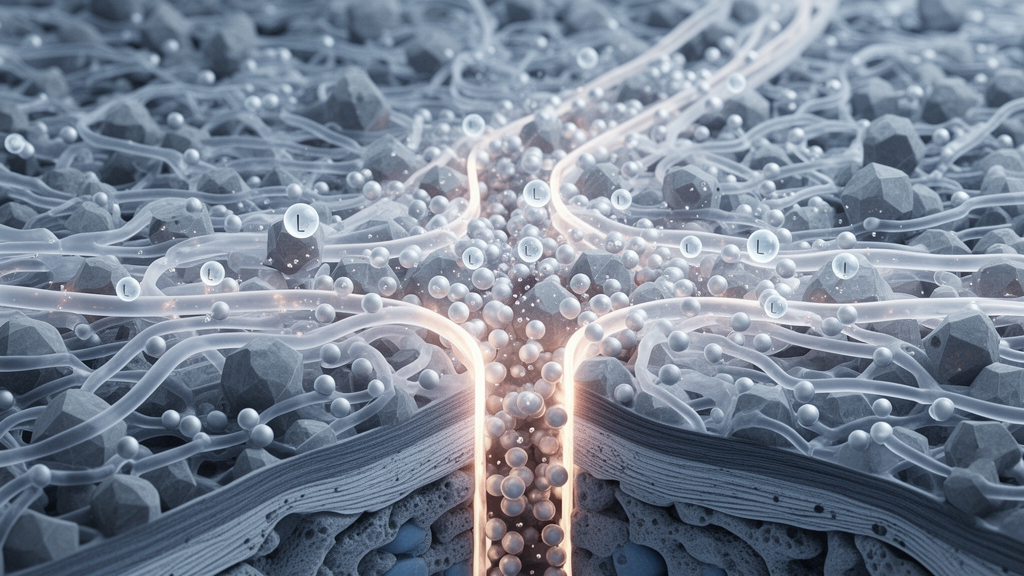
Image Credits: AI Generated

DOI: 10.3389/fchem.2026.1961300

Keywords: LiTFSI, LiODFB, polymer electrolytes, lithium-ion batteries, PVDF-HFP, PAN, LLZTO, ionic conductivity, lithium-ion transference, capacity retention, Lithium-salt, anion

Cite Scienmag News

Neil Sanderson. (October 21, 2026). Research report: Lithium-salt anion regulation of ion transport and interfacial stability in PVDF-HFP/PAN/LLZTO composite polymer electrolytes. Scienmag. https://scienmag.com/research-report-lithium-salt-anion-regulation-of-ion-transport-and-interfacial-stability-in-pvdf-hfp-pan-llzto-composite-polymer-electrolytes/


Neil Sanderson. "Research report: Lithium-salt anion regulation of ion transport and interfacial stability in PVDF-HFP/PAN/LLZTO composite polymer electrolytes." Scienmag, 21 October 2026, https://scienmag.com/research-report-lithium-salt-anion-regulation-of-ion-transport-and-interfacial-stability-in-pvdf-hfp-pan-llzto-composite-polymer-electrolytes/. Accessed 21 October 2026.

Neil Sanderson. "Research report: Lithium-salt anion regulation of ion transport and interfacial stability in PVDF-HFP/PAN/LLZTO composite polymer electrolytes." Scienmag. October 21, 2026. https://scienmag.com/research-report-lithium-salt-anion-regulation-of-ion-transport-and-interfacial-stability-in-pvdf-hfp-pan-llzto-composite-polymer-electrolytes/

Tags: anioncapacity retentioncomparison of LiTFSI and LiODFB saltsimpact of lithium salts on electrochemical performanceinterfacial stability in lithium-ion batteriesion transport mechanisms in polymer electrolytesionic conductivityionic conductivity optimization in solid electrolytesLiODFBLiTFSILithium salt anion regulation in polymer electrolyteslithium-ion batterieslithium-ion battery electrolyte stabilitylithium-ion transferenceLithium-saltLLZTOLLZTO ceramic filler in solid electrolytesmechanical properties of composite polymer electrolytesPANparasitic reactions and capacity decay in lithium batteriesPolymer ElectrolytesPVDF-HFPPVDF-HFP/PAN composite membranes
Share26Tweet16
Previous Post

Dental extraction wounds split in one in five dogs

Next Post

Ethiopian river-basin study maps seasonal forage value for cattle

Related Posts

Rural tourism spending linked to weaker Chinese farm prosperity
Science News

Rural tourism spending linked to weaker Chinese farm prosperity

October 21, 2026
Yellow River estuaries contrast in microbial assembly and carbon cycling
Earth Science

Yellow River estuaries contrast in microbial assembly and carbon cycling

October 21, 2026
Reused Industrial Meter Feeds 30-Day Electrical Monitoring Trial
Science News

Reused Industrial Meter Feeds 30-Day Electrical Monitoring Trial

October 21, 2026
DTI-ALPS links more consistently with cognition in asymptomatic moyamoya disease
Medicine

DTI-ALPS links more consistently with cognition in asymptomatic moyamoya disease

October 21, 2026
Qualitative study finds immigrant mothers use family stories to navigate immigration talks
Science News

Qualitative study finds immigrant mothers use family stories to navigate immigration talks

October 21, 2026
Breath Analysis Nearly Perfectly Separates Gout Patients in Proof-of-Concept Study
Science News

Breath Analysis Nearly Perfectly Separates Gout Patients in Proof-of-Concept Study

October 21, 2026
Next Post
Ethiopian river-basin study maps seasonal forage value for cattle

Ethiopian river-basin study maps seasonal forage value for cattle

  • Mothers who receive childcare support from maternal grandparents show more optimized

    Mothers who receive childcare support from maternal grandparents show more parental warmth, finds NTU Singapore study

    27656 shares
    Share 11059 Tweet 6912
  • University of Seville Breaks 120-Year-Old Mystery, Revises a Key Einstein Concept

    1061 shares
    Share 424 Tweet 265
  • Bee body mass, pathogens and local climate influence heat tolerance

    682 shares
    Share 273 Tweet 171
  • Researchers record first-ever images and data of a shark experiencing a boat strike

    546 shares
    Share 218 Tweet 137
  • Groundbreaking Clinical Trial Reveals Lubiprostone Enhances Kidney Function

    531 shares
    Share 212 Tweet 133
Science

Embark on a thrilling journey of discovery with Scienmag.com—your ultimate source for cutting-edge breakthroughs. Immerse yourself in a world where curiosity knows no limits and tomorrow’s possibilities become today’s reality!

RECENT NEWS

  • Rural tourism spending linked to weaker Chinese farm prosperity
  • Yellow River estuaries contrast in microbial assembly and carbon cycling
  • Reused Industrial Meter Feeds 30-Day Electrical Monitoring Trial
  • DTI-ALPS links more consistently with cognition in asymptomatic moyamoya disease

Categories

  • Agriculture
  • Anthropology
  • Archaeology
  • Athmospheric
  • Biology
  • Biotechnology
  • Blog
  • Bussines
  • Cancer
  • Chemistry
  • Climate
  • Earth Science
  • Editorial Policy
  • Marine
  • Mathematics
  • Medicine
  • Pediatry
  • Policy
  • Psychology & Psychiatry
  • Science Education
  • Science News
  • Social Science
  • Space
  • Technology and Engineering

Subscribe to Blog via Email

Enter your email address to subscribe to this blog and receive notifications of new posts by email.

Join 5,150 other subscribers

© 2025 Scienmag - Science Magazine

Welcome Back!

Login to your account below

Forgotten Password?

Retrieve your password

Please enter your username or email address to reset your password.

Log In
No Result
View All Result
  • HOME
  • SCIENCE NEWS
  • CONTACT US

© 2025 Scienmag - Science Magazine

Discover more from Science

Subscribe now to keep reading and get access to the full archive.

Continue reading