


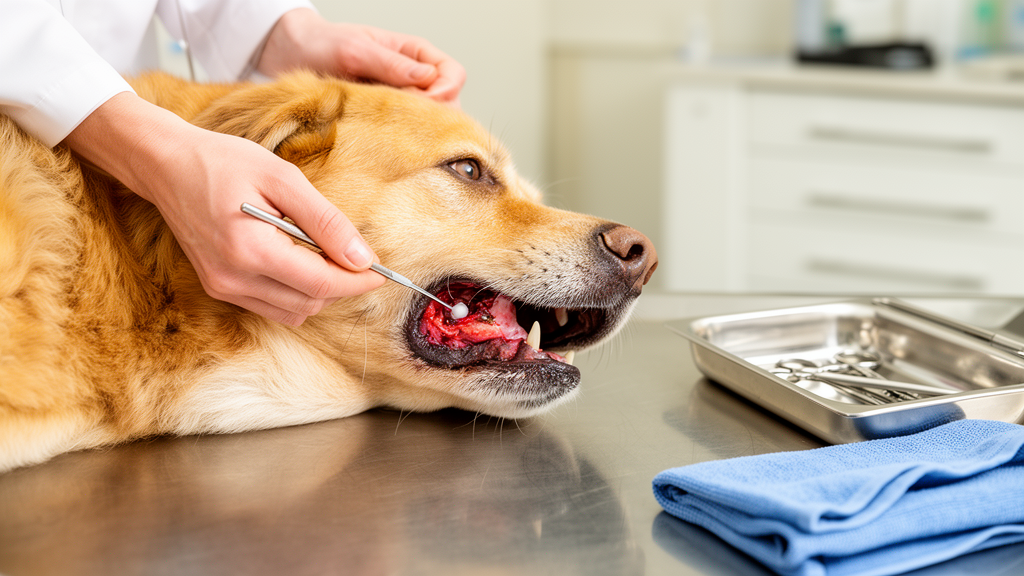
In a prospective clinical study of 87 healthy adult dogs undergoing permanent-tooth extraction, 17 developed dehiscence, a partial reopening of the extraction wound, by the first postoperative examination. The complication affected 19.5% of the dogs but only 4.2% of the 404 individual extraction sites, revealing how a relatively uncommon site-level event can affect a substantial minority of animals undergoing dental surgery. Most affected wounds were mild, and every dehisced site healed by second intention within 31 days without surgical revision. The researchers said the results support monitoring and conservative management for uncomplicated cases, while emphasizing that the proportion of affected dogs remains clinically relevant.
The study was conducted at the Small Animal Clinic of the Veterinary Faculty at the University of Ljubljana in Slovenia. The dogs had permanent dentition and were undergoing clinically indicated closed or open extractions. The investigators excluded animals with conditions or treatments that could impair wound healing, those requiring perioperative or postoperative antibiotics, and dogs with an oronasal fistula. No perioperative or immediate postoperative antibiotics or antiseptics were administered. All 87 animals were discharged on the day of surgery with pain management as clinically indicated, received a routine non-sedated examination 10 days later, and, if a healing complication was detected, underwent weekly in-person or telemedicine follow-up until healing was confirmed.
Dehiscence was defined by incomplete epithelial healing and separation of the wound edges, with defects of varying extent and granulation tissue accompanied by signs of inflammation. Investigators adapted a numerical scoring system for examination without sedation, meaning the assessment focused on wound-edge separation, gap size, and the presence of bridging granulation tissue. Features such as discharge, ulceration, necrotic tissue, debris, and inflammation could not be evaluated consistently in awake dogs and were not included in the score. Of the 17 affected sites, 13, or 76.5%, were classified as mild, while four had gaps larger than 10 mm that were not bridged by granulation tissue at the first examination.
Most complications involved large, functionally important teeth. Canine teeth accounted for six of the 17 affected sites, maxillary fourth premolars for four, and the mandibular first molar for one; together, these teeth represented 11 of 17 cases. Three affected dogs received antibiotics beginning five days after surgery, and one additional dog received extended analgesia because owners reported pain during eating. Two of the antibiotic-treated dogs had mandibular canine extraction sites, marked halitosis, and pain with eating. No affected site required revision surgery. After continued home-care measures, including soft food, avoidance of tooth brushing at the site, prevention of access to hard chew toys, and saline rinsing after meals, all wounds healed within 31 days.
Statistical analysis found several factors associated with dehiscence, although the observational design means these were associations rather than proof of causation. Each additional kilogram of body weight was associated with 13% higher odds of the complication, with an odds ratio of 1.13 and a 95% confidence interval of 1.04 to 1.23. Age was not associated with dehiscence. Compared with closed extractions, open procedures had nearly 17-fold higher odds, but that estimate had a wide 95% confidence interval of 2.11 to 141.91. The relatively small number of events and the strong relationship between surgical technique and procedural difficulty limit interpretation of these estimates.
Anatomical location also mattered. Sites in the rostral mandible, extending from the mandibular canine to the third premolar, had 23.25 times the odds of dehiscence seen in the incisive region, with a 95% confidence interval of 4.03 to 134.27. The rostral maxilla also had higher odds in the main model, although that difference did not remain significant after correction for multiple comparisons. The investigators proposed that persistent tension from the lower lip and perioral muscles may contribute to wound separation in the rostral mandible, but the study did not directly measure tissue tension. Caudal maxillary and mandibular sites were not significantly associated with dehiscence relative to the incisive region.
The extent of surgery showed a strong association. Removal of at least 50% of the alveolar bone was associated with nearly 19-fold higher odds of dehiscence compared with no buccal bone removal, although the 95% confidence interval was broad, from 2.36 to 151.59. Extractions for traumatic dentoalveolar injury had 9.20 times the odds associated with extractions for periodontal disease, while other extraction indications were not significantly associated. The authors suggested that fractured, periodontally healthy teeth may require more traumatic removal, whereas extensive bone removal may serve as a marker of extraction difficulty rather than being the sole cause of wound breakdown.
Flap design produced a notable but potentially confounded pattern. Among open extractions, triangular flaps were associated with higher estimated odds of dehiscence than envelope flaps. In the Bayesian model, the posterior median odds ratio was 4.44 for triangular versus envelope flaps among open procedures, with a 95% credible interval of 1.18 to 20.00. Pedicle flaps also had elevated estimated odds, but the estimate was imprecise because only five sites used that technique. Triangular flaps were more frequently used in procedures requiring removal of at least half the alveolar bone, so the researchers cautioned that the result may reflect extraction complexity and tissue trauma rather than flap design alone.
Other perioperative measurements did not show clear associations. Anesthesia duration, hypotension requiring a crystalloid bolus, and intraoperative root fracture were not significantly associated with dehiscence. Higher minimum body temperature was associated with greater odds in the primary model, but the relationship disappeared after adjustment for body weight, suggesting confounding. Root fracture occurred at 9.9% of extraction sites and involved 27.6% of the dogs, but fractured roots were successfully retrieved. The study also recorded two cases of late suborbital swelling after apparently uncomplicated healing, one linked to a subcutaneous foreign body and the other to panniculitis and myositis, showing that not every postoperative facial sign necessarily reflects the extraction wound itself.
Several limitations constrain the findings. The first examination occurred 10 days after surgery, so an earlier assessment might have detected more dehiscence while a later one might have missed mild cases that had already healed. Because examinations were performed without sedation, the investigators could not assess every tissue feature or bone healing consistently. The sample also came from one veterinary clinic, included only 17 dehiscence events, and contained relatively few pedicle-flap cases. Factors such as flap design, bone removal, extraction type, fracture, and body weight were interrelated, making it difficult to isolate the independent effect of any one factor. The authors called for more uniform canine populations and further prospective studies, while describing their cohort as the largest prospective clinical study of post-extraction wound-healing complications in healthy adult dogs reported to date.
Subject of Research: Prospective study of post-extraction wound dehiscence and associated risk factors in healthy adult dogs
Article Title: Wound healing complications after tooth extraction in dogs
Article References: Šparaš, L., Pavlica, M., Lukanc, B., & Nemec, A. (2026). Wound healing complications after tooth extraction in dogs. Frontiers in Veterinary Science, 13, 1962193. https://doi.org/10.3389/fvets.2026.1962193
Image Credits: AI Generated
DOI: 10.3389/fvets.2026.1962193
Keywords: veterinary dentistry, tooth extraction, wound dehiscence, dogs, second-intention healing, oral surgery, periodontal disease, dental fractures, Wound, healing, complications, tooth
Cite Scienmag News
William Thompson. (October 21, 2026). Dental extraction wounds split in one in five dogs. Scienmag. https://scienmag.com/dental-extraction-wounds-split-in-one-in-five-dogs/
William Thompson. "Dental extraction wounds split in one in five dogs." Scienmag, 21 October 2026, https://scienmag.com/dental-extraction-wounds-split-in-one-in-five-dogs/. Accessed 21 October 2026.
William Thompson. "Dental extraction wounds split in one in five dogs." Scienmag. October 21, 2026. https://scienmag.com/dental-extraction-wounds-split-in-one-in-five-dogs/


