


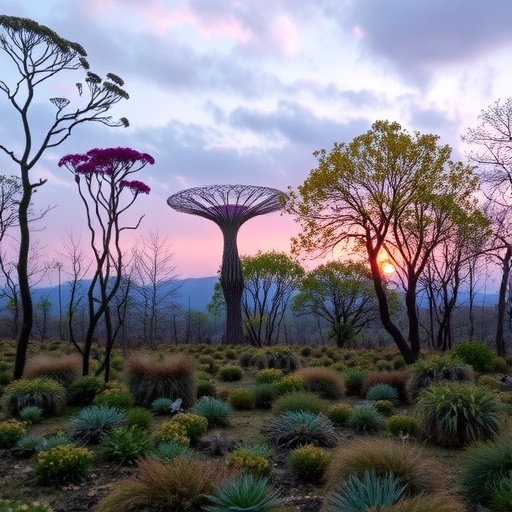
A groundbreaking study from the University of California, Davis, unveils a nuanced and sobering forecast for global plant biodiversity in the face of escalating climate change. Contrary to widespread assumptions emphasizing species’ capacity to migrate as a buffer against extinction, this comprehensive research underscores habitat loss as the principal driver of impending plant extinctions by 2100. Utilizing advanced computational modeling techniques, the study projects alarming extinction rates and profound habitat transformations that will reshape ecosystems globally, demanding urgent re-evaluation of conservation strategies.
The research, encompassing an unprecedented database of approximately 68,000 plant species—which accounts for nearly 18% of the world’s known flora—employed sophisticated ecological simulations to predict shifts in species distributions under various climate change scenarios. These simulations integrate not only projected climatic alterations but also species’ potential to relocate geographically over time, a pioneering approach that enhances the precision of extinction risk assessments. The results reveal that between 7% and 16% of these plant species may lose upwards of 90% of their habitable range, placing them at extreme risk of extinction by the close of the century.
Central to the findings is the revelation that plants’ inherent capability to track shifting climate zones through dispersal is insufficient to offset the rapid and extensive loss of suitable habitat areas. The study highlights that habitat degradation and disappearance, exacerbated by rising temperatures and altered precipitation patterns, will eclipse any benefits that might arise from range shifts. This means that even if plants manage to move, the quality and size of their new habitats will often fall short of their survival requirements, a grim prognosis for global plant diversity.
This insight carries profound implications for conservation policies, particularly those advocating assisted migration, where humans actively facilitate the relocation of species to more climatically favorable regions. While such measures have gained traction as potential tools to mitigate biodiversity loss, the UC Davis study warns that assisted migration alone is unlikely to substantially reduce extinction rates. Instead, it advocates for integrated approaches that also prioritize habitat restoration and the protection of climate refugia—areas that remain relatively stable and hospitable despite global changes—to sustain vulnerable species.
Prominent in this extensive analysis are the projected extinction hotspots: southern Europe, the western United States, and southern Australia. These regions are anticipated to experience drastic contractions in plant habitat, threatening both ancient and economically critical species. For example, the spikemoss (Selaginella) in California, representing one of the oldest lineages of vascular plants with origins dating back over 400 million years, faces heightened vulnerability. Similarly, various species of eucalyptus in Australia, pivotal to native forests, biodiversity, indigenous cultural heritage, and the timber industry, are identified at significant risk.
Intriguingly, the researchers also found that climate-induced shifts could lead to localized increases in plant diversity. Approximately 28% of the Earth’s land area might witness augmented species richness as plants colonize new environments, especially in wetter regions such as the eastern United States, India, Southeast Asia, and southern parts of South America. These shifts will create novel assemblages of species, prompting unforeseen ecological interactions and complexities that challenge established conservation paradigms centered on historical species distributions.
Such dynamic changes spotlight the inevitable transformation of ecosystems and the necessity for adaptive management frameworks that recognize and incorporate novel species combinations. As senior author Xiaoli Dong poignantly notes, the ecological landscape of tomorrow will diverge dramatically from the familiar patterns of the past half-century, necessitating flexible conservation strategies that anticipate and respond to these shifts rather than attempting to preserve static conditions.
The research also emphasizes the critical role of ex situ conservation strategies, including seed banks and botanical gardens, which serve as repositories for genetic diversity and safeguards against the irreversible loss of plant species. These institutions, alongside the identification and management of climate refugia, will be crucial for preserving the genetic and medicinal value of plants under duress from climate pressures.
From a methodological perspective, the study advances the field by integrating the temporal dynamics of range shifts with the spatial complexity of habitat availability. This methodological innovation allowed the researchers to disentangle the intertwined effects of climate velocity and habitat fragmentation on extinction risk, revealing that the latter overwhelmingly dictates plant survival outcomes. The use of extensive species distribution data, combined with robust climate models, represents a significant leap forward in projecting biodiversity trajectories under global change.
Moreover, the findings stress the indispensable importance of aggressive greenhouse gas emission reductions to mitigate biodiversity loss. While localized conservation interventions have value, they are unlikely to counterbalance the habitat degradation driven by unchecked climate warming. This underscores a critical intersection of biodiversity conservation with global climate policy, highlighting the urgency of coordinated action to safeguard the planet’s botanical heritage.
In conclusion, the UC Davis study provides a technically rigorous and ecologically vital contribution to our understanding of how climate change will reshape global plant distributions and diversity. Its findings challenge existing conservation dogma, prioritize the role of habitat preservation, and call for an integrated, multifaceted approach to protecting plant species in an era of unprecedented environmental transformation. As the world grapples with climate change, these insights offer a roadmap for more effective stewardship of the planet’s vital green infrastructure.
News Publication Date: 7-May-2026.
References: The study was published in Science and funded by the National Science Foundation, conducted by researchers at UC Davis, Yale University, the Centre for Synthesis and Analysis on Biodiversity (France), and Beijing Normal University.
Cite Scienmag News
Margaret Porter. (May 7, 2026). Research Predicts Plant Extinction Rates Through 2100. Scienmag. https://scienmag.com/research-predicts-plant-extinction-rates-through-2100/
Margaret Porter. "Research Predicts Plant Extinction Rates Through 2100." Scienmag, 7 May 2026, https://scienmag.com/research-predicts-plant-extinction-rates-through-2100/. Accessed 4 September 2026.
Margaret Porter. "Research Predicts Plant Extinction Rates Through 2100." Scienmag. May 7, 2026. https://scienmag.com/research-predicts-plant-extinction-rates-through-2100/


