


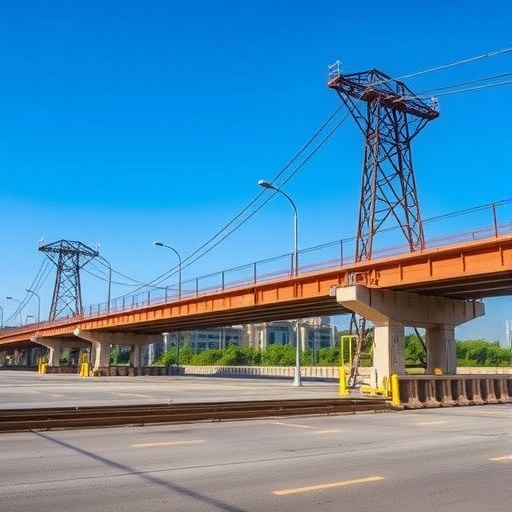
The persistent challenge of corrosion, often overshadowed in the vast landscape of global issues, commands significant attention due to its profound economic and infrastructural ramifications. The 24th Carbon Research International Forum, convened on May 22, 2026, delivered an accessible yet in-depth discourse addressing this formidable problem, with a concentrated examination on the integration of carbon-based additives within organic coatings designed to safeguard mild steel. This digital forum, now permanently accessible via a recorded YouTube session, brought into sharp focus innovative approaches toward sustainable materials science and infrastructure longevity.
Dr. Ren Chong Lim, an esteemed Assistant Professor and Deputy Director at the Centre for Advanced Materials and Energy Sciences, Universiti Brunei Darussalam, steered the conversation under the adept hosting of Dr. Longlong Xia from the Institute of Soil Science, Chinese Academy of Sciences. Their collaborative efforts illuminated the critical intersection of material science and environmental stewardship, particularly pertinent in the context of protecting mild steel—a material foundational to global construction and engineering sectors.
The economic impact of corrosion is staggering, as delineated by statistics from the Association for Materials Protection and Performance. Corrosion-induced losses amount to approximately 2.5 trillion USD annually, a figure that echoes the spending envelopes of entire economic sectors such as the military or automotive industries. This quantification underscores corrosion not merely as a technical concern but as a massive economic burden demanding innovative, scalable solutions.
Mild steel’s ubiquity in infrastructure owes itself to a triad of affordability, malleability, and durability, positioning it as the backbone of modern construction, transportation, and manufacturing systems. Nevertheless, its susceptibility to corrosion, especially in the absence of durable protective barriers, presents an ongoing challenge. Traditionally employed organic coatings, while effective, often necessitate additives that may impose environmental or health hazards, hindering efforts toward sustainability and public safety.
Dr. Lim’s presentation unveiled the potential of carbon-based additives, notably derivatives like nanocellulose, which promise to revolutionize corrosion protection. These materials, harnessed from renewable carbon sources, present an exciting frontier in materials engineering—where sustainability synergizes with performance. The nanostructured nature of these additives can enhance the barrier properties of coatings, impeding corrosive agents from penetrating and degrading metal surfaces.
In-depth discussions also elucidated the methodologies employed to assess the efficacy of these novel coatings. Advanced surface characterization techniques, including electron microscopy and spectroscopic analyses, were illustrated as pivotal in understanding the morphological integration of carbon-based additives within organic matrices. Electrochemical evaluation techniques, such as potentiodynamic polarization and electrochemical impedance spectroscopy, provided quantitative insights into the corrosion resistance imparted by these next-generation coatings.
The conversation extended beyond laboratory confines to explore practical considerations imperative for real-world application. Dr. Lim underscored that scalability, cost-effectiveness, and material availability must be balanced alongside technical performance to transition these innovations from bench to market. He highlighted that only through multidisciplinary collaboration can sustainable coating technologies attain the necessary robustness for widespread adoption.
Addressing future horizons, the forum posited avenues for ongoing research focused on enhancing the renewable nature of carbon additives, refining functionalization techniques, and developing application protocols tailored to diverse environmental conditions. Such research endeavors are critical to optimize performance parameters while minimizing ecological footprints across the life cycles of coated steel components.
The recorded forum presentation serves as a resource not only for the academic community but also for industry stakeholders and the inquisitive public. By democratizing access to cutting-edge knowledge, the session catalyzes broader engagement with the urgent imperative to develop sustainable infrastructure solutions that marry durability with environmental consciousness.
Moreover, the integration of carbon-based additives into coating matrices aligns with global imperatives to reduce dependence on toxic materials and shift towards circular economy principles. Utilizing renewable bio-derived nanomaterials like nanocellulose taps into abundant natural resources, enhancing the ecological credentials of corrosion protection technologies.
The broader implications of this work resonate deeply with contemporary challenges in engineering sustainability. Protecting infrastructure from corrosion extends asset lifespans, reduces maintenance demands, and ultimately mitigates emissions associated with material manufacturing and replacement. These cascading benefits present compelling incentives for the widespread uptake of carbon-based coating innovations.
The forum, meticulously organized by the editorial offices of Carbon Research, Biochar, and Sustainable Carbon Materials, reflects an evolving commitment within the scientific community to address pressing environmental challenges through materials innovation. The open-access dissemination of such research fosters a global dialogue and accelerates knowledge transfer across disciplinary and geographic boundaries.
In sum, the 24th Carbon Research International Forum highlighted a transformative approach in corrosion science: leveraging renewable carbon-based additives to develop sophisticated, sustainable coatings that protect mild steel more effectively while reducing environmental impact. This paradigm embodies the nexus of engineering excellence and environmental responsibility, offering a beacon for future material science endeavors.
News Publication Date: May 22, 2026
Web References:
– Recorded Forum Session: https://youtu.be/Z8glVCDT5XU?si=fW9n-eoEZLlq_R4E
– Biochar Journal: https://link.springer.com/journal/42773
– Carbon Research Journal: https://link.springer.com/journal/44246
Cite Scienmag News
Denise Maddox. (May 27, 2026). Eco-Friendly Carbon-Based Coatings Revolutionize Steel Infrastructure Protection. Scienmag. https://scienmag.com/eco-friendly-carbon-based-coatings-revolutionize-steel-infrastructure-protection/
Denise Maddox. "Eco-Friendly Carbon-Based Coatings Revolutionize Steel Infrastructure Protection." Scienmag, 27 May 2026, https://scienmag.com/eco-friendly-carbon-based-coatings-revolutionize-steel-infrastructure-protection/. Accessed 3 September 2026.
Denise Maddox. "Eco-Friendly Carbon-Based Coatings Revolutionize Steel Infrastructure Protection." Scienmag. May 27, 2026. https://scienmag.com/eco-friendly-carbon-based-coatings-revolutionize-steel-infrastructure-protection/


